


There is a uniquely visceral energy that accompanies the Stanley Cup Final, an intensity so profound that it seemingly alters the air density inside the arena, transforming a simple game of hockey into a physical and psychological crucible where legacies are forged in the span of mere seconds on the frozen ice. The current spectacular battle between the Carolina Hurricanes and the Vegas Golden Knights has epitomized this desperate struggle, unfolding as a masterclass in athletic resilience and strategic warfare that has captured the imagination of hockey fans worldwide. After a grueling start to the series that tested the absolute limits of both rosters, the Hurricanes traveled deep into the neon-lit, deafening cauldron of Las Vegas for Game 4, carrying the heavy psychological weight of knowing that another loss on foreign ice would put them on the brink of elimination. The previous two contests had already pushed both squads to their absolute emotional and physical limits, stretching deep into the nerve-wracking, heart-stopping territory of sudden-death overtime, leaving players bruised and fans utterly exhausted. This time, however, the narrative of the series demanded a definitive hero who could settle the score in regulation without the agonizing safety net of an extra period. Inside the arena, the atmosphere was a cacophony of sound, a roaring sea of gold-clad spectators hoping to see their Golden Knights seize a commanding, perhaps insurmountable stranglehold on the championship narrative. Yet, beneath the collective calm exterior of the Hurricanes’ locker room lay a quiet, burning resolve to even the series at two games apiece, setting the stage for an unforgettable night of high-stakes drama where passion, strategy, and sheer willpower would collide in a spectacular showcase of championship hockey.
From the moment the puck dropped to start the first period, the Hurricanes played like a team possessed, unleashing an offensive storm that left the Vegas defenders looking uncharacteristically shell-shocked in their own end of the ice. It took merely seventy-six seconds for Carolina to make their intentions known, as the sensational Logan Stankoven picked up a loose puck and fired home his eleventh goal of these playoffs, sending an immediate shockwave of silence through the partisan Las Vegas crowd. Rather than retreating into a defensive shell to preserve the early lead, the Hurricanes pressed their advantage with a relentless forecheck, capitalizing on the momentum of their dream start. Just moments later, Jackson Blake found himself in the perfect position following some brilliant, synchronized passing from Taylor Hall and Nikolaj Ehlers, quickly burying the puck past a diving goalie to double the lead and leave the home crowd murmuring in disbelief. While Vegas captain Mark Stone managed to briefly stem the bleeding by engineering a response for the Golden Knights to make it 2-1, the Hurricanes refused to let up. When Vegas took a costly penalty, Jordan Staal capitalized with a textbook power-play goal, lunging forward to tuck home a rebound after a heavy blueline blast from Shayne Gostisbehere. Entering the first intermission with a commanding 3-1 lead, the Hurricanes had executed their game plan to perfection, but in the volatile landscape of the NHL playoffs, they knew all too well that no lead is truly safe.
The second period served as a stark reminder of why the Golden Knights had fought their way to the sport’s grandest stage, as they orchestrated a ferocious comeback that illustrated the thin margin of error in championship hockey. Refusing to roll over on their home ice, Vegas emerged from the dressing room with a renewed sense of urgency, suffocating Carolina’s transition play and dominating the neutral zone. The comeback began in earnest when William Karlsson capitalized on a lapse in the Hurricanes’ defensive coverage, scoring his third goal of the postseason with a sublime display of stickhandling that breathed life back into the quieted arena. The crowd’s roar returned to a deafening pitch shortly thereafter when Brett Howden, who has been building a compelling, narrative-driven case for the Conn Smythe Trophy as the playoff MVP, found the back of the net for his fourteenth goal of the postseason, leveling the game at three apiece. This rapid equalization shifted the entire psychological landscape of Game 4, transforming a comfortable Carolina lead into a pressure cooker of dread and uncertainty as momentum swung heavily in favor of the hosts. The Hurricanes, who had looked so dominant just twenty minutes prior, suddenly found themselves on their heels, forced to survive a relentless barrage of golden jerseys and recalibrate their strategy before the game slipped entirely out of their grasp entering the final period.
Amidst the tactical adjustments and physical battles on the ice, the game’s defining subplot belonged to Carolina’s head coach Rod Brind’Amour, who made a highly criticized, high-stakes coaching gamble by naming young goaltender Brandon Bussi the starter over the veteran Frederik Andersen. Stepping into the crease for his first start of the entire series, Bussi was asked to shoulder a mountain of pressure that would make even the most seasoned hockey veterans crumble under the spotlight. It was a classic human drama of an underdog thrust into the ultimate trial by fire, with the championship hopes of an entire franchise riding on his ability to stop ninety-mile-per-hour vulcanized rubber disks. Bussi answered the call with the calm composure of a seasoned zen master, turning aside crucial shots during the second-period onslaught and holding the line when the Golden Knights pushed hardest to take the lead. Over the course of the game, Vegas launched twenty shots on goal, and while they managed to sneak three past him, Bussi’s timely saves in the game’s critical moments kept the Hurricanes afloat when the defense ahead of him began to fray. By choosing the unheralded backup over his established star, Brind’Amour highlighted the deep trust that defines this Carolina roster, a fundamental belief that anyone donning the jersey can step up and become a hero when their number is called on the biggest stage.
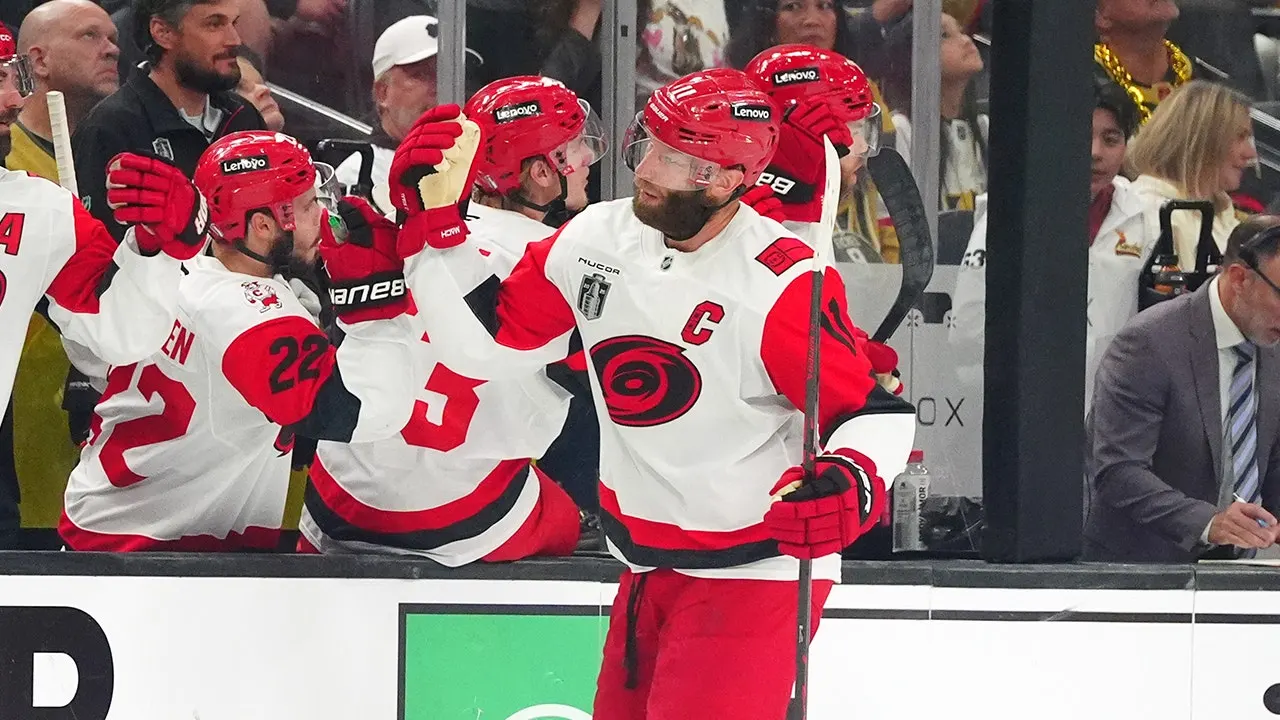
With the score deadlocked at 3-3 in the third period, the game hung in a delicate balance, waiting for a single mistake to break the tension and dictate the fate of the series. That moment of destiny arrived with just under fourteen minutes remaining on the clock, when Vegas defenseman Shea Theodore committed a catastrophic turnover directly in front of his own net under heavy pressure from an incoming forecheck. Hurricanes young star Seth Jarvis reacted with predatory instincts, picking off the errant pass and attempting a quick backhand shot that was initially denied by a desperate, acrobatic pad save from Carter Hart. However, the play was far from over; Jarvis stubbornly battled for the rebound, tapping into a deep reservoir of raw determination to keep the play alive and knock the puck loose to Nikolaj Ehlers. Ehlers, showing immense vision under pressure, quickly nudged the puck toward a sliding Jordan Staal, who had lost his footing and was actively crashing to the ice on his knees. In a display of sheer athletic coordination and desperation, the captain swatted at the puck while down, guiding it past Hart and into the net before sliding joyously into the boards to celebrate his second goal of the night. This miraculous marker did more than just break the tie; it etched Staal’s name into hockey history, making him the first player in nearly half a century to score a goal in each of the first four games of a Stanley Cup Final.
With a slim 4-3 lead and the clock ticking away, the Hurricanes showcased their defensive pedigree, erecting a wall of sticks and bodies that frustrated the Golden Knights’ relentless attempts to equalize. The final nail in the coffin came courtesy of Nikolaj Ehlers, who showed tremendous poise by banking the puck off the glass out of his own defensive zone, watching as it trickled down the length of the ice and into the empty Vegas net to secure the 5-3 victory. As the final buzzer sounded, the Hurricanes celebrated a hard-fought victory that effectively resets the Stanley Cup Final into a best-of-three sprint, with Game 5 scheduled to return to the passionate, red-clad sanctuary of Carolina’s Lenovo Center. Beyond the statistics and the strategist notes, this game was a profound testament to the human elements of sport—the anxiety of blown leads, the triumph of unexpected goaltenders, the desperate resilience of aging captains, and the absolute beauty of hockey’s unpredictable nature. As both teams leave the desert and head to Raleigh, they do so carrying the intense bruises of four games of absolute warfare, knowing that the ultimate prize in professional sports is now closer than ever, yet still requiring two more victories of pure, unadulterated grit.