

Paragraph 1: The Unexpected Silence and the Weight of a Changing Season
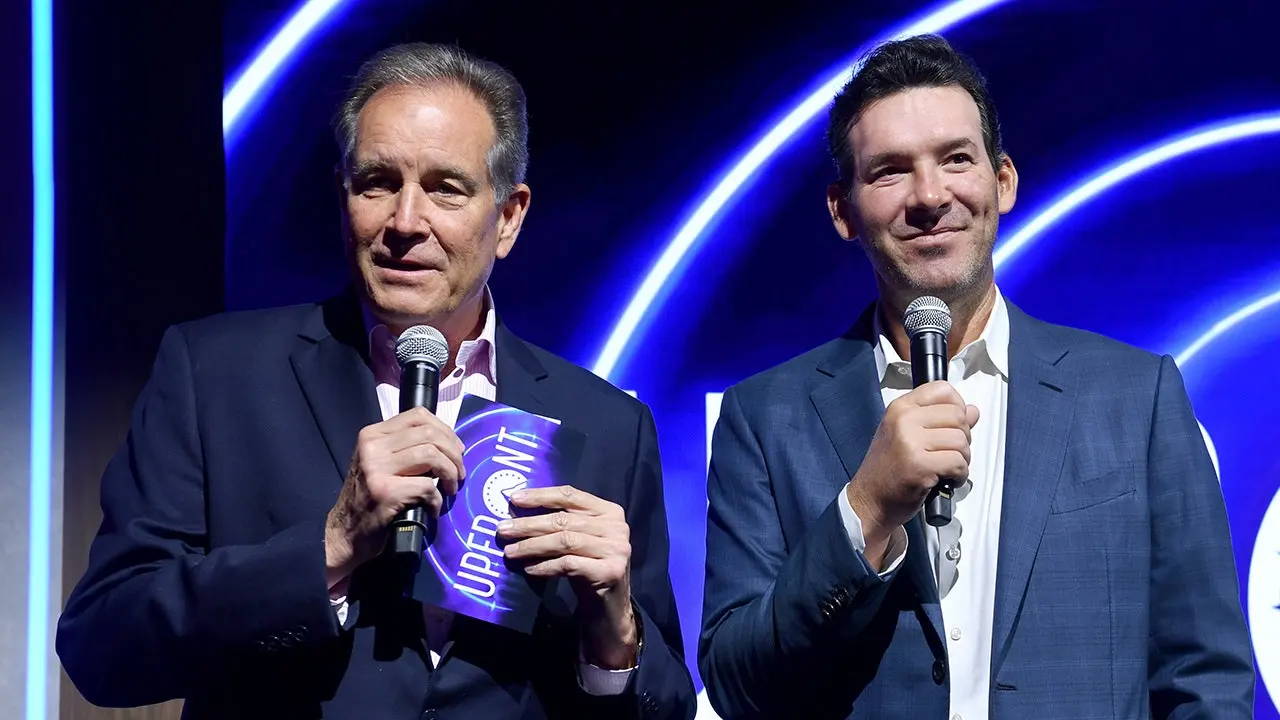
The bright lights of the CBS Sports media day should have been a celebration, a triumphant kickoff to another grueling NFL season. Instead, the atmosphere was thick with an unspoken tension, a palpable sense of loss that hung over the room like a storm cloud. Jim Nantz, the velvet-voiced icon of American sports broadcasting, stood before the assembled press, his familiar, reassuring cadence slightly tempered by the gravity of the moment. He was there to promote the upcoming campaign, but the elephant in the room was unmistakable: where was Tony Romo? The answer, of course, was a shadow cast by a July night in Wisconsin, a road trip gone horribly wrong, and a single, life-altering decision that had shattered the blissful routine of the most famous broadcast duo in football. Nantz, typically a master of smooth transitions and measured optimism, found himself navigating a minefield of questions he could only partially answer. He spoke of laying low, of focusing on his golf events, of respecting the private nature of a personal crisis. It was a masterclass in diplomatic deflection, yet his words carried a profound emotional undertone. Here was a man who had shared the booth with Romo for over half a decade, witnessing the highs of nail-biting playoff finishes and the lows of brutal defeats, suddenly forced to answer for his partner’s absence not because of a contract dispute or a career move, but because of an impaired driving charge. The season was about to begin, but the familiar chemistry, the inside jokes, the telepathic football analysis—all of it was now buried beneath the legal jargon, the corporate reassurances, and the quiet, desperate hope that a friend would be able to piece his life back together.
Paragraph 2: A Friendship Forged in Champagne and Shared Lounges
To fully grasp the depth of Nantz’s discomfort, one must understand the intimate history between the two men. This was not a professional pairing that had grown coldly transactional; it was a brotherhood. Nantz reminded everyone present that his relationship with Romo transcended the gridiron and the broadcast booth. He reached back to 2011, long before Romo ever donned a CBS blazer, when he stood as a guest at the quarterback’s wedding to Candice Crawford. “He and I go back to 2011 when he got married, I was invited to his wedding,” Nantz stated, his voice laced with a tenderness that cut through the corporate veneer of the press conference. “So, this was not someone in 2017 when he entered the booth I was just getting to know for the first time.” This revelation reframed the entire narrative. Nantz wasn’t just losing a broadcast partner; he was watching a dear friend stumble through a profound public crisis. He spoke of adoring Romo’s family, specifically his wife, expressing that they were the ones on his mind. He refused to divulge the contents of their private conversations, a gesture of fierce loyalty that spoke volumes. In an industry where leaks and gossip run rampant, Nantz chose the path of discretion, demonstrating a moral compass that prioritized human dignity over sensationalism. He admitted to communicating back and forth with Romo since the incident, but he sharply drew the line at revealing emotional details. This guardedness wasn’t secrecy for its own sake; it was the protective instinct of a man who understood that the harshest judgment would come not from the legal system, but from the court of public opinion. In that moment, Nantz became less of a sports announcer and more of a guardian, shielding his friend from the unrelenting glare of cameras while the latter attempted to confront his demons.
Paragraph 3: The Unraveling of a Midnight Drive and the Fragility of Fortune
The details of the arrest itself are a stark reminder of how quickly fortune can evaporate. Romo was apprehended by the Milwaukee County Sheriff’s Office after exhibiting signs of impairment while driving back from a golf event. The charges—operating while intoxicated, possession of an open container, and unsafe passing—painted a picture of a mundane, everyday type of lapse in judgment, yet one with catastrophic consequences. For a man who had spent his entire adult life under the microscope, analyzing plays with robotic precision and reading defenses like an open book, failing a field sobriety test felt like a surreal fall from grace. It strips away the celebrity veneer, leaving a raw, human tableau of a man making a mistake. The subsequent videos released of the traffic stop showed a cooperative, yet clearly inebriated individual, a stark contrast to the sharp, effervescent analyst who diagrammed plays with intuitive genius on Sundays. This incident hits at the very core of Romo’s constructed identity. He built his post-playing career on being the smartest guy in the room, the preppy, likable former Cowboy who could predict plays moments before they happened. Now, he is contending with a label that threatens to redefine him—a man who drove drunk. The irony is not lost on anyone, least of all on Nantz, who has spent years watching his partner prepare meticulously for games, leaving no stone unturned. The failure to make a simple, rational choice—calling an Uber, staying at a hotel—casts a pall over that professional integrity. For the casual fan, this is a headline; for those who know him, it’s a heartbreaking reminder of human fallibility, where a single night of poor judgment can outshine a decade of professional brilliance.
Paragraph 4: The Corporate Calculus of Million-Dollar Contracts and Morals Clauses
While Nantz navigates the emotional waters of friendship, the corporate machinery of CBS Sports is grinding through a far more unpleasant calculation. CBS Sports President David Berson addressed the media with carefully rehearsed opacity, stating that Romo’s situation is “evolving” and that there is “no timetable or final decision” regarding his future. His words about considering the “impact on our image and our brand” ring hollow to those who know the bottom line. Romo is sitting on a ten-year, $180 million contract, of which roughly $72 million is still owed. The inclusion of an industry-standard morals clause gives the network a legal weapon—a potential loophole to sever ties without paying out the remainder. But wielding that weapon is fraught with risk. A legal battle with a multimillionaire quarterback would be messy, public, and expensive. Berson’s assurance that “we have a deep bench” acknowledges the immediate need to fill the void, which they have done by brining in the immensely popular J.J. Watt. Yet, behind the corporate jargon, this is a story about the transactional nature of fame. A man who was once seen as the golden goose, the premier analyst who legitimized the network’s coverage, is now viewed as a liability. The business of sports television is unforgiving; it cares less about the personal redemption of a star than about the quarterly ratings. Berson’s mention of the 2028 Super Bowl broadcast looms ominously, a reminder that long-term planning can be derailed by a single bad night. In this cold, monetary world, Romo’s human struggle is reduced to a spreadsheet line item, a decision matrix evaluating risk versus reward, dignity versus dollars.
Paragraph 5: J.J. Watt and the Awkward Geometry of the Broadcast Booth
The immediate replacement of Romo with J.J. Watt for the opening slate of games adds another confusing layer to the narrative. Watt, a future Hall of Fame defensive end, is beloved for his ferocious play and infectious personality. He lacks Romo’s deep play-calling intuition, but he brings a raw, physical understanding of the trenches and a fresh burst of enthusiasm. Yet, watching him sit next to Nantz will be inherently uncomfortable. The booth will feel different—lacking that familiar, rapid-fire banter. Nantz will have to recalibrate his timing, adjusting to a new voice, a new rhythm. It’s a stark juxtaposition of the old and the new, a forced transition that nobody wanted. Nantz, ever the professional, has no doubt prepared for this, but one can imagine the emotional whiplash of calling a touchdown while simultaneously feeling the absence of the man he spent years building chemistry with. The announcement comes ahead of Romo’s court date, which is scheduled for September 21st, a mere eight days after the first broadcast with Watt. This schedule creates a surreal back-to-back: on September 13th, the world watches Nantz and Watt navigate the opener; on September 21st, the world watches Romo navigate a courtroom. For Romo, watching that first broadcast from wherever he is will be a gut-wrenching experience. It will be a public viewing of his own professional eclipse, watching a younger, celebrated star effortlessly slide into the chair that was supposed to be his for the next decade. For Nantz, it means performing at his peak while carrying the emotional baggage of a friend in crisis, a tightrope walk between personal loyalty and public duty.
Paragraph 6: The Unwritten Future and the Grace of Time
Ultimately, this saga is not yet defined—it is an unwritten chapter in the lives of two men. The speculation regarding Romo’s preparation, whispers that he had grown complacent or less sharp in recent seasons, adds a somber footnote to the debate. Was this arrest a catalyst for change, or merely an accelerant of a pre-existing downward trajectory at CBS? For Nantz, the conclusion is clear. “Tony is a great friend of mine and has been for years,” he reiterated, emphasizing his continued loyalty. He left the private content of their conversations to the realm of discretion, a testament to a bond that cannot be severed by a legal mishap. The future remains murky: Will the morals clause be invoked? Will Romo return after a suspension? Will the network part ways, forcing Nantz into a permanent pairing with Watt? These questions hang in the air, volatile and unresolved. In the grand narrative of sports, redemption stories are a beloved trope, but they are rarely straightforward. The road ahead for Romo involves legal fees, mandatory alcohol assessments, and a long, humiliating public rehabilitation. For Nantz, it means continuing to be a beacon of professional excellence while privately praying for his friend’s soul. In the end, this story transcends football. It is a parable about the fragility of reputation, the relentless pressure of public life, and the enduring power of human friendship. As the NFL season begins, the focus will be on the games, the players, and the broadcasting duo of Nantz and Watt. But underneath the crowd noise, there is a quieter rhythm—the pulse of a man fighting for his redemption, and the steady hand of a friend waiting to help him up when he is finally ready to stand.