



The NFL has a cruel sense of humor. Just 19 months ago, the Philadelphia Eagles and Washington Commanders were on top of the football world, convinced they had finally found their quarterbacks for the next decade. Philadelphia had just demolished the Chiefs in Super Bowl LIX, and Jalen Hurts was the steady, stoic MVP holding the trophy. Washington, against all odds, had found a genuine superstar in rookie Jayden Daniels, a magician who dragged a long-suffering franchise to the NFC Championship Game for the first time in over thirty years. That January playoff meeting felt less like a game and more like a passing of the torch, the opening chapter of what was supposed to be a legendary rivalry. Hurts versus Daniels, twice a year, with the NFC East on the line. It was the kind of story the NFL loves to sell, and for a moment, everyone bought it. But the league has a way of humbling you before the confetti even dries. The 2025 season was a wake-up call for both teams, and now the two quarterbacks meet again in the 2026 season opener under entirely different circumstances. Neither player is basking in glory anymore. Instead, both are carrying the weight of doubt, frustration, and contract uncertainty. Hurts is entering the final year of his current deal after this season, and Daniels is at the crossroads where first-round quarterbacks either cash in or start getting uncomfortable questions. This isn’t just another game. It’s a referendum on whether these two franchises can still trust their most important player.
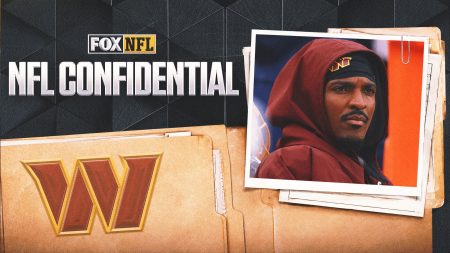
For Daniels, the bar for a successful season is lower than it is for Hurts, and that says a lot about where Washington stands. The Commanders are expected to finish in the bottom half of the NFC East, so simply staying healthy for all seventeen games would be a win. If he can do that and rediscover the magic of his rookie year, the team will happily write him a blank check in the spring. But there are real reasons to be nervous. The offensive line was already a problem last season, and now star left tackle Laremy Tunsil is out indefinitely with a torn triceps. That’s a massive blow for any quarterback, but especially for one who struggled when the pocket got dirty. To make matters worse, Washington hired David Blough as offensive coordinator—a man who is just three seasons into his coaching career and has never called plays at this level. It’s a lot to ask of a young quarterback to overcome all of that, and there’s a genuine possibility that Daniels doesn’t bounce back. If he limps through another disappointing season, the Commanders might hesitate to hand him a top-of-the-market contract. They wouldn’t necessarily move on from him, but they’d likely push contract talks into next offseason, which is never a good sign for a first-round quarterback. That kind of limbo can poison a relationship quickly, especially when the player knows he’s being watched and judged on every single throw.
A lot of Daniels’ struggles in 2025 came down to an inability to hit the middle of the field. It wasn’t that he was afraid to make those throws—according to Pro Football Focus, his accuracy on intermediate passes dropped by almost ten percent from his rookie season. There were too many passes that sailed high, low, behind receivers, or just hung in the air too long. But it’s also important to remember what he was working with. Terry McLaurin was injured, leaving the receiving corps in shambles. At one point, 35-year-old Zach Ertz was the most reliable weapon against man coverage, which is a polite way of saying the offense was broken. Any quarterback would struggle when their best option is a tight end past his prime and a group of receivers who couldn’t separate. Daniels’ regression from Year 1 to Year 2 was largely tied to man coverage and the blitz. Washington didn’t have anybody who could punish defenses for playing aggressively, and Daniels loses accuracy when he’s forced to throw into tight windows. He’s still one of the best quarterbacks in the league at throwing with touch against zone defenses, but that skill didn’t matter much because the Commanders couldn’t force defenses to play zone. The front office did make an effort to fix that in the offseason, signing Stefon Diggs, getting McLaurin healthy, and adding explosive athletes like third-round pick Antonio Williams and former first-rounder Treylon Burks. Those upgrades should help, but this still isn’t a world-beating receiving corps, and Daniels will need to take a real step as an intermediate passer if the offense is going to function. The pieces are better, but the pressure is still all on him.
Hurts’ situation is more complicated, partly because the Eagles have won a lot of football games with him, and winning can cover up a lot of problems. General manager Howie Roseman has spent the offseason defending Hurts, insisting that the only stat that matters is wins. That sounds nice in a press conference, but it’s also a dangerously reductive way to evaluate a quarterback. If the Eagles have a down year and the passing game still looks stuck in the mud, Roseman’s tune might change quickly. The supporting cast around Hurts is still loaded with blue-chip talent, even after trading away his top receiver, A.J. Brown. But for the first time since he entered the league, all of that talent is being asked to operate in an entirely new system. Sean Mannion, hired away from Green Bay, is the fifth offensive coordinator of Nick Sirianni’s tenure, but he’s the first hire from outside Sirianni’s coaching tree. This isn’t a tweak. The Eagles are going to run a completely different offense, with more under-center snaps, condensed formations, and a heavy dose of play-action passing. It’s the kind of scheme that made the 49ers and Rams dangerous, but it requires the quarterback to be comfortable doing things Hurts has spent his entire career avoiding. That’s a massive bet on a player who has reportedly pushed back against exactly this kind of change in the past. The hope is that Mannion can unlock something new in Hurts, but hope isn’t a plan, and the first real test comes on Sunday.
The uncomfortable truth is that Hurts has developed habits that are hard to break, and there’s now plenty of public evidence to back that up. In April, ESPN published a report detailing growing frustration with Hurts’ reluctance to step outside his comfort zone. Sources said he pushed back on going under center more, resisted pre-snap motion, and hesitated to let it rip against zone coverage. Some of that was denied by people close to Hurts, but the numbers tell their own story. For the fifth straight season, Hurts targeted the middle third of the field at the lowest rate in the league. That’s not a coincidence. He’s had four different offensive coordinators, and the pattern hasn’t changed one bit. My own theory is that Hurts knows his arm strength isn’t elite, and he’s developed a keen awareness of his own limits. He avoids the middle of the field for the same reason Jared Goff doesn’t throw on the run—it’s just not his game, and he knows it. That approach has kept his interception numbers low, but it’s also made the Eagles predictable and limited their ceiling. There was a moment in last season’s loss to Denver where Hurts clearly considered firing a stick throw to DeVonta Smith in a tight zone window, then thought better of it and instead scrambled and heaved the ball downfield. That one decision sums up his entire career. He’s a brilliant game manager who protects the football, but he rarely gives his offense a chance to make explosive plays over the middle. For this new scheme to work, one of two things has to happen. Either Mannion has to be some kind of offensive genius who consistently schemes receivers open so Hurts doesn’t have to make difficult throws, or Hurts has to take more chances, even if it means a few more interceptions. There’s no in-between. And the answer won’t come on the practice field—it will come in live games, starting with the very first one.
Sunday’s opener will be the perfect stress test for both quarterbacks, and the defensive matchups make it even more fascinating. Daniels will look across the line and see an Eagles secondary that closes throwing windows as well as any defense in the league. That’s exactly the kind of opponent that broke him last year. If the pass rush gets home early, if the windows disappear, if the intermediate throws start falling incomplete again, the old doubts will come rushing back. On the other sideline, Hurts will be asked to run an offense fundamentally different from anything he’s done before, against a Washington defense built around pre-snap disguises and post-snap chaos. That’s a brutal way to introduce a new system, and it will expose every hesitation, every moment of discomfort, every instinct to bail out of structure. The final score will matter, sure, but the real answers are deeper than that. How quickly does Daniels process pressure? Can he make the throws he couldn’t make last season? Does Hurts look natural under center? Is he willing to throw into the middle of the field when the play calls for it? These are the questions that will hang over both franchises long after the clock hits zero. The Eagles and Commanders have convinced themselves that their quarterbacks are still the future. Sunday is the first chance to prove it, to themselves, to their teammates, and to everyone watching. The vibes were perfect once. Now it’s time to see if either side can get them back.