





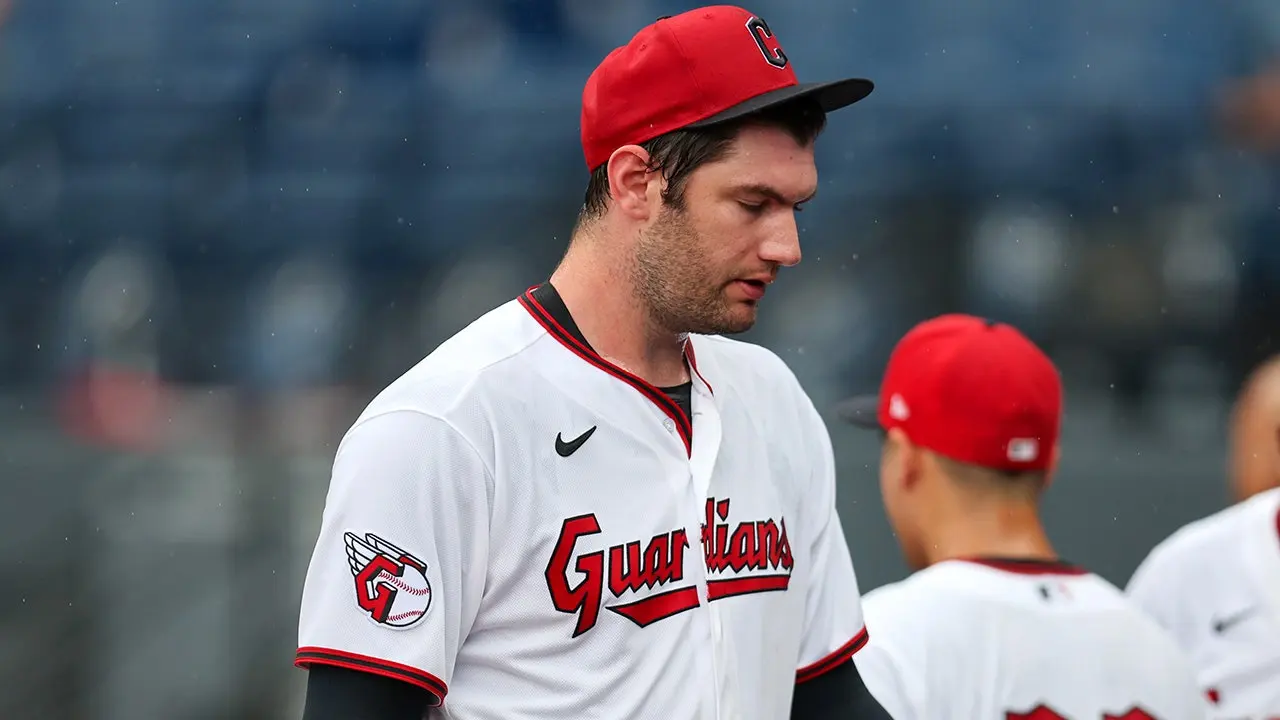
There is a sacred, almost religious silence that descends upon a historic baseball stadium when a starting pitcher is actively flirting with sports immortality. On a warm, highly humid Sunday afternoon at Progressive Field, with the air thick with the nostalgic, comforting scent of fresh-cut grass and stadium hot dogs, Cleveland Guardians starter Gavin Williams was not merely pitching a standard regular-season game; he was painting a masterpiece of sheer athletic dominance on the mound. From the very moment he threw his first pitch of the afternoon, Williams possessed the kind of electric, untouchable stuff that makes even the most seasoned, professional hitters look like bewildered schoolboys trying to hit a ghost. He carved through the high-powered Arizona Diamondbacks lineup with a relentless, mechanical precision that felt both beautiful and terrifying to watch for everyone in attendance. By the time the top of the sixth inning rolled around, the stadium’s massive scoreboard told a story of absolute, unblemished perfection: fifteen Diamondbacks had stepped up to the plate, and fifteen had walked back to the dugout empty-handed, ten of them utterly undone by the devastating, late-breaking bite of Williams’ third strike. The crowd of faithful Cleveland fans, sweltering in the summer heat, sat in a state of suspended animation, whispering in hushed tones, desperately trying to avoid mentioning the two words that could break the mystical spell: “perfect game.” The tension on the field was incredibly heavy, almost physical in its density, as Williams stood on the rubber, staring down at his glove, seemingly oblivious to the immense weight of baseball history resting on his young shoulders. In those rare, fleeting moments, baseball transcends the boundaries of a mere sport and becomes a deeply human theatrical display of focus and willpower, where one young man stands at the very center of the universe, defying the chaotic, failure-prone nature of his profession. Every swing of the opponent’s bat felt like a sudden heartbeat, every routine catch by the infielders brought a collective sigh of relief, and every thunderous strikeout brought the stadium one step closer to a legendary achievement that very few in the century-long history of the sport have ever managed to grasp.
However, baseball is also a game governed by a complex, fiercely guarded code of unwritten rules—centuries-old traditions passed down through generations of players who believe in a certain standard of honor, respect, and mutual etiquette on the diamond. That delicate boundary of competitive sportsmanship was suddenly and violently tested when Arizona’s center fielder, Tim Tawa, stepped up to the plate with one strike against him in the sixth. In a controversial move that sent a jolt of pure shock and electricity through the stadium, Tawa dropped his hands and attempted a bunt. To the purists of the game, attempting to bunt to break up a perfect game or a no-hitter is the ultimate act of disrespect, a cheap, cowardly shortcut designed to avoid a strikeout and ruin a pitcher’s historic milestone rather than earning a base hit through traditional, head-to-head combat. It violates the sacred agreement between pitcher and hitter to battle honestly in the spotlight of history. The reaction from the Guardians’ side of the field was instantaneous and white-hot with fury, led by their fiery catcher, Patrick Bailey. Bailey did not attempt to hide his utter disgust, immediately stepping out from behind the dish to exchange heated words with Tawa, making it abundantly clear that Cleveland viewed the bunt as a violation of the game’s sacred integrity. Though Tawa eventually pulled back from the bunt on subsequent pitches and instead served a clean, legitimate single into right field—officially ending both the perfect game and the no-hit bid for Williams—the damage to the collective peace of the afternoon had already been done. The magical, history-making spell had been broken in an instant, replaced by a simmering, toxic resentment that hung over the infield like a dark cloud, proving that the competitive fire of these world-class athletes cannot be easily contained when they feel their personal and professional honor has been compromised on the field of play.
As if the heavens themselves were reacting to the sudden, dramatic shift in human energy on the field, the skies above Cleveland opened up just moments later, unleashing a torrential downpour that perfectly matched the turbulent, angry mood of the players. The transition from a tense, historic baseball game to a chaotic weather emergency was almost instantaneous. Following a wild pitch from a clearly rattled Williams, who was struggling to grip the damp ball, the home plate umpire waved his hands, calling for an immediate rain delay as the grounds crew came sprinting out from the tunnels with the massive protective tarp. Yet, the physical storm was quickly eclipsed by the emotional tempest brewing near home plate. Before the tarp could even be fully unrolled over the infield grass, the simmering anger from Tawa’s bunt attempt erupted into a full-scale, benches-clearing confrontation. Players and coaches from both dugouts poured onto the field, converging near the batter’s box in a sea of jersey colors, shouting, pointing fingers, and exchanging venomous words as the rain began to pour down in absolute buckets. It was a surreal, captivating spectacle: two major league teams, drenched to the bone, standing on the edge of a muddy infield, screaming over the roar of the wind and rain while the white tarp, heavy with water, became a literal barrier between them. The physical elements of nature and the raw, unvarnished passions of professional athletes collided in a single, chaotic moment, turning a quiet Sunday afternoon into an arena of intense, theatrical conflict that held every fan left in the stands completely spellbound as they watched the drama unfold.
At the absolute heart of this rain-soaked storm was Cleveland’s first-year manager, Stephen Vogt, whose protective instincts for his young pitcher drove him straight into the center of the fray. Vogt marched out of the dugout with a swift, purposeful stride, his face etched with protective fury as he shouted heated words directly toward the Diamondbacks’ bench, sparking the scrum near the dish. While the exact insults and grievances hurled across the infield remained muffled by the howling wind and rain, the underlying message was unmistakable: the Guardians would not stand idly by while their ace was targeted or disrespected by what they perceived as cheap baseball tactics. For Cleveland, this moment felt like an agonizing case of deja vu; just weeks prior on July 9, Williams had been cruising through another perfect game bid against the Minnesota Twins when Royce Lewis also attempted a bunt, eventually breaking up the bid with a single. This repeated affront felt like a pattern, a systematic disrespect that Vogt was determined to halt once and for all, defending his squad with everything he had. The Diamondbacks, for their part, held their ground, defending Tawa’s right to do whatever it took to get on base and win a baseball game, arguing that in the modern era, there is no room for sentimental unwritten rules when a critical major league victory is on the line. This deep philosophical clash—between the romantic, traditionalist view of baseball’s sacred, unwritten codes and the pragmatic, win-at-all-costs mentality of the modern athlete—lay at the absolute core of the argument. It was a battle between old-school honor and new-school analytics, fueling a high-stakes shouting match that, fortunately, resolved without any actual physical violence, but left a lasting mark on the season’s narrative.
When the rain finally subsided and the tarp was rolled away, a strange, quiet calm washed over Progressive Field, allowing both teams to channel their lingering aggression and adrenaline back into the game itself. Regrettably for the Cleveland faithful, the long delay meant that Gavin Williams’ historic afternoon on the mound was officially over, ending his day at 5.2 innings with ten strikeouts, one hit, and one walk allowed—a spectacular stat line that will always be accompanied by a quiet, lingering sense of what might have been had the weather and the bunt not intervened. But instead of letting the disappointment and anger distract them, the Guardians used the emotional surge as high-octane fuel for the remainder of the contest. The Cleveland offense came alive with a vengeance, determined to secure a victory for their departed starter and prove their superiority on the scoreboard. Under the gray skies, they unleashed a relentless attack while their bullpen stepped up to keep the shutout alive, preserving the hard work of their ace. Rookie sensation Chase DeLauter took center stage, delivering a stellar, clutch 2-for-4 performance at the plate that drove in three crucial runs, demonstrating a poise and maturity far beyond his years. Meanwhile, Patrick Bailey, who had defended his pitcher so fiercely before the storm erupted, let his bat do the talking by crushing a towering, majestic home run, putting an emphatic exclamation point on his afternoon and sending a clear message to the Diamondbacks that Cleveland would not be bullied, intimidated, or demoralized by any opponent’s tactics. This offensive explosion proved that while they could protect each other with angry words at home plate, they were just as capable of defending their home turf with sheer athletic talent and clutch hitting when the game hung in the balance.
By the time the final out was recorded, the Guardians had secured a dominant, therapeutic 5-0 victory, limiting the frustrated Diamondbacks to just a single hit after Tawa’s controversial single in the sixth. In the grand, long-term scheme of a grueling 162-game season, a single win on a rainy Sunday afternoon in August might seem like a mere footnote in the standings, but for those who witnessed the events at Progressive Field, it was a profound, beautiful reminder of why baseball remains so deeply human. It is a game played not by cold, calculated statistics on a computer spreadsheet, but by emotional men of flesh and blood, driven by pride, tradition, and an intense, unwavering loyalty to one another. Gavin Williams may have been denied his official spot in the history books on this day, but he and his teammates walked off the wet grass having forged something arguably more valuable: a shared trial by fire that unified their clubhouse and solidified their collective identity as a team that fights for each other. The bond created in moments of high-stakes conflict often defines a championship run, and Cleveland proved they have the heart of a contender. As the fans slowly filed out into the damp Cleveland evening, with the towering stadium lights reflecting off the wet pavement of the city, they didn’t just talk about the final score or the playoff chase; they talked about the unwritten rules, the sudden storm, the passionate defense of a teammate, and the beautiful, unpredictable drama of a game where a single controversial bunt can spark a roaring fire that burns long after the rain has stopped and the field has cleared, leaving a lasting legacy on their season.