






It is only two weeks into the NFL season, but there is already a feeling in Western New York that this autumn could be special. Josh Allen, the quarterback of the Buffalo Bills, is not just winning football games; he is playing like a man possessed by purpose. Through the first two contests, Allen has thrown for 582 yards and five touchdowns, added another 92 yards and four scores with his legs, and, perhaps most remarkably, has not thrown a single interception. Those numbers alone would justify the early MVP chatter that is already beginning to circle the league, but they do not tell the whole story. To watch Allen play right now is to watch a man who has grown from a raw, talented curiosity into a complete professional. He is still the same charismatic, tough, and occasionally reckless kid from California’s Central Valley who captured Buffalo’s imagination, but there is a calmness about him. He surveys the field like a chess player, not a gambler. He takes what the defense gives him, and when the pocket collapses, he does not panic. He escapes, extends, and often turns broken plays into moments of magic. For a Bills fan base that has seen more heartbreak than confetti, this version of Allen feels like a promise being kept.
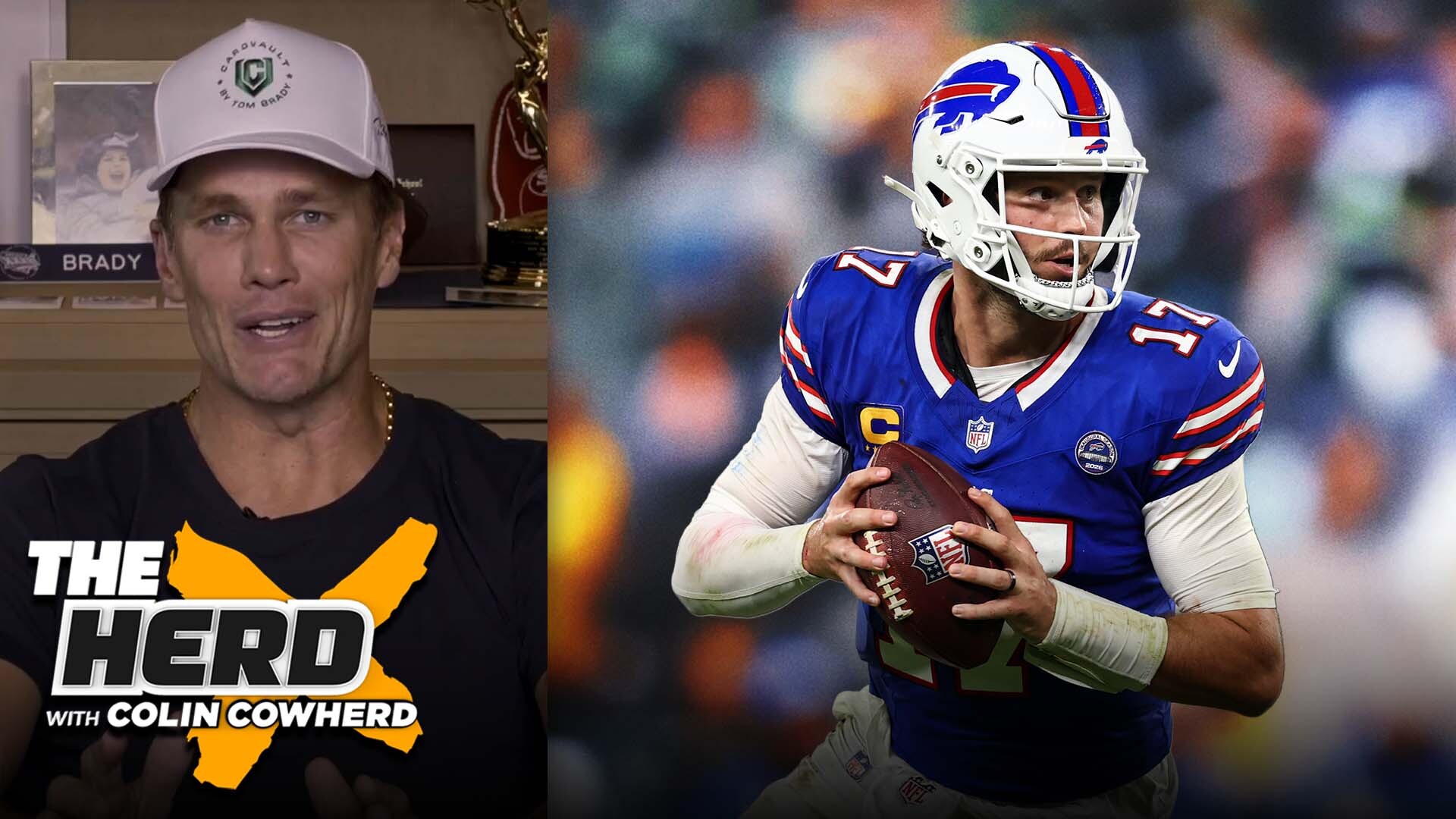
When the greatest quarterback in the history of the game talks about your development, you listen. Appearing on Colin Cowherd’s show “The Herd,” seven-time Super Bowl champion Tom Brady offered a detailed breakdown of what has made Allen so dangerous in 2025. Brady, who knows more about the pressures and joys of playing the position than anyone alive, did not fixate on Allen’s rocket arm or his rare ability to plow through defenders. Instead, he went straight to the root of the transformation. “I thought there was a lot of development that took place when he had Brian Daboll as his coordinator,” Brady said. Daboll, now the head coach of the New York Giants, spent years shaping Allen in Buffalo, and his fingerprints remain all over the quarterback’s game. The system, the terminology, the habits, the trust in the offense—all of it was forged in those early, often messy years. Brady also acknowledged the physical gifts that have always separated Allen from the pack. “He’s got the big arm, the legs and can kind of run the big plays,” he said. But what has truly impressed Brady is not the highlight reel. It is the quiet, unglamorous work that occurs between the highlights. It is the recognition that the greatest quarterbacks are not simply brilliant; they are also dependable, and dependability is a choice.
For much of Allen’s early career, the knock against him was not his talent but his willingness to give it away. He could make a breathtaking throw that left defenders shaking their heads, and then, a few drives later, he would force a pass into a crowd, lose a fumble, or take a sack that made even his most loyal supporters wince. There is a reason the phrase “bonehead” became attached to his game in that period. It was not that he was unintelligent on the field. It was that his competitive fire sometimes outpaced his judgment. He wanted to make every play. He wanted to prove that he belonged in the same sentence as Patrick Mahomes and the other young superstars. But the great ones learn that the first secret of consistency is survival. Brady, who built an entire career on protecting the football and squeezing the most out of every possession, recognized that growth immediately. “It’s always been ‘how can he eliminate the negative plays?’” Brady said. “The bonehead fumbles, the bonehead sacks and those plays are the ones that put your team behind the eight ball.” To hear a legend speak about Allen’s old flaws in the past tense is itself a tribute. It says that Allen is no longer the quarterback who gives games away with a single high-risk decision. The cannon still exists, but it now comes with a trigger discipline that once eluded him.
The most telling moment in Brady’s commentary came when he distilled the entire maturation process into a single, beautifully simple truth. “Sometimes the best play is throwing the ball away,” he said. “Playing for a second down and staying in those situations. Eliminating the negative plays. I think for him, that’s where I’ve seen his game mature the most.” This is not the stuff of viral clips or fantasy football championships. No one buys a jersey because their quarterback threw the ball into the third row on third and long. But it is this exact behavior that separates the four-time MVP from the one-and-done playoff contender. Allen has learned to concede the down to win the war. He has learned that when the defense has his wide receivers blanketed and the pocket is disintegrating, the most heroic move can be the unheroic one: to take the incompletion, live for second down, and trust that his defense will get the ball back. This shift in mindset is enormous. It is the difference between a quarterback who makes his team hold its breath and one who makes his team hold its nerve. And it is why, despite the gaudy statistics, the biggest improvement in Allen’s game is the one that appears nowhere in the box score. His turnovers are down, his dangerous sacks are fewer, and his decision-making, particularly in the red zone and near the sideline, has become surgical.
Brady’s observation does not exist in a vacuum. It is part of a larger arc that Allen has been writing ever since he was drafted in 2018. From his arrival in Buffalo, Allen was a project, an enormous talent with small-school roots and a burning desire to become great. He was not an overnight sensation like some of his peers; he was a retooled, rebuilt, and patiently developed masterpiece. He put on weight, refined his mechanics, and forged a bond with the city of Buffalo that rarely exists between superstar athletes and their fan bases. The residents of that rust-belt city see something of themselves in Allen. He works, he sweats, he bleeds, he gets knocked down, and he gets back up with the same impossible optimism. Now, with his team sitting at 2-0, with his offense humming through him, and with his own coachable obsession driving him, Allen has entered the rarified air of the NFL’s elite. The MVP race is still long, as is the season itself, but there is a clear sense that the quarterback who is currently playing in Buffalo is not the same player who used to ignore the open checkdown in order to launch a 40-yard dart across his body. He is the player that Tom Brady can watch with the professional respect of someone who knows exactly how hard it is to change your nature.
Two games does not make a career, and the NFL season is a marathon with nearly two dozen more Sundays to come. But what Allen has shown in the opening weeks is the most reliable indicator of sustained success: quiet discipline married to explosive talent. He is playing with a clear head and a full heart, and the numbers, as impressive as they are, only hint at the growth that has taken place. The 582 passing yards, the five touchdown passes, the four scores on the ground, and the perfect interception count all tell the story of a player who has mastered the balance between aggression and control. Brady’s words are a kind of passing of the torch, a gentle acknowledgment from the greatest of the great that Allen has reached a new level. The young man who once threw into triple coverage because he believed he could make any throw is now the mature leader who knows when a play is dead, when to throw the ball away, and when to trust the next opportunity. For Buffalo, a city that has waited nearly three decades for another championship, Josh Allen embodies the long-suffering and wonderfully stubborn belief that redemption is real. If he keeps playing this way, he will not just be an MVP candidate. He will be exactly the kind of quarterback Tom Brady respected most: one who never beats himself, and who leaves glory on the field not because he out-threw the world, but because he out-thought it.