

Paragraph 1: The Shocking Announcement and the Weight of a Name
The Los Angeles baseball landscape was thrown into a state of thrilling, chaotic agitation on a breezy Wednesday afternoon, as reports emerged that would fundamentally shift the trajectory of the reigning National League champions. The news, first broken by The Athletic and quickly confirmed by organizational insiders, announced that the Los Angeles Dodgers were promoting their crown jewel of the farm system, top prospect Josue De Paula, directly from Double-A. This was not a routine September roster expansion, nor was it a charitable appearance for a highly decorated minor leaguer to get a taste of the big leagues. This was a calculated, aggressive, and frankly breathtaking move by a front office that values meticulous timing, signifying that they believe a 21-year-old has not only the physical tools but the unshakeable mental fortitude to contribute to a pennant race. However, the promotion did not occur in a vacuum. The very same day, manager Dave Roberts had to address the assembled media with a grim, somber tone: Shohei Ohtani, the planet’s most transcendent baseball talent, was heading to the injured list. The juxtaposition of these two announcements created an electric, almost surreal atmosphere. One star was dimming, albeit temporarily, while a new star was preparing to ignite. The fanbase was torn between the gut-punch of losing Ohtani’s generational bat and the sheer adrenaline rush of seeing De Paula skip an entire level of development—a rare vote of confidence that speaks volumes about his readiness and the desperation of the Dodgers’ current roster depth. The jump from Double-A to the Major Leagues is a colossal leap, a chasm filled with seasoned veterans, deceptive sliders, and 100-mph heaters thrown by men who have spent their entire lives perfecting the art of humiliating young hitters. Yet, the Dodgers are betting that De Paula’s unique combination of elite plate discipline and emerging power can immediately inject life into a lineup that suddenly feels depleted. He is expected to take over the designated hitter role; the shadow of Ohtani looms large over that position, but the Dodgers are hoping that De Paula does not shrink from it, but instead uses the immense pressure as a forge to temper his undeniable raw talent.
Paragraph 2: The Roots of a Rising Star in the Dominican Republic
To fully appreciate the magnitude of this sudden, accelerated promotion, one must trace the origins of Josue De Paula, a journey that begins in the sun-drenched, baseball-obsessed streets of the Dominican Republic. Unlike the multi-million dollar international signings that often dominate the headlines, De Paula’s entrance into professional baseball was a quieter, more understated affair. The Dodgers’ deep network of scouts first spotted him while he was playing for the El Niche Academy, a renowned training ground known for producing polished, fundamentally sound players. In January 2022, at just 17 years old, De Paula inked his first professional contract with the Dodgers for a modest signing bonus of $397,500. In the high-stakes world of international free agency, that figure is a relative drop in the bucket, a testament to the fact that he was an under-the-radar find, a diamond initially obscured by the glare of more hyped prospects. But the Dodgers’ player development machine saw something special in the wiry, athletic teenager. They saw a remarkably advanced eye at the plate—a patience and a pitch recognition ability that is often the last tool to develop in a professional hitter. From his very first days in the Dominican Summer League, De Paula showcased a preternatural calm in the batter’s box, drawing walks at an elite rate and rarely chasing pitches outside the zone. As he climbed the ladder through Low-A and High-A, his body began to transform. The lean, projectable frame started filling out with muscle, and the line drives that once nestled into the gaps began to carry over the outfield fence. His coaches marveled not only at his physical development but at his emotional maturity. He was a sponge, voraciously absorbing every piece of advice, demanding extra video sessions, and constantly tinkering with his swing mechanics to maximize his launch angle without sacrificing his elite contact rate. The raw tools that were hinted at during his time in El Niche Academy were now blossoming into a full-fledged five-tool profile, making him the centerpiece of a Dodgers farm system that prides itself on being the gold standard in baseball.
Paragraph 3: A Statistical Breakthrough and the Futures Game Coronation
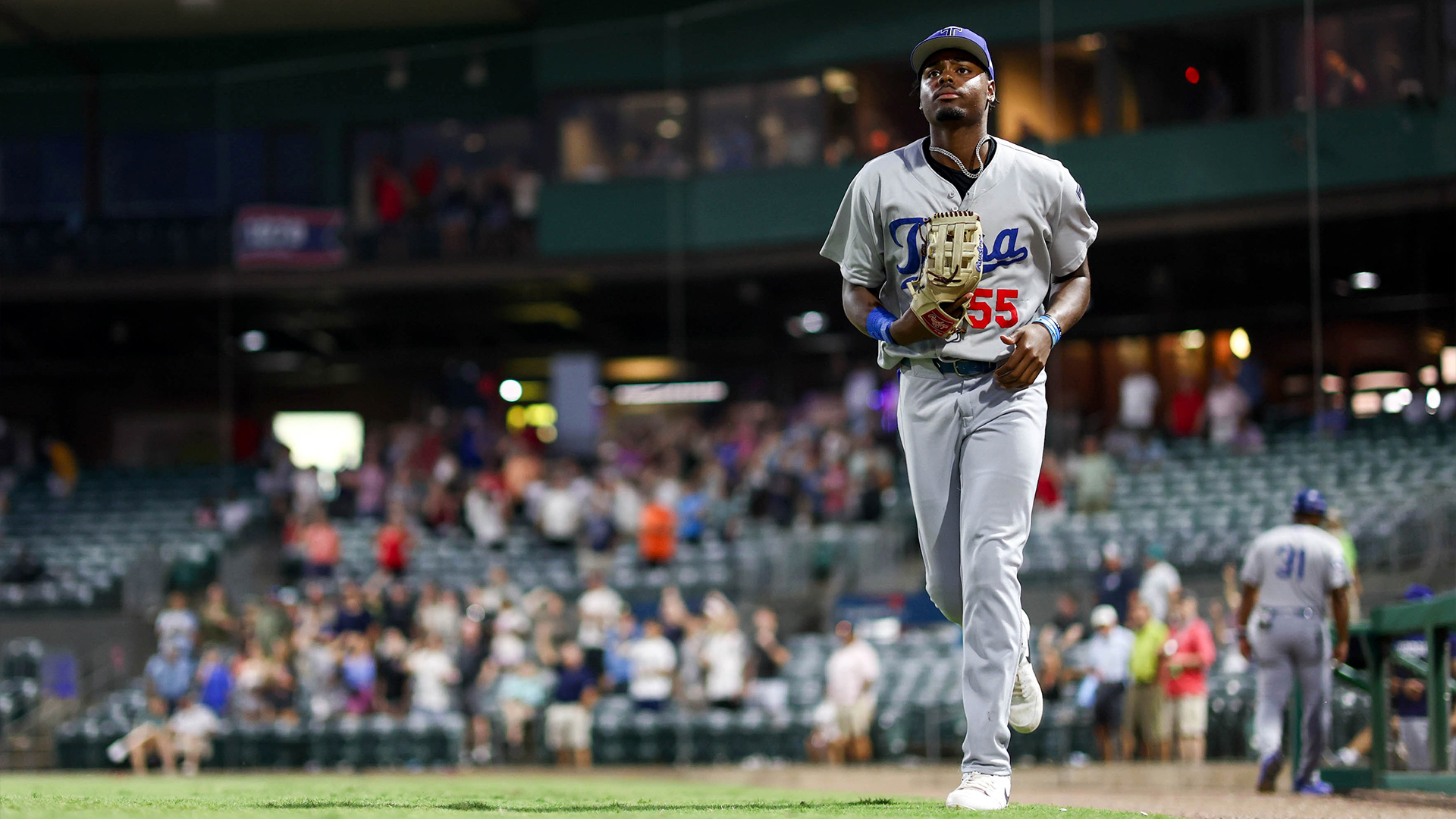
The 2025 minor league season was the definitive coming-out party for Josue De Paula, the year he silenced any lingering doubts about his ultimate ceiling. Assigned to the Double-A Tulsa Drillers, the highest level of the minors before the Majors, De Paula was expected to be challenged, perhaps even hemmed in by the advanced pitching. Instead, he dominated the competition with an authority that forced the Dodgers’ hand. Over 123 games and 588 plate appearances, he terrorized Texas League pitchers, slashing a monumental .303/.401/.547. His 27 home runs were a revelation, especially considering that his defensive value as a corner outfielder was always expected to be bolstered by his bat, not necessarily his power. But he did not stop there; he also swiped 31 bases, showcasing a delightful blend of power and speed that is the hallmark of the modern five-tool superstar. This 25/25 season placed him in rarefied air, but his most critical feat was his plate discipline. His walk rate hovered around 12%, while his strikeout rate stayed below a remarkably low 20%, indicating a hitter who controls the strike zone with veteran precision rather than reckless aggression. However, the moment that catapulted De Paula from a “trader talk” prospect into a national phenomenon occurred at the 2025 All-Star Futures Game. In front of a national television audience and the collective gaze of every Major League front office, De Paula put on an absolute show. He smoked a towering home run that cleared the outfield wall with ease, and later in the game, legged out an infield single with blazing speed, demonstrating the complete package of power, speed, and instincts. Named the game’s Most Valuable Player, he solidified his status as the No. 6 overall prospect in baseball and the undisputed top outfielder in the minors. This performance was not a fluke; it was the culmination of years of internal development. His advanced approach at the plate, which allows him to hit lefties and righties with equal proficiency, meant that he was not a platoon piece but a future everyday anchor. The statistical profile was undeniable, and the aggressive leap to Los Angeles became not just a possibility, but an inevitability, accelerated by the unfortunate injury to Ohtani.
Paragraph 4: The Ohtani Void and the Colossal Pressure of the DH Role
The circumstances surrounding De Paula’s promotion are as bitter as they are sweet, rooted in the sudden and unexpected injury to Shohei Ohtani. While the Dodgers have remained tight-lipped about the exact details of the ailment, the announcement that Ohtani would be shelved sent immediate shockwaves through the sport. Ohtani is not merely a hitter; he is a gravitational anomaly. He draws the attention of every pitcher, every analyst, and every fan in the stadium, and his mere presence in the lineup protects the hitters around him, ensuring they see better pitches. Without him, the Dodgers’ offense faces a void that cannot be filled by any single player. Opposing managers can now pick apart the middle of the order, attacking the replacements with a freedom that was previously unimaginable. Enter De Paula. The Dodgers are asking this 21-year-old to step into the designated hitter spot, a position steeped in the legacy of the game’s greatest sluggers and the recent dominance of Ohtani. The mental weight of this assignment is staggering. He will be facing Major League arms that have perfected the art of sequencing, mixing a devastating two-seam fastball with a sharp slider that breaks in on the hands. He will see pitchers who study video obsessively, looking for any minute hole in his swing. The pressure to perform immediately is immense, but the Dodgers’ scouting reports and the player’s own demeanor suggest he possesses the psychological resilience to handle it. His unflappable nature, so often praised by his minor league managers, suggests a player who views pressure as a privilege, not a burden. He will have inevitable slumps and strikeouts, but the organization is betting on his ability to grind through the tough at-bats, to work counts, and to drive in runs when the game is on the line. The young man from the Dominican Republic is not expected to be a savior, but rather a stabilizing presence, a professional bat that can keep the Dodgers competitive while the superstar heals and returns to reclaim his throne.
Paragraph 5: The Human Side of the Call—A Dream Realized in Real-Time
Beyond the box scores, the analytics, and the strategic depth charts, there exists the profoundly human story of a 21-year-old having his life upended in the span of a few hours. Imagine the phone call—the voice of his agent on the other end, calm yet urgent, delivering the surreal news: “Josue, you are going to Los Angeles. You are going to the big leagues.” The initial shock, the disbelief, the overwhelming swell of emotion that makes the room spin. He is likely sitting in a modest apartment in Tulsa, Oklahoma, surrounded by the paraphernalia of a minor league existence, when the weight of that moment crashes down upon him. His mind races to his family back in the Dominican Republic—their sacrifices, the endless bus rides to the academies, the late-night training sessions under floodlights. The flight to Los Angeles is a blur of nervous energy; the city itself feels like a foreign planet, its sprawling highways and palm trees a stark contrast to the barrios he left behind. When he walks into Dodger Stadium for the first time, the sheer scale of the cathedral is awe-inspiring. He sees the famous pavilions, the pristine dirt of the warning track, and the shimmering lights that have illuminated the careers of legends like Jackie Robinson and Fernando Valenzuela. In the clubhouse, he catches a glimpse of Ohtani, who, despite his injury, offers a quiet word of encouragement, a silent nod of shared understanding of the immigrant dream. The presence of his new teammates—superstars he once collected in baseball cards—grounds him. In that moment, the fear is immense, but it is outweighed by an unshakeable confidence borne from years of hard work. He does not feel like a replacement; he feels like a successor. The thrill of simply putting on the iconic blue jersey is electrifying, but the realization that he is about to step onto the biggest stage in the world, representing the hopes of an entire nation, transforms that thrill into a fierce determination to prove his worth.
Paragraph 6: The Future Arrives, Brilliant and Unafraid
As the Dodgers prepare to take the field with their new rookie in the lineup, the narrative transcends the immediate game. This move is a declaration of intent, a vivid illustration of the franchise’s forward-thinking philosophy and its unwavering faith in its player development pipeline. De Paula’s promotion is not just a solution to a temporary injury; it is a glimpse into the future core of a dynasty. The organization is waving the banner of youth, suggesting that their pipeline remains the envy of the league and that they are unafraid to let talent ascend on its own merit, regardless of age or experience level. For De Paula, this is the beginning of a legacy that could define an era. The path from El Niche Academy to Dodger Stadium is a stark reminder that baseball is a global game, one that welcomes raw talent and refines it into greatness. He carries the weight of his family, his country, and an entire fanbase’s expectations, yet he does so with a humility that resonates deeply within the clubhouse. The statistics will be scrutinized, the strikeouts will be analyzed, and the inevitable slumps will bring criticism, but the core belief in his ability remains unshakeable. The Dodgers are betting that the same discipline that transformed a $397,500 investment into the No. 6 prospect in the world will transform him into a playoff hero and a future MVP candidate. As he steps into the batter’s box for his first Major League at-bat, the atmosphere will be electric, a cacophony of cheers and nerves. It is a singular moment that embodies the beautiful, cyclical nature of sports—the passing of the torch from one generation to the next. The shadow of Ohtani looms large, but it does not obscure the light of this new dawn. The future has arrived, and for Josue De Paula, it is written in the brilliant hues of Los Angeles blue, ready to be authored in the pages of baseball history.