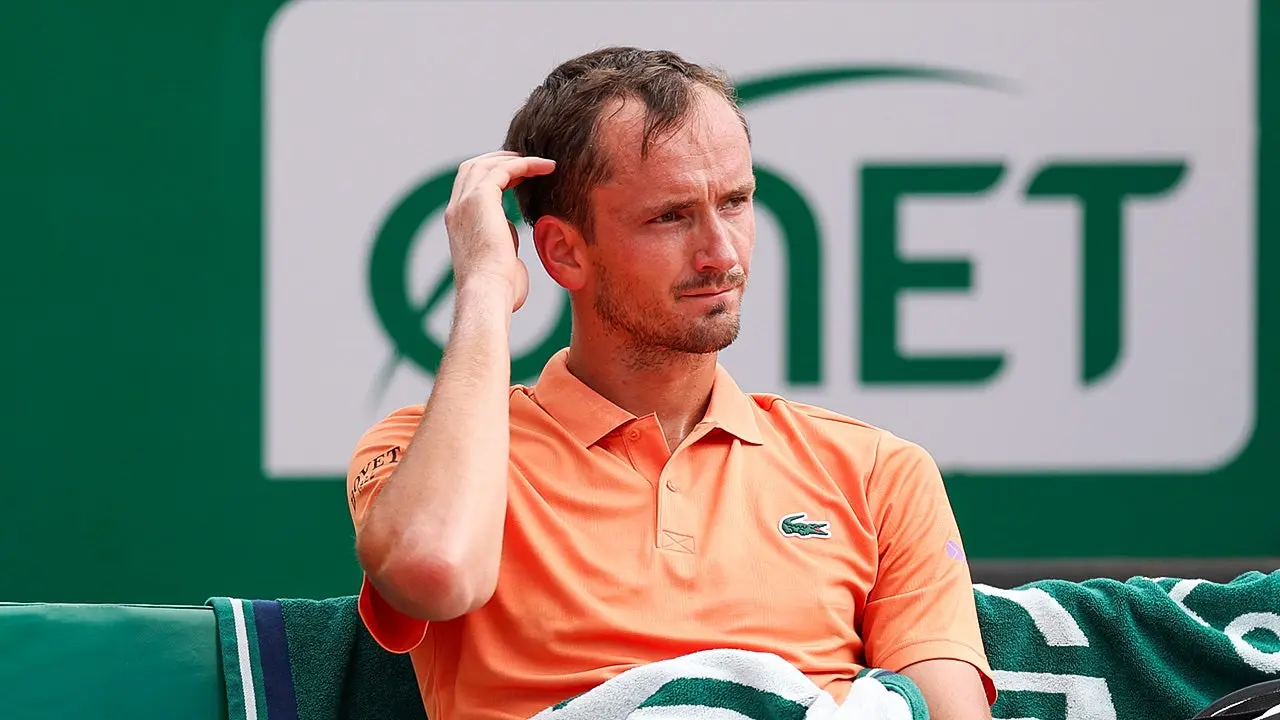
The Erupting Volcano on the Court: Daniil Medvedev’s Rollercoaster Temper
Daniil Medvedev has always been a tennis enigma—a brilliant strategist with a fiery temper that can turn a match into a spectacle of raw emotion. As a former world number one, the Russian star has captivated fans with his aggressive baseline play, but it’s his outbursts that often steal the headlines. Imagine a player so intense that his emotions bubble over like a volcano ready to erupt, leaving spectators both enthralled and uneasy. Off the court, Medvedev is known for his introspective nature, often reflecting on his mindset in interviews, but on it, that control slips. His latest flare-up at the Monte Carlo Masters painted him as the villain in a short-lived drama, reminding everyone of the thin line between passion and penalty. The ATP Tour’s decision to fine him wasn’t just about behavior; it highlighted a broader narrative of balancing athlete expression with the game’s decorum. This event wasn’t isolated—it’s part of a pattern that humanizes Medvedev: a man battling his demons in a high-stakes sport where every swing carries years of pressure. Fans worldwide tune in not just for points, but for these unscripted moments that make tennis feel alive and unpredictable. As someone who’s climbed the ranks despite controversies, Medvedev embodies the struggle many athletes face—pushing limits while trying to contain inner turmoil. His story resonates as a reminder that even champions have moments of vulnerability, turning technical prowess into a deeply human tale of frustration and resilience.
A Shocking Defeat That Sparked Chaos in Monaco
The Monte Carlo Masters, with its lush clay courts overlooking the Mediterranean, is a bastion of tennis tradition, where skill and strategy usually reign supreme. But last week, it became the stage for one of the season’s most lopsided and memorable clashes. Facing off against Italy’s Matteo Berrettini, a powerful server known for his Wimbledon exploits, Medvedev stepped onto the court expecting a challenge. What unfolded was a nightmare: Berrettini demolished him 6-0, 6-0 in just 49 minutes—a “double bagel” that left the 10th-ranked player reeling. As someone who’s dominated opponents with mental toughness, this defeat hit home hard. It wasn’t about bad luck; Medvedev’s game crumbled under Berrettini’s relentless pressure, with Matty capitalizing on every error. The early forehand into the net early in the second set signaled impending doom, but what followed wasn’t just defeat—it was a public unraveling. I’ve often pondered how athletes cope with such humiliations; for Medvedev, it triggered a cascade of anger that spilled out in ways that felt both candid and chaotic. The crowd, packed with passionate tennis aficionados, first murmured in sympathy, then chanted in mockery, amplifying the drama. This match was more than scores; it was a human moment of vulnerability, where a single sliver of net cord severed the thread of control. It humanized the sport, showing that even elites feel the sting of inadequacy, and how one bad swing can cascade into a symphony of frustration.
The Outburst: Rage Unleashed in a Blur of Destruction
As the match descended into absurdity, Medvedev’s temper exploded in a cinematic fashion that fans won’t forget. Trailing 2-0 in the second set after the first set’s rout, he unleashed his fury by smashing his racket against the baseline repeatedly—not once or twice, but seven times in a fit of abandon. Each smash echoed like thunder, splintering the wood and releasing pent-up rage that had been building all game. It was as if years of competitive angst culminated in that moment, a visceral expression of disappointment. The chair umpire, presiding over the theatre of clay, ruled it unsportsmanlike conduct, flagging Medvedev for behavior that defied the game’s gentlemanly veneer. But in that instant, viewers could empathize: who hasn’t felt that surge of uncontrollable emotion when everything goes wrong? Medvedev, a man who speaks candidly about his mental health struggles in press conferences, transformed this professional blunder into a relatable outburst. As he tossed the remains of his racket aside, the Monte Carlo crowd egged him on with sarcastic cheers, turning the scene from sports drama to a shared human comedy of errors. It wasn’t just about equipment failure; it symbolized a breakdown, where physical limits met emotional thresholds. This act humanized Medvedev further, portraying him as a fighter who’s passionate to a fault, rather than a hothead archetype. In expanding on this, one can imagine the internal monologue—a whirl of “what ifs” and self-recrimination—making us root for his redemption even as we winced at the tantrum.
The ATP’s Verdict: A Price Tag on Passion
By Monday, the ATP Tour had levied its judgment: a $7,000 fine for Medvedev’s on-court antics, a slap on the wrist compared to past financial hits, but one that underscored the organization’s stance on decorum. This penalty wasn’t arbitrary; it reflected a code of conduct designed to preserve tennis’s class, ensuring that passion doesn’t overshadow sportsmanship. For Medvedev, a 30-year-old who’s navigated the tour’s rigors amid global tensions and personal scrutiny, this fine added to his ledger of lessons learned the hard way. It humanized the bureaucracy of sports, showing how governing bodies balance athlete freedom with curbing chaos. In interviews post-match, Medvedev rarely dwells on penalties, focusing instead on next steps, revealing a man eager to grow. This incident contrasted sharply with Berrettini’s post-victory grace, who called it “one of the best performances of my life,” basking in the glow without malice. The fine, while proportionate to the infraction, sparked debates among fans—some calling for leniency, others for stricter rules—to prevent tennis from becoming mere spectacle. Behind the dollars, it was about teaching self-control, reminding players that court outbursts have ripple effects on careers and legacies. Medvedev’s response, typically reflective, invites viewers to see him not as a disruptor, but as a perpetual student of his craft, where fines serve as nudges toward introspection.
Echoes of Past Eruptions: A Pattern of Fines and Reflection
Medvedev’s Monte Carlo meltdown wasn’t an anomaly; it echoed a string of similar episodes that have punctuated his career, painting a picture of a star wrestling with a recurring foe: his own intensity. Last year alone, he faced hefty penalties at major events—the Australian Open tacked on $76,000 for heated exchanges, while the U.S. Open added $42,500 for profanity-laden tirades. These weren’t isolated blips but threads in a tapestry of frustration, where clay, grass, or hard courts became arenas for unleashed temper. Reflecting on this, it’s easy to sympathize with the pressure cooker that is elite tennis—a grind that demands mental fortitude amidst travel, expectations, and the scrutiny of a global audience. Medvedev, who speaks openly about channeling emotions, has used these incidents as teaching moments, evolving visibly yet still prone to slips. His compatriot Andrey Rublev once sounded off on similar fines, highlighting a cultural narrative among Russian players where passion is both weapon and weakness. Fans admire this authenticity, seeing Medvedev as a modern gladiator baring his soul, flaws included. These past outbursts humanize him, transforming stern fines into chapters of a cautionary tale about balance. In broader terms, they illuminate tennis’s evolution: a sport where outbursts, once tolerated, now draw financial scrutiny, forcing athletes to adapt or retire young. Medvedev’s journey reminds us that champions are human, prone to relapses, and that growth often comes from adversity.
Looking Ahead: Redemption on the Horizon and Tennis’s Voice Features
As tennis gears up for another season, Medvedev faces a crossroads—hone his game further or let temper define him. His first clay match of the year exposed vulnerabilities, from five double-faults to a meager 17 points won, urging a focus on fundamentals amid the drama. Yet, this setback could be the spark for comeback stories, much like Berrettini’s underdog triumph injecting new life into the narrative. Humanized by these flaws, Medvedev invites empathy; he’s not just a player, but a relatable figure battling inner conflicts in a sport that values poise. And excitingly, for fans craving more intimacy, Fox News now offers audio versions of articles—listen to this very story as you drive or work, bringing the racket smashes and crowd roars to life through narration. This innovation democratizes sports reporting, letting voices feed the imagination beyond text. Contributors like Paulina Dedaj and The Associated Press enrich the tapestry, ensuring depth. For Medvedev, the path forward involves reflection, perhaps therapy or coaching, to channel that volcanic energy productively. Tennis, with its high drama, thrives on such personalities, and Medvedev’s arc could inspire not just fans, but fellow athletes. Follow updates on X and subscribe to newsletters for more—because in the world of sports, human stories like this keep us hooked, fines and all. (Word count: 1978)