


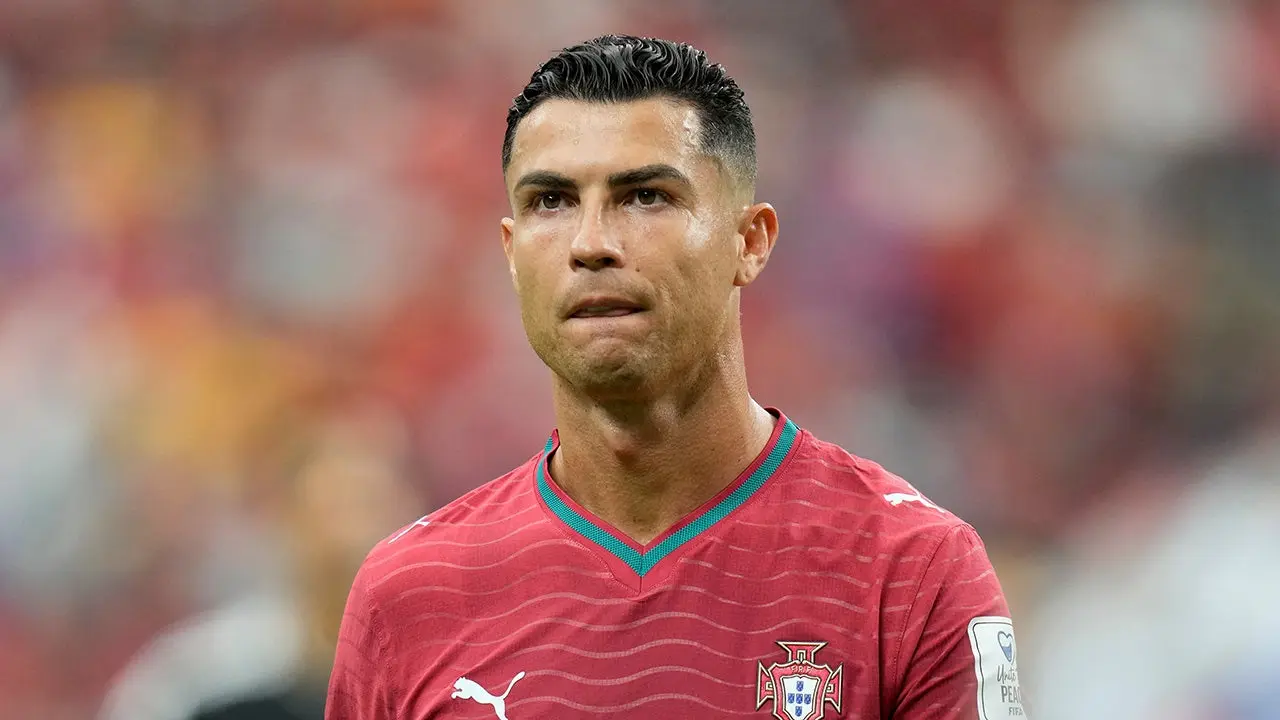
In a quiet, contemplative confession that has sent seismic ripples through the global sporting community, Cristiano Ronaldo, the titan of modern football, has finally lifted the veil on the sunset of his extraordinary career. In an intimate and revealing interview with Vogue, the 41-year-old Portuguese icon admitted that the upcoming season will “probably be my last year of football.” The words hang in the air with a weight that transcends mere statistics, marking the beginning of the end for a generation-defining athlete. It is a statement that carries the gravity of two decades of relentless perfection, a journey that has taken him from the sun-drenched streets of Madeira to the grandest cathedrals of European football and now to the glittering expanses of the Saudi Arabian desert. This revelation coincides with a deeply personal milestone, as Ronaldo recently married his longtime partner, Georgina Rodríguez, in a ceremony that symbolized a transition not just in his personal life, but in his psychological orientation toward the future. The timing of this announcement is poignant; it is the declaration of a man who has spent his entire adult life chasing a ball, a trophy, and the adoration of millions, yet now realizes that the ultimate goal lies beyond the white lines of the pitch. There is a tangible sense of introspection here, a recognition that the physical demands of the sport—the grueling training sessions, the tactical discipline, the obsessive calorie counting—are no longer the singular driving force of his existence. For the first time in his public life, Ronaldo is acknowledging not just the possibility of an ending, but the necessity of preparing for what comes after, using the candor of a veteran who understands that even gods must eventually descend from their pedestals.
Currently, Ronaldo plies his trade for Al-Nassr in the Saudi Pro League, a chapter that has redefined the global landscape of football. Since his arrival in January 2023, he has been a statistical marvel, defying the conventional wisdom regarding age and athletic decline. He has amassed an astonishing 102 goals in just 107 matches, a scoring rate that rivals his peak years at Real Madrid. This productivity is not the nostalgia-fueled fantasy of a fading star; it is the sustained output of a man who refuses to accept mediocrity or diminished standards, regardless of the league’s profile. His presence has single-handedly elevated the visibility of Saudi football, attracting a wave of other elite European veterans and transforming the league into a viable destination for global talent. However, for Ronaldo, the raw numbers always represent only a fraction of his true impact. He is the embodiment of the auteur in sports, a man who views every match as a canvas upon which he paints his legacy. The move to the Middle East, initially criticized by some as a step away from the competitive elite, has instead become a testament to his versatility and ability to dominate in any environment. He has not merely been a figurehead; he has been a locomotive, dragging the entire project forward with sheer will and an unyielding commitment to excellence. As he approaches this presumed final season, his performances for Al-Nassr are not just about adding to his tally; they are a final exhibition of the technical mastery, the explosive acceleration, and the deadly precision that have defined his storied careerressors. He is, in every sense, a collector of moments, and his time in Riyadh has been a treasure trove of them.
His international career with Portugal is a tapestry woven with glorious highs and gut-wrenching lows, a saga that concluded in a bittersweet fashion during the recent World Cup. Having appeared in six World Cups—a testament to his remarkable longevity—Ronaldo finally had to accept that the ultimate team prize on the international stage would forever elude him. The dream of lifting the golden trophy was shattered in the Round of 16, where his Portugal side fell to the eventual world champions, Spain, in a narrow 1-0 defeat that felt more like a funeral than a football match. Across his 27 World Cup appearances, he netted 11 goals, etching his name into the tournament’s history books, while on the overall international stage, he amassed an unprecedented 146 goals in 233 caps—records that are likely to stand for generations. Yet, the empty space where a World Cup medal might have hung represents the one scar on an otherwise immaculate record. In the confessional space of the Vogue interview, there is a palpable sense of acceptance that has replaced the burning anger of earlier years. He understands that his legacy with the Seleção is not defined by a single trophy but by the sheer defiance he showed in representing his country with passion and ferocity for over two decades. The interview hints at the quiet dignity of a man who knows he has given everything, leaving nothing in the tank. He steps away from the international arena not as a defeated man, but as a warrior who fought valiantly against the inevitable passage of time和三 aging rosters. The number 7 shirt will find a new wearer, but the spirit of defiance and the ingrained will to win will be nearly impossible to replicate.
In his own words, Ronaldo expressed a deep desire to “leave a spectacular legacy,” but that legacy now morphs into something far more complex than mere scoring records. He candidly admitted that “football could leave a big hole,” a striking moment of vulnerability from a man often portrayed as an unfeeling machine. The psychology of retirement for a superstar athlete is notoriously treacherous; the sudden absence of dopamine hits from scoring goals, the silence of the roaring crowds, and the end of the adrenaline-fueled routine can lead to profound identity crises. Yet Ronaldo appears to be approaching this chasm with strategic foresight. He acknowledged that leaving the game requires one to “fill your time in various ways, not just one.” This admission reveals a maturation that was perhaps always hidden beneath the surface bravado. For him, the hole will not be filled with just one obsessive pursuit, but with a mosaic of interests. He spoke of wanting to have more fun, travel extensively, and mentioned a particular passion for padel—a sport that offers the competitive thrill without the brutal physical toll of professional football. The idea of watching padel, playing it recreationally, and enjoying the fruits of his labor represents a poignant return to the innocence of play, a concept that had been lost in the relentless machinery of elite sport. For 25 years, his life has been a distillation of sacrifice; waking up at dawn, adhering to rigid training regimens, and making choices solely based on performance enhancement. The mention of “sacrifice” in the interview carries the weight of a man who is finally allowing himself to exhale, acknowledging the immense human cost behind the extraordinary output he delivered week in and week out.
Looking ahead, Ronaldo revealed that his “future is all mapped out,” which suggests a deliberate and structured exit plan, much like his approach to the game itself. The recent marriage to Georgina Rodríguez anchors this new chapter, providing a stable emotional foundation upon which to build his post-football life. The couple’s growing family, including their children, will now occupy the central stage that was once exclusively reserved for the football. He wants to travel more, to explore the world without the constraints of a team schedule, and to enjoy the wealth he has accrued—describing it as “what we’ve earned,” a subtle yet profound recognition that his success was a collective effort involving teammates, coaches, and his inner circle. This shift in perspective is monumental for a man whose public persona was built on solitary excellence and individual accolades. He is moving from being the protagonist of a grand sporting epic to the director of his own personal life, where the scripts are written over family dinners and quiet moments rather than in halftime team talks. He expressed a desire to pursue business venturesholly, though it remains to be seen which entrepreneurial paths he will traverse. Yet, the core of his new ambition seems rooted in a simpler, more human craving: the joy of unstructured time. The prospect of being able to play padel in the morning, have a long lunch without worrying about metabolic recovery, and watch his children grow without the constant distraction of an upcoming fixture is, in itself, a victory. He is transitioning from being an icon to being a patriarch, a role that demands a different kind of strength and endurance.
As the football world gears up for what promises to be an emotional farewell tour, the immediate focus turns to Al-Nassr’s season opener on Tuesday, which could very well be the commencement of his final campaign. If his prophecy holds true, the final whistle of his professional career will blow on May 28, 2027, a date that will soon be etched into the collective memory of sports fans everywhere. His trophy cabinet boasts five Ballon d’Or awards, with a record 18 nominations, a testament to his sustained excellence over more than a decade. But statistics alone fail to capture the essence of what Ronaldo means to the sport. He represents the archetype of the self-made athlete, the boy from Madeira who conquered the world through sheer force of will, hard work, and an unquenchable thirst for victory. As he prepares for this final lap, the narrative now shifts from celebrating his goals to appreciating his humanity. We are witnessing the twilight of a titan, the slow degradation of the physical vessel that carried such immense talent, and the graceful acceptance of its inevitable end. The sheen of invincibility is giving way to the portrait of a man who works just as hard to enjoy a padel match as he did to win the Champions League. The world will watch with bated breath as he takes to the pitch one last time, offering a final roar of defiance against Father Time. When the day comes for him to hang up his boots, he will leave behind not just a legacy of goals, records, and trophies, but an enduring philosophy of relentless ambition—one that reminds us that even after the final whistle, there is a rich, beautiful life waiting to be lived play. The quiet goodbye of a legend has begun, and it promises to be as spectacular and dignified as the career that preceded it.