

The Great Shuffle: A Human Guide to College Football’s Chaotic 2026 Realignment
Imagine waking up one morning to find that the neighborhood you’ve lived in for fifty years has been annexed by a foreign city, that your beloved local supermarket has been bought out by a national chain, and that the friendly rivals you played every Thanksgiving have moved across the country to start a new life. That’s precisely what the college football landscape feels like heading into the 2026 season, where the tectonic plates of tradition, geography, and regional pride have shattered and reformed in ways that would make a cartographer weep. We are witnessing the most radical reshuffling of the sport’s conferences since the dawn of the BCS era, with a staggering twenty-two teams switching allegiances ahead of the fall of 2026. While the so-called “Power 4” leagues—the Big Ten, SEC, Big 12, and ACC—have managed to hunker down and stay stable for another cycle, the rest of the FBS looks like a frantic game of musical chairs. For the casual fan, this is merely a set of cryptic acronyms on a television screen; but for the die-hard alumni, the players, and the small-town communities that live and die by their school’s uniform, it’s a gut-wrenching recalibration of identity. We’re not just changing schedules; we are changing family trees, vacation plans, and the very definition of what it means to be a “conference champion.” But beyond the dry press releases and the official university announcements lies a deeper story of hope, betrayal, survival, and the relentless pursuit of relevance, so let’s take a humanized walk through this stunning new map and figure out exactly who is going where, and more importantly, why it matters.
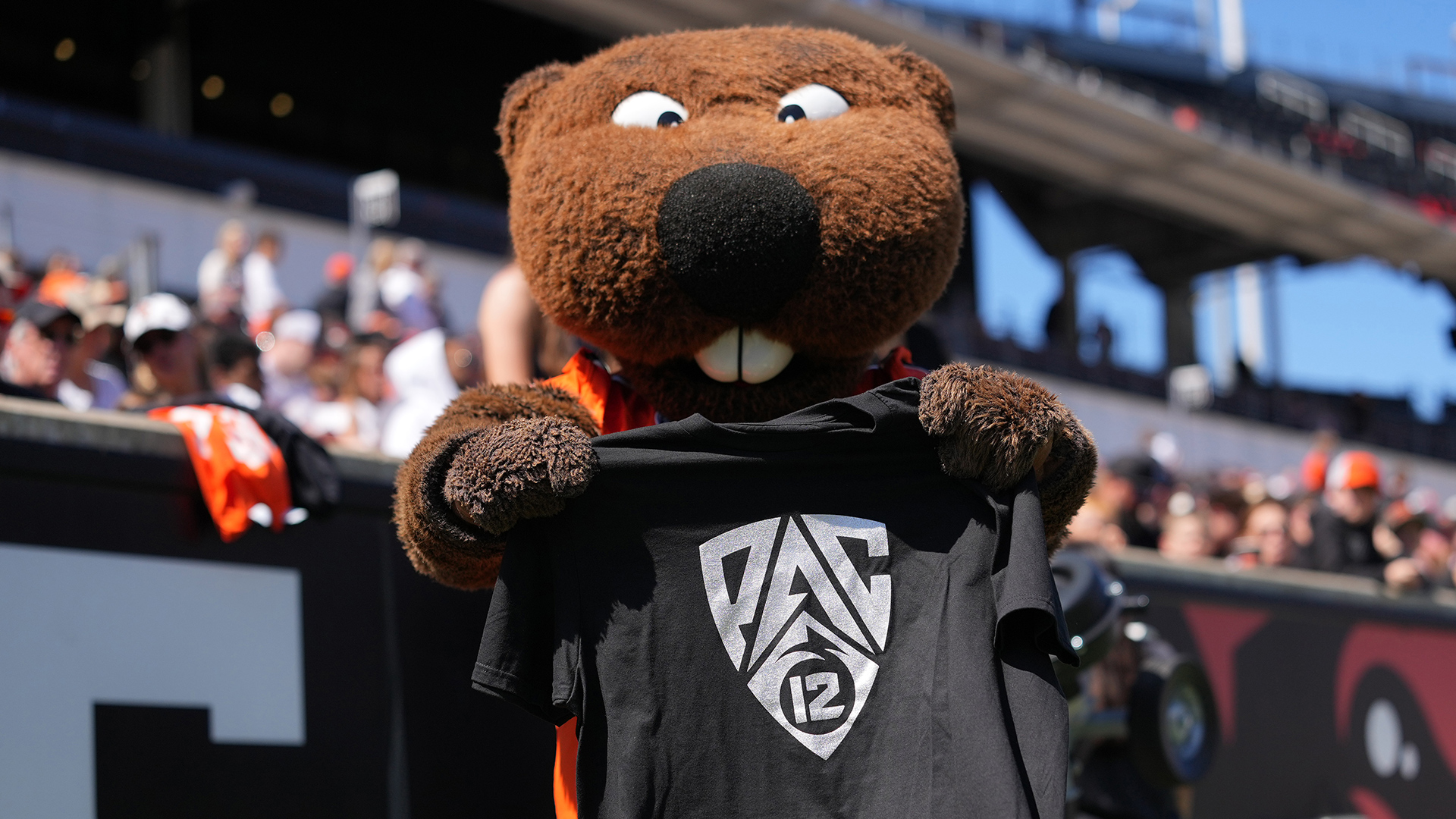
The most dramatic resurrection story in this entire saga belongs to the Pac-12, a conference that was left for dead just over a year ago, when it was mercilessly cannibalized by its wealthier peers. After UCLA, USC, Oregon, and Washington bolted for the Big Ten, and Arizona, Arizona State, Utah, and Colorado ran off to the Big 12, the league was left with just two orphaned children: Oregon State and Washington State. For over a year, these two schools—the Beavers and the Cougars—were forced to play a nomadic existence, scheduling games against whoever would take their calls, scrambling for revenue, and looking in the mirror at a brand that had shrunk from the glorious “Conference of Champions” to the “Conference of Two.” But now, against all odds, the Pac-12 is rising from its own ashes for the 2026 season, bolstered by a desperate influx of new blood. The conference has expanded to eight football-playing members, welcoming a formidable group of hungry institutions. Boise State, the blue-turfed giant-killers from Idaho, have finally shed their Mountain West skin to join the party, bringing with them a rabid fanbase and a history of toppling the blue bloods. They are joined by Fresno State, San Diego State, Colorado State, and Utah State—all refugees from the Mountain West who smelled survival in the Pac-12’s resurrection. Perhaps the most intriguing addition is Texas State, which jumps all the way from the Sun Belt, a school looking to elevate its profile under the bright lights of a Power conference moniker. The holdovers—Oregon State and Washington State—remain, acting as the emotional anchors of this newly formed collective. While the 2026 Pac-12 may lack the historical luster of Stanford and Cal, it is a scrappy, competitive, and geographically sensible football league. Even Gonzaga has joined for basketball, bringing a hoops pedigree that will make the new league electric on the hardwood, proving that while the old West Coast order has crumbled, the spirit of competition lives on, driven by schools eager to prove they belong on the biggest stage.
On the flip side of that Pac-12 renaissance sits the Mountain West, which has been hit by a five-team exodus and is scrambling to hold the fort. Having lost Boise State, Colorado State, Fresno State, San Diego State, and Utah State to the Pac-12, the conference found itself in a precarious position, losing the very teams that gave it national credibility. However, the Mountain West is fighting back with a fascinating mix of established programs and a historic rookie. They poached Northern Illinois from the Mid-American Conference, a team known for its fierce defense and ability to pull off mind-boggling upsets, like their famous 2023 victory over Notre Dame. They also brought in the University of Texas-El Paso (UTEP) from Conference USA, a program desperately trying to carve out a niche in the desert southwest. But the true headliner for the Mountain West is the addition of North Dakota State University—the Bison. This is the human-interest story of the decade. NDSU has absolutely dominated the Football Championship Subdivision, winning ten national titles and establishing themselves as the gold standard of FCS football. For years, fans have debated whether they could hang with the big boys, and now, in 2026, they are finally taking the leap into the FBS. Imagine the excitement in Fargo, North Dakota, as the Bison roll into Las Vegas to take on UNLV, or fly to Hawaii for a road trip that spans 3,800 miles. It’s a culture shock for these players who are used to small-town rivalries, but it’s a testament to their ambition. The holdovers—Air Force, Hawaii, Nevada, New Mexico, San Jose State, UNLV, and Wyoming—form a solid core of quirky, travel-heavy programs that now have a chance to win a conference championship without having to run through the perennial BCS-busting Broncos of Boise State. It’s a irony of realignment that the Mountain West, once considered a mid-major powerhouse, is now the stepping stone for someone else’s rise, but the addition of NDSU brings an infectious energy that could redefine the league’s identity.
The ripples of this chaotic realignment have spread far beyond the Rocky Mountains, creating a dizzying game of pinball among the other Group of Five conferences. The Mid-American Conference (MAC), historically a bastion of regional sanity played on cold Tuesday nights in Ohio and Michigan, lost Northern Illinois to the Mountain West. To fill that void, they have added the Sacramento State Hornets, a school making the monumental jump from the FCS Big Sky Conference. The cultural juxtaposition is staggering: Sacramento State, a California school that plays near the Pacific coast, will now be traveling to Buffalo, Toledo, and Akron for conference games in the dead of winter. It’s a logistical nightmare and a fascinating social experiment; one can only imagine the culture shock when the California kids step off the bus into a snowstorm in Kalamazoo. The Sun Belt Conference, meanwhile, played a one-for-one swap, gracefully waving goodbye to Texas State—who packed their bags for the Pac-12—and welcoming Louisiana Tech from Conference USA. This maintains the Sun Belt’s strength at fourteen teams, but it also highlights the relentless pursuit of upward mobility that defines modern college football. Louisiana Tech, located in Ruston, Louisiana, brings a proud football history and a passionate fanbase to a league that has become remarkably competitive. Over in Conference USA, the losses are piling up. Losing both Louisiana Tech and UTEP drops the league down to just ten members, a noticeable dent in its footprint. Still, the holdovers—which include upstarts like Liberty, Jacksonville State, and a surprisingly competitive Delaware squad—are hoping to carve out a new identity in a league that often feels like a temporary holding pen for programs bouncing between conferences. The American Athletic Conference (AAC), which once looked like it was on the verge of crashing the Big 12 party, remains entirely unchanged, keeping its 14-team roster including Army and Navy, providing a stable anchor amidst the madness. This youth movement across the Group of Five means increased travel budgets, wildly different time zones, and a loss of regional rivalries—but it also opens the door for new clashes, fresh faces, and the eternal hope that someday, a Group of Five team will crash the College Football Playoff.
While the Group of Five was in total upheaval, the vultures circling the top of the food chain—the Power 4 conferences—remained completely static, holding their breath and their rosters. The Big Ten, now an 18-team monstrosity, continues to house an odd mix of Midwest traditionalists (Michigan, Ohio State, Iowa) and West Coast transplants (Oregon, UCLA, USC, and Washington). For the 2026 season, there is no change, but the human element of this arrangement is still striking: fans in Pasadena now travel to State College, and the historic Rose Bowl rivalry is now just a regular conference game. Similarly, the Big 12 is holding firm at 16 teams, having absorbed Arizona, Arizona State, Colorado, and Utah two years ago, and integrating them alongside the scrappy additions of BYU, Cincinnati, UCF, and Houston. This league feels like the ultimate melting pot of the sport, a mix of old Big 8 royalty and upstart urban programs. The SEC, the undisputed gold standard of college football, is locked in at 16 teams, with Oklahoma and Texas settling in for their third year in the league. Watching the Texas Longhorns play in the Swamp in Gainesville, or Oklahoma facing off against Georgia in Athens, is still surreal to anyone who grew up in the 1990s, but the CFB world has moved on. The ACC also stays at 17 members, continuing to function with the geographic absurdity of having Stanford and Cal fly cross-country to play Boston College and Duke. These stable Power 4 leagues have effectively built a moat around themselves, ensuring they keep their revenue and their prestige, while the lower tiers scramble for the crumbs of television money. It’s a tale of two worlds: the rich are consolidating their power through massive twenty-team mega-conferences, while the working class of the sport is engaging in a frantic, desperate shuffle just to survive.
Looking at the entirety of this 2026 realignment, it’s impossible to ignore the emotional whiplash that the players, fans, and university staff are experiencing. The landscape we once knew—where geography dictated rivalries, where a bus ride could get you to a conference game, and where the logos on the field represented a coherent regional identity—has been replaced by a contract-driven, television-oriented marketplace where loyalty is secondary to the bottom line. For the athletes themselves, the human cost is tangible: a defensive tackle from Texas State is now spending time in Boise, Idaho; a safety from Sacramento State is learning to pack for upstate New York in November; and the families of these kids have to figure out how to watch their sons play on streaming services across three different time zones. It’s glorious and exhausting at the same time. The “tradition” of college football is being stretched so thin that it risks becoming a parody of itself, yet it’s this very chaos that makes the sport so uniquely American. There is a certain beauty in the fact that a tiny school like North Dakota State can dream big enough to crash the big leagues, or that a once-mighty Pac-12 can be rebuilt from the rubble of two gallant holdouts. As the 2026 season approaches, we should look past the acronyms and the television contracts and see the human beings standing on the sidelines. We are watching the destruction of old memories and the creation of new ones. Rivalries will be forgotten, but new ones will ignite. Old travel patterns will fade, but new road trips will become legendary. The game is changing, but its heart—the passion of the student-athletes, the tailgates in the parking lots, and the goosebumps at the opening kickoff—remains stubbornly the same. So, as we head into this bold new era of college football, let’s embrace the confusion, buy the new merchandise, and prepare for a wild ride across a map that has been redrawn with reckless abandon. Just don’t try to use a compass to find your conference opponent; these days, you’re better off using a random number generator.