

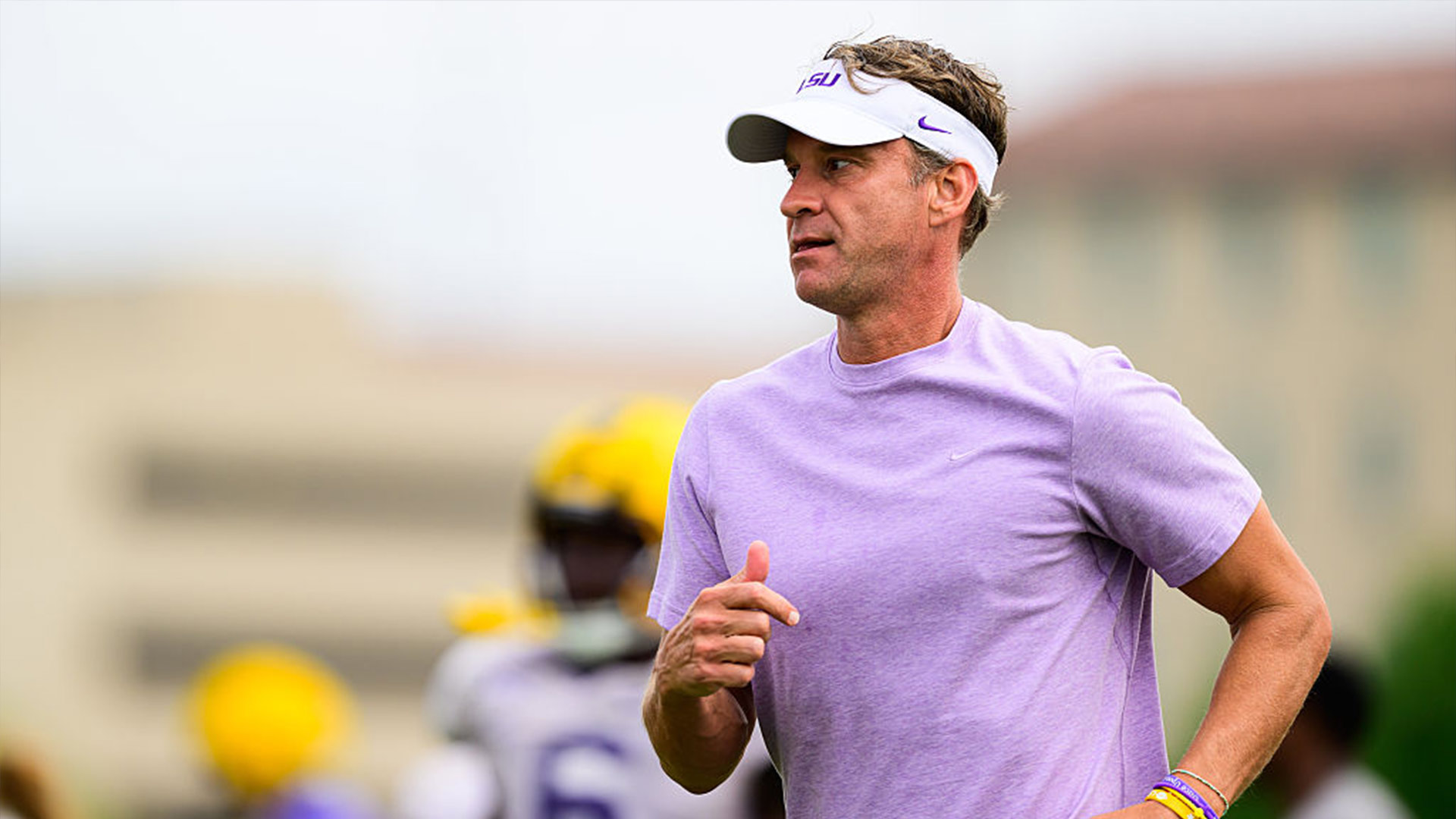
The college football coaching carousel in 2026 spun with an unprecedented, dizzying intensity, turning the sport into a high-stakes game of musical chairs that left athletic directors, players, and fans breathless. It was a relentless whirlwind of ambition, betrayal, and hope, where loyalty was often a casualty of the desperation to win. This wasn’t just a standard offseason shuffle; it was a seismic seismic restructuring of the sport’s hierarchy. Established titans of the game decided to abandon their long-held kingdoms for supposedly greener pastures, while rising stars from the Group of Five took their shot at the big time. As the dust settled, a new, chaotic map of college football emerged, one defined not by tradition, but by the ruthless calculus of the transfer portal and the burning desire for a playoff berth. The greatest drama, however, wasn’t found in the final standings, but in the personal journeys of the men who left their footprints on the turf, carrying their baggage, their egos, and their fragile families into an entirely new world of expectations.
The Southeastern Conference became the epicenter of this upheaval, a brutal theater where every move felt like a personal vendetta. Lane Kiffin, ever the mercurial showman, shocked the world by abandoning the Ole Miss Rebels he had just led to an 11-1 record and a playoff berth. With a gleam in his eye and a familiar restlessness, he jetted off to SEC rival LSU, leaving a trail of heartbroken players and furious fans in Oxford. His mission was audacious: to revitalize a Tigers program that hadn’t won a national title since Joe Burrow’s magical 2019 season, and Kiffin wasted no time, raiding the transfer portal to bring his trusted quarterback, Sam Leavitt, down to Baton Rouge to run his offense. Meanwhile, Ole Miss didn’t have time to mourn; they quickly elevated their defensive coordinator, Pete Golding, to the head coach position, hoping his familiarity would steady a ship that had just lost its captain. Golding’s first task was retaining the core talent that made their semifinal run possible, a daunting job given the sharks circling in the SEC. Adding to the chaos, Jon Sumrall, the boy wonder from Tulane, leveraged his remarkable CFP appearance into the head job at Florida, a program desperate for relevance since 2019. And over at Auburn, Alex Golesh jumped from South Florida, bringing his dual-threat quarterback Bynum Brown along to try and reignite a Tigers offense that had been dormant since the COVID-shortened season—a stark reminder that in this new world, the coach and his players were a packaged deal, a mercenary unit moving together in search of the biggest payday and the brightest spotlight.
The Big Ten, usually a bastion of stability, was thrown into complete pandemonium with a cascading effect of veteran coaches moving between historical powerhouses. Kyle Whittingham, the long-time architect of Utah’s success, finally gave in to the lure of the ultimate blue-blood job, leaving the Utes to take over at Michigan—a program needing a cultural overhaul after the post-national championship hangover. Whittingham carried two decades of Pac-12 wisdom and a fierce, old-school identity to Ann Arbor, tasked with cleaning up a messy rebuild that promised more headaches than glory. He was pushed out of the picture when James Franklin, after 12 wildly successful yet ultimately frustrating years at Penn State, abruptly ended his tenure mid-season, shockingly landing at Virginia Tech. Franklin, known for his energy and recruiting prowess, left the Nittany Lions in the lurch, immediately setting to work flipping high school commits and building a new empire in Blacksburg, where the Hokies hadn’t achieved double-digit wins in a decade. Penn State’s search took them to the heartland, landing on Matt Campbell, the gritty Iowa State lifer who was famous for doing more with less. Now handed a massive athletic budget and a roster full of blue-chip talent, Campbell faced the ultimate test: could he transition from being the scrappy underdog who overachieved to the favorite who had to win it all? His decision to bring his quarterback, Rocco Becht, highlighted his belief that culture travels with the team, not just the headset on the sideline.
Beyond the massive brands, a fascinating dichotomy emerged between two young offensive masterminds stepping into entirely opposite worlds, showcasing the vastly different dreams that drive coaches. Will Stein, the brilliant offensive coordinator from Oregon, took his first head coaching gig at Kentucky, stepping into a football program that plays second fiddle to basketball. Stein faced an “uphill battle” not just against SEC defenses, but against the apathy of a fanbase that tuned out after January. He carried the “gumption” to fundraise, to convince boosters that football matters, and to prove that his explosive offensive mind could translate to a program starving for any kind of gridiron relevance. His journey was one of grit and persuasion. Across the country, Brian Hartline took the exact opposite path. The legendary Ohio State receivers coach, the man who built “WR-U,” voluntarily stepped down from the penthouse of college football to take the head job at South Florida. It was a humbling descent in terms of prestige, but a massive leap in terms of personal autonomy. Hartline, worshipped as a recruiter and developer, was now challenged to prove he could build an entire program from the ground up, tackling roster building, budgeting, and defensive schemes. The bullseye on his back wasn’t the SEC or the Big Ten, but rather the existential fear of being a great assistant who couldn’t handle the CEO role. His story was one of profound humility, betting on himself to transform a hotbed of Florida talent into a winning operation, all while risking the pristine reputation he had built in Columbus.
Beneath all the tactical formations and press conference bravado, the most humanizing aspect of this chaotic carousel was the sheer, raw emotional toll it took on the players, the coaching staffs, and their families. When Kiffin left Ole Miss, the players who had trusted him, who had bought into his vision of a playoff run, felt a visceral sense of abandonment. Yet, their loyalty was often conditional, and they watched as their teammate, Sam Leavitt, packed his bags again, a pawn in the endless game of musical chairs. Similarly, Alex Golesh’s move to Auburn uprooted Bynum Brown, forcing a young man to adjust to a new state, new playbook, and a new pressure cooker filled with Auburn’s notoriously demanding fanbase. For the coaches themselves, the moves were a double-edged sword. A promotion fueled their ego, but it also meant uprooting families, moving kids to new schools, and facing a new set of cutthroat expectations that could end their careers in two short seasons if the wins didn’t materialize. The pressure of the transfer portal turned these storied programs into transient hotels, where the staff was the only constant. Yet, in the midst of that chaos, these men showed their humanity—Campbell’s decision to bring Becht showed a deep trust in his people; Whittingham, a 60-something veteran, embodied the fear of starting fresh late in his career; and Franklin’s sudden exit to VT exposed the ugly reality of ambition overpowering gratitude.
As the 2026 season dawned, it became clear that this carousel wasn’t merely about record changes or recruiting rankings; it was about the fragility of the human spirit chasing an unattainable ideal of perfection. The college football landscape had transformed into a cutthroat corporate environment, yet the men leading these programs remained deeply, flawed, and beautifully human. Kiffin, now at LSU, was again battling for validation, trying to prove his genius wasn’t just a flash in the pan. Campbell, at Penn State, was stepping into the shoes of a man who couldn’t quite deliver the national title, burdened by the weight of a massive paycheck that demanded immediate results. Hartline, at USF, was learning to be a head coach, making mistakes, and realizing that the bond he forged with his players in a cramped locker room was, ultimately, the reason he loved this game. Jon Sumrall, the young prodigy, faced the pressure of rebuilding Florida while navigating the shadow of a legendary basketball program, and Pete Golding had to convince Ole Miss’s stars to stay for him rather than the departed Kiffin. This volatile environment laid bare a simple, enduring truth: for every highlight reel and multi-million dollar contract, there is a person standing on the sideline, fighting off the demons of doubt, the pangs of regret, and the searing hope that this new chapter, this new color on the uniform, will finally be the one that secures their legacy. In the brutal, beautiful chaos of 2026, the only true constant was the relentless, beating heart of the game itself.