





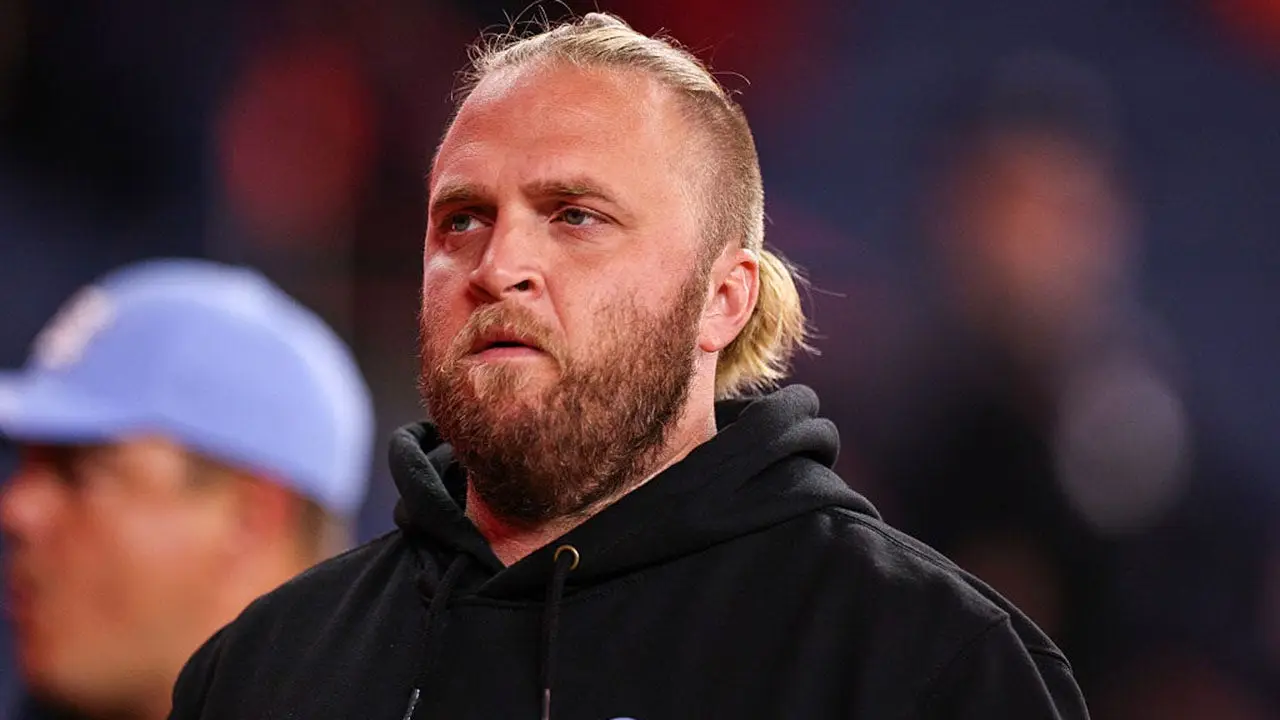
The autumn air in Chapel Hill is usually filled with the optimistic clamor of a new college football season, but this year, a heavy, uneasy silence has settled over Kenan Memorial Stadium. The North Carolina Tar Heels, currently deep in the grueling routine of fall camp, are facing a storm of distractions that would test even the most seasoned programs. At the center of this tempest is head coach Bill Belichick, a man long celebrated for his stoic, almost robotic focus, who now finds himself navigating a series of deeply personal and professional crises that have stripped away his legendary armor. On a Thursday morning that was supposed to be about depth charts and defensive schemes, Belichick stood before the media not just as a coach searching for answers, but as a father carrying a heavy burden. With a rare vulnerability, he announced that his son, Steve Belichick, the team’s defensive coordinator and his right-hand man, had been placed on medical leave. In a world where college football is often treated like a matter of life and death, the coach’s brief, quiet statement served as a stark reminder of the fragile humanity that exists behind the headsets and laminates. Bill requested privacy, noting that it was a deeply personal medical situation that he could not expand upon, leaving a program already searching for its identity suddenly leaderless on the defensive side of the ball just weeks before the season opener.
This family emergency is compounded by a dark administrative cloud that has been hovering over the program since mid-summer, threatening to derail the team’s preparation before the first whistle even blows. On July 27, the university took the drastic step of placing general manager Michael Lombardi on paid administrative leave following a human resources complaint, a move that sent shockwaves through the athletic department and left players and staff searching for answers in a vacuum of information. Since the suspension, the situation has escalated into a complex legal and public relations battle, with Lombardi hiring high-profile attorney Tom Mars to defend his reputation in the court of public opinion. Mars has publicly criticized the university’s handling of the situation, arguing that his client has had his name sullied by baseless social media rumors and online innuendo without even being informed of the specific nature of the allegations against him. To navigate this sensitive and potentially explosive matter, UNC has recently hired three outside law firms to conduct a thorough investigation, signaling that this is not a minor dispute that will easily blow over. For the young athletes in the locker room, this corporate legal battle is an unsettling reminder of the cold, business-like reality of modern college athletics, where the guiding hands of their program’s leaders can be suddenly swept away by administrative protocols and legal maneuverings.
The timing of these twin crises could not be more disastrous for a program that is currently teetering on the edge of a critical crossroads. When North Carolina hired Bill Belichick, the university’s administration envisioned a bold experiment: importing the disciplined, hyper-professionalized atmosphere of the New England Patriots to Chapel Hill, essentially branding the Tar Heels as the “33rd team” of the NFL. However, the transition from the professional ranks to the collegiate level has been far from seamless, revealing a fundamental clash between Belichick’s old-school, system-oriented philosophy and the rapidly evolving, chaotic landscape of modern college football. Today’s collegiate sports world is dominated by the wild west of Name, Image, and Likeness (NIL) collectives, the constant movement of the transfer portal, and the looming reality of direct revenue-sharing with student-athletes. In this hyper-competitive financial market, building a roster is no longer just about scouting and player development; it is about managing a complex web of financial expectations and keeping young men motivated in an environment where they are treated more like free agents than students. The initial promise of Belichick’s NFL pedigree has met the harsh reality of a system that requires a different kind of relationship-building and administrative agility, leaving many to wonder if the legendary coach’s formula can actually translate to a generation of athletes who wield unprecedented leverage and independence.
The skepticism surrounding this grand collegiate experiment is not just theoretical; it is backed by the sobering reality of the team’s recent performance on the field. Coming off a deeply disappointing 4-8 season, the initial euphoria that accompanied Belichick’s arrival in Chapel Hill has evaporated, replaced by a growing sense of disillusionment and impatience among a fan base that expects the program to compete at the highest level of the ACC. The glittering marketing campaigns and high-profile press conferences that defined the start of his tenure have given way to tough questions about the trajectory of the program and the sustainability of relying heavily on the transfer portal to patch up roster holes. In college towns, where the identity of the community is often deeply intertwined with the success of the local team, a losing record carries a unique, heavy weight that is felt in every local business, student housing complex, and campus walkway. The pressure on Belichick to turn things around this season is immense, and yet, looking at the roster talent alone, even the most optimistic analysts suggest that reaching a modest postseason bowl game would be considered a major achievement. For a coach whose name is synonymous with championship rings and historic dynasties, the prospect of fighting just to become bowl-eligible under a microscope of intense local scrutiny represents a dramatic and humbling shift in reality.
Despite the heavy emotional toll of Steve Belichick’s absence and the distracting noise of the Lombardi investigation, the daily grind of fall camp must go on, forcing a group of young student-athletes to display a level of maturity far beyond their years. These players, mostly aged 18 to 22, are expected to lock out the media circus, ignore the whispers on campus, and focus entirely on mastering their playbooks as they prepare to face a formidable TCU team in their season opener. With their defensive coordinator away and the general manager sidelined, the coaching staff has had to stretch itself thin, with assistants stepping into larger roles and veteran players taking on unprecedented leadership responsibilities on the practice field. The human element of this struggle is palpable during the hot, humid summer afternoons in North Carolina, where the players sweat through double sessions, relying on one another for motivation and support in the face of institutional instability. It is a testament to the raw resilience of collegiate athletes, who often find a strange, comforting sanctuary in the violent simplicity of the football field, using the game as an escape from the complex, adult anxieties that are currently swirling around their program.
Ultimately, the upcoming season has evolved into something much larger than a quest for a winning record; it has become a profound test of character, legacy, and adaptation for one of the greatest minds in the history of American sports. Bill Belichick stands at a pivotal crossroads in the twilight of his career, navigating a rapidly changing collegiate landscape while shielding his family from public scrutiny and managing a program in the midst of an administrative crisis. The next few months will determine whether his time in Chapel Hill will be remembered as a noble but flawed experiment, or as a masterclass in resilience and leadership under the most challenging circumstances imaginable. As the Tar Heels prepare to step onto the field against TCU, they do so not as a polished NFL-style machine, but as a deeply human team that has been battered by adversity, searching for a way to unite, heal, and prove their skeptics wrong. In the end, the true measure of Belichick’s tenure at North Carolina may not be found in the win-loss column, but in how he guides these young men through the storm, proving that even in the high-stakes, transactional world of modern college football, the bonds of family, community, and shared adversity still hold the power to triumph.