





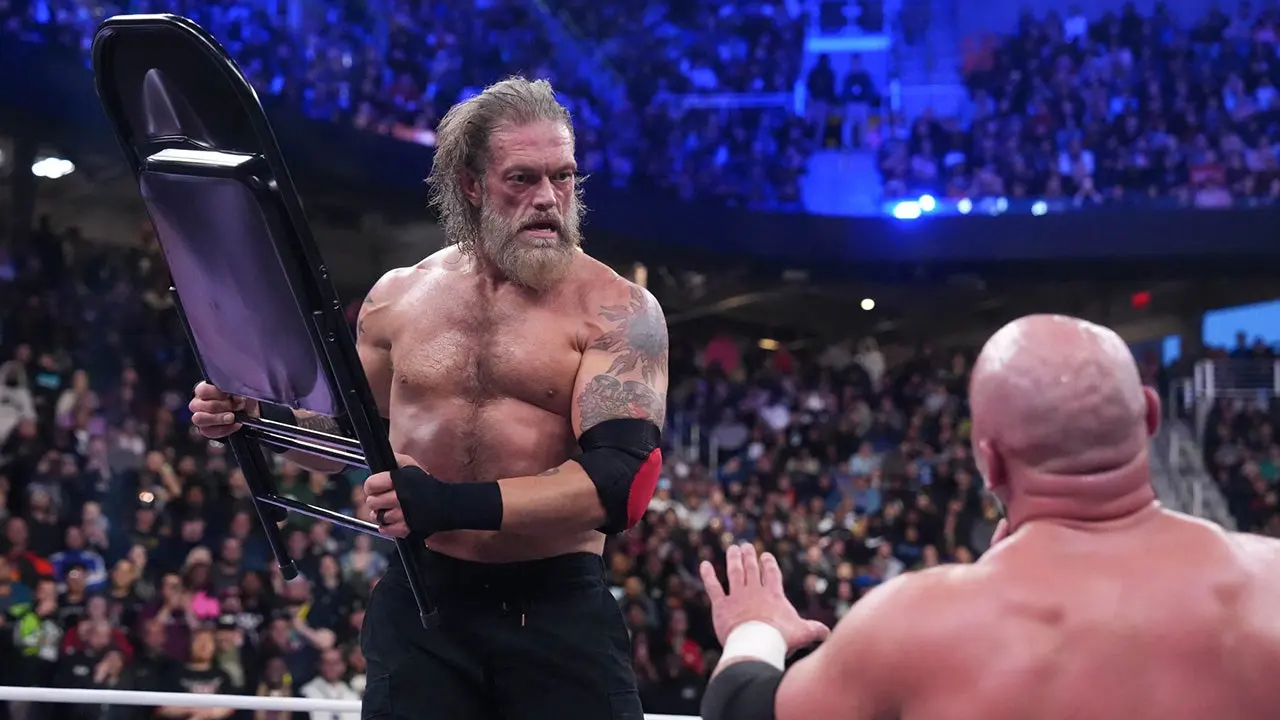
There is a profound, almost spiritual reverence that envelopes a performer when they step into a space where history has not merely been made, but deeply synthesized into the very mortar of the walls. For Adam Copeland, a man whose name is synonymous with the highest peaks of modern professional wrestling, the opportunity to wrestle inside the storied confines of Arena México is not just another date on a crowded touring schedule; it is the realization of a lifelong dream. Known globally as “The Wrestling Cathedral,” this iconic venue in the heart of Mexico City has stood for decades as the ultimate crucible of Lucha Libre, a place where legends are forged under the watchful eyes of some of the most passionate and knowledgeable fans on the planet. When All Elite Wrestling (AEW) brings its highly anticipated Grand Slam: Mexico event to this hallowed ground on Wednesday night, Copeland will finally get to experience the unique, electric atmosphere that he has admired from afar for his entire career. Despite having achieved nearly every accolade imaginable over a span of three decades—including multiple world championships, headlining WrestleMania, and earning a rightful place in the hall of fame—the fifty-year-old veteran has never once competed inside this legendary arena. The sheer weight of this moment was not lost on Copeland, who took to social media to express a mixture of humility, excitement, and deep respect for the culture he is about to immerse himself in. Through an introspective Instagram post, he shared his excitement with fans worldwide, writing that tonight he finally gets to perform in the Cathedral, noting with a sense of nostalgic longing that the last time he wrestled in Mexico was all the way back in 2008. His message was a vibrant love letter to the art of Lucha Libre itself, as he spoke of his enduring fascination with the masks, the mystique, the theatrical pageantry, and the raw vocal power of the Mexican audience, imploring them to bring their loudest voices to welcome him back after a sixteen-year absence.
To truly understand why this debut matters so deeply to Copeland, one must look at the turbulent, inspiring trajectory of his legendary career—a journey marked by soaring triumphs, devastating setbacks, and an eventual, miraculous resurrection. For nine long years, Copeland was forced into a premature retirement due to a severe cervical spinal stenosis diagnosis that threatened not just his livelihood, but his physical mobility. During those dark, quiet years away from the squared circle, he was left to contemplate a legacy that felt unfinished, staring at his wrestling boots with the painful realization that he might never again feel the rush of walking through the curtain. When he miraculously defied the medical odds to return to action in 2020, it was not merely about reclaiming lost time, but about seeking out the experiences and venues that had eluded him during his first run. His subsequent transition to All Elite Wrestling opened up a brand-new landscape of creative freedom, allowing him to rewrite the final chapters of his career on his own terms and pursue the artistic fulfillment he had long hungered for. This late-career renaissance has been defined by a childlike wonder and an insatiable desire to test himself against new opponents in unfamiliar territories. Standing on the precipice of his Arena México debut, Copeland is no longer just a veteran executing a contract; he is an artist who has been granted a second lease on life, eager to paint his unique brand of physical storytelling on one of the most sacred canvases the sporting world has to offer, proving to himself and the world that the fire within him burns as brightly as it did when he was an aspiring teenager in Ontario.
This quest for artistic fulfillment led Copeland to curate a highly personal, deeply sentimental bucket list of venues he desperately wanted to perform in before finally hanging up his boots for good. This list was not compiled out of arrogance or a desire to collect trophies, but rather out of a deep-seated respect for the global history of the industry that raised him. At the very top of this prestigious list sat Arena México, alongside other legendary international monuments of the sport: the majestic Tokyo Dome in Japan, the historic Maple Leaf Gardens in Toronto—which holds a sacred place in his heart as the venue where he watched his childhood heroes as a wide-eyed boy—and the colossal Wembley Stadium in London. For any professional wrestler, performing in these venues is akin to an actor playing on Broadway or a musician taking the stage at Wembley; they are spaces where the energy of the past seems to linger in the air, challenging the modern performer to rise to the occasion. Copeland’s pursuit of these holy grails is a testament to his romantic view of professional wrestling, viewing it not merely as physical combat or sports entertainment, but as a living, breathing mythology. Later this month, he is poised to cross another massive venue off his bucket list when AEW hosts its flagship pay-per-view event, All In, at Wembley Stadium, but before he can look forward to the ocean of nearly eighty thousand screaming fans in London, his soul demands that he first pay his respects to the intimate, pressure-cooker intensity of the Wrestling Cathedral in Mexico City, satisfying a decades-old curiosity that has lingered in the back of his mind.
Adding an extra layer of emotional gravitas to this monumental night is the fact that Copeland will not be embarking on this historic journey alone; instead, he will stand shoulder-to-shoulder with his lifelong best friend and on-screen partner, Christian Cage. The bond between Copeland and Cage is one of the most enduring and genuine friendships in the history of the entertainment industry, stretching back to their childhood days in Orangeville, Ontario, where they first bonded over a shared dream of becoming professional wrestlers. Together, they revolutionized the tag team division in the late 1990s and early 2000s, defining an era with their high-risk innovation, sharp charisma, and unmatched chemistry. After spending years on separate paths, achieving individual greatness as world champions and cementing their respective legacies, their poetic reunion in AEW has felt like a harmonious homecoming. Their current run as the AEW World Tag Team Champions is a masterclass in longevity, highlighted by their recent, grueling victory at Double or Nothing, where they defeated the formidable duo of FTR in a punishing, emotionally draining “I Quit” match to capture the gold. For Copeland, sharing the ring with Cage in Arena México is the ultimate validation of their lifelong brotherhood, a moment where two childhood friends who conquered the wrestling world can look at each other in the center of a historic Mexican ring and realize that they are still making history together, decades after they first started dreaming in a cold Canadian gymnasium.
The stage is set for a chaotic, high-stakes spectacle as Copeland, Cage, and their temporary allies, the enigmatic and brilliant Young Bucks (Matt and Nick Jackson), prepare to engage in a war of styles against a formidable four-man coalition consisting of Jon Moxley, Daniel Garcia, Pac, and Wheeler Yuta. This eight-man tag team match is a fascinating tapestry of contrasting wrestling philosophies, bringing together the aerial artistry of the Jacksons, the grit and unyielding violence of Moxley, the technical brilliance of Yuta, the gravity-defying intensity of Pac, and the raw, rhythmic energy of Garcia. For the passionate Mexican crowd, this match offers a rare collision of worlds, blending the traditional, fast-paced drama of Lucha Libre with the hard-hitting, dramatic storytelling of modern American television wrestling. The dynamic of the match is further complicated by the uneasy alliance between the champions and the Young Bucks, who are widely expected to be Copeland and Cage’s opponents at the upcoming Wembley Stadium show. This underlying tension adds a psychological chess match to the physical warfare, as teammates must watch their own backs while trying to overcome a ferocious opposition that wants nothing more than to spoil Copeland’s historic debut. As the bell rings and the chants of the Arena México faithful echo from the rafters, Copeland will be forced to draw upon every ounce of his experience, navigating the unique ring dimensions, the thinner high-altitude air of Mexico City, and the sheer unpredictability of a multi-man melee to ensure that his first step into the Cathedral is marked by victory rather than defeat.
Ultimately, as the sweat dries and the echoes of the crowd fade into the Mexico City night, this event serves as a beautiful, humanizing reminder of why we fall in love with sports and performance in the first place. It is a story about the relentless pursuit of passion over comfort, about a man who had everything taken away from him, only to fight his way back to the top so he could appreciate the simple, profound joy of stepping into a historic ring in a country that lives and breathes the sport. As Copeland prepares to transition from the intimate, historic warmth of Arena México to the grand, sweeping stage of Wembley Stadium for All In later this month, his journey stands as a living testament to resilience, gratitude, and the enduring magic of professional wrestling. This late-career run in AEW is not a cynical victory lap or a search for a final payday; it is a heartfelt love letter to the business, written by a man who refuses to let his dreams remain unfulfilled. When the music hits and Adam Copeland finally walks down the ramp in Arena México on Wednesday night, he will do so not just as a global superstar, but as a grateful fan who finally got his chance to worship at the altar of the Wrestling Cathedral, leaving a piece of his heart in the ring and taking a piece of Mexican wrestling history with him forever.