


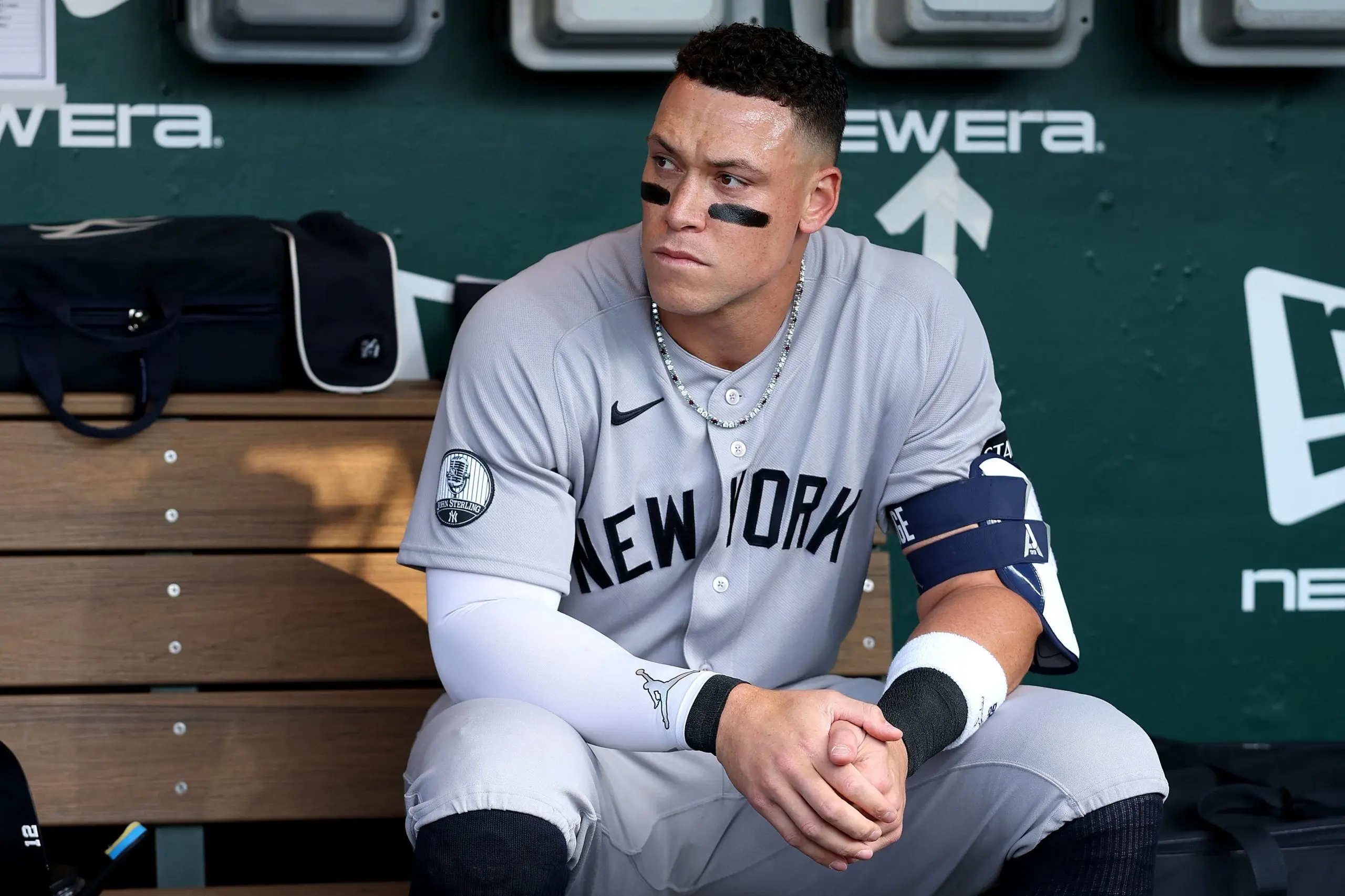
Sports have an uncanny way of feeding our hunger for hope, and in the bright, demanding theater of the Bronx, the 2026 New York Yankees seemed poised to deliver something truly legendary. From the opening pitch of the spring, the air around Yankee Stadium carried the sweet, electric energy of a championship-caliber squad finding its rhythm. It was a beautiful symphony of talent coming together in unexpected ways; first baseman Ben Rice transformed from a promising young prospect into an absolute terror at the plate, dominating opposing pitchers throughout the first third of the campaign with a poise that belied his experience. Down in the dugout, the atmosphere was bolstered by Cody Bellinger, who put on a masterclass of defensive elegance and timely hitting in his spectacular second year wearing the pinstripes. On the mound, the pitching staff achieved a brilliant harmony, with Cam Schlitter looking practically unhittable, while the ace Gerrit Cole finally made his triumphant return to a Major League mound, marking his first appearance since the grueling obstacles kept him away in 2024. Yet, for all the depth and dazzling individual stories anchoring this roster, everyone in the Bronx knew a fundamental truth of modern baseball: the Yankees can build a magnificent castle, but it is ultimately their captain, Aaron Judge, who holds the keys to the kingdom.
There is a unique, almost mythological pressure that rests upon the shoulders of Aaron Judge, a sports giant who carries the hopes of millions with a quiet, graceful humility. When the 2026 season commenced, he seemed to defy the limits of human athletic performance, launching baseballs into orbit with such frequency that fans and analysts alike began whispering about another record-breaking, historic campaign. But baseball is a cruel, grinding sport that respects neither reputation nor legacy, and as the calendar turned to May, a subtle, agonizing shift began to unfold. To any ordinary ballplayer, an .805 OPS over the course of a calendar month represents a highly respectable, productive stretch of baseball. But Aaron Judge is not an ordinary mortal; he is the standard by which excellence in New York is measured, and by his own towering standards, this sudden cooling of his bat felt like an ominous eclipse. Spectators began to notice a slight, almost imperceptible hesitation in his swing—the micro-adjustments that spoke of an athlete battling his own body. It was a poignant reminder of the quiet, agonizing wars that professional athletes wage in secret, playing through the whispers of physical pain and masking deep discomfort beneath a stoic smile just to carry the crushing weight of a franchise’s aspirations.
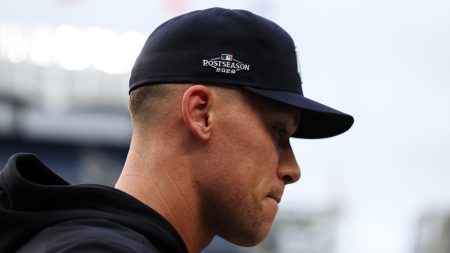
The bubble of stoicism finally burst on a quiet Tuesday evening when the Yankees’ lineup card was posted and the towering silhouette of number ninety-nine was conspicuously absent. In New York, an unexplained absence of Aaron Judge is a source of immediate, full-blown anxiety, and the organization’s initial reluctance to share details only fueled the fire of speculation. By Wednesday night, the quiet concern in the clubhouse had evolved into palpable dread, captured perfectly by the weary demeanor of manager Aaron Boone as he met with reporters in the post-game press room. Boone, a man who has navigated the relentless media storms of New York for years, could not hide the shadows of worry on his face as he admitted that they were searching in the dark, sending their captain back for advanced, highly targeted medical imaging. “We just want clarity on what we’re exactly dealing with,” Boone murmured, his words echoing the collective heartbeat of a fanbase holding its breath. The phrase “more specific spots” hung heavily in the humid night air, a clinical euphemism signaling to everyone listening that this was not merely a routine rest day, but rather a profound physical mystery threatening to derail a beautifully constructed season.
That elusive clarity finally arrived on Thursday evening, descending like a sudden hammer blow to the collective chest of New York sports fans as the front office released the official medical diagnosis. Aaron Judge had suffered a stress fracture of the first rib on his right side, a delicate and frustrating injury that is famously difficult to manage because of how intimately the ribs are involved in the explosive mechanics of a baseball swing. The prognosis was as brutal as it was vague: he would be sidelined indefinitely, with his next official medical evaluation scheduled in an agonizing four-to-six weeks just to see if the bone had begun the slow, tedious process of knitting itself back together. It was a devastating revelation that stripped away any illusions of a quick recovery, forcing fans and teammates alike to confront the harsh reality of a long, dark stretch of the season without their leader. Yet, amid the heartbreak of the announcement, a fragile silver lining emerged: the medical staff remained optimistic that their captain would return to the field before the final curtain fell on the 2026 season. It was a small, vital flicker of hope to cling to—a promise that while the summer might be long and difficult, the autumn might still belong to the king of the Bronx.
Without their talisman, the Yankees must now navigate a grueling baseball landscape where the margin for error has suddenly become razor-thin. Fortuitously, the current American League landscape lacks the depth of dominant powerhouses seen in years past, practically guaranteeing that even a compromised Yankees team possesses enough raw talent to secure a spot in the postseason. However, baseball is a game of strategic positioning, and the surprisingly resilient Tampa Bay Rays are currently clinging to the top spot in the fiercely competitive American League East division, looking down at the Bronx Bombers with hungry eyes. Winning the division is not merely a matter of pride; it represents the golden ticket of a first-round postseason bye, a crucial period of rest that could be the difference between a deep championship run and a premature October exit. Without Judge anchoring the middle of the order, every single player in that dugout—from the veteran stars to the young rookies—will have to elevate their game to prevent a mid-summer slide. The pressure is now squarely on the shoulders of players like Bellinger and Rice to carry the offensive load, proving that this team is a cohesive unit capable of weathering the fiercest storms rather than just a supporting cast to a singular superstar.
Ultimately, this injury is a deeply human story about resilience, patience, and the fragile nature of athletic greatness. For Aaron Judge, the coming weeks will not be spent under the bright lights of stadium floods or amidst the deafening roars of adoring crowds, but rather in the quiet, sterile confines of rehabilitation rooms, working tirelessly to heal a body that has given so much to the game. But if sports have taught us anything, it is that the greatest triumphs are almost always preceded by the most grueling trials. If Judge can endure this period of forced stillness, heal his broken rib, and step back onto the pristine grass of Yankee Stadium before October arrives, his return will be infused with a theatrical power that no scriptwriter could ever replicate. A healthy Aaron Judge entering the postseason is not merely a baseball player; he is a game-changing force of nature, an intimidating presence capable of shifting the entire balance of power in Major League Baseball with a single, thunderous swing of his bat. As the Yankees prepare to march forward into the heat of summer without their captain, they do so not with despair, but with a fierce, quiet resolve, knowing that if they can just hold the line, their leader will return to guide them through the crucible of October.