





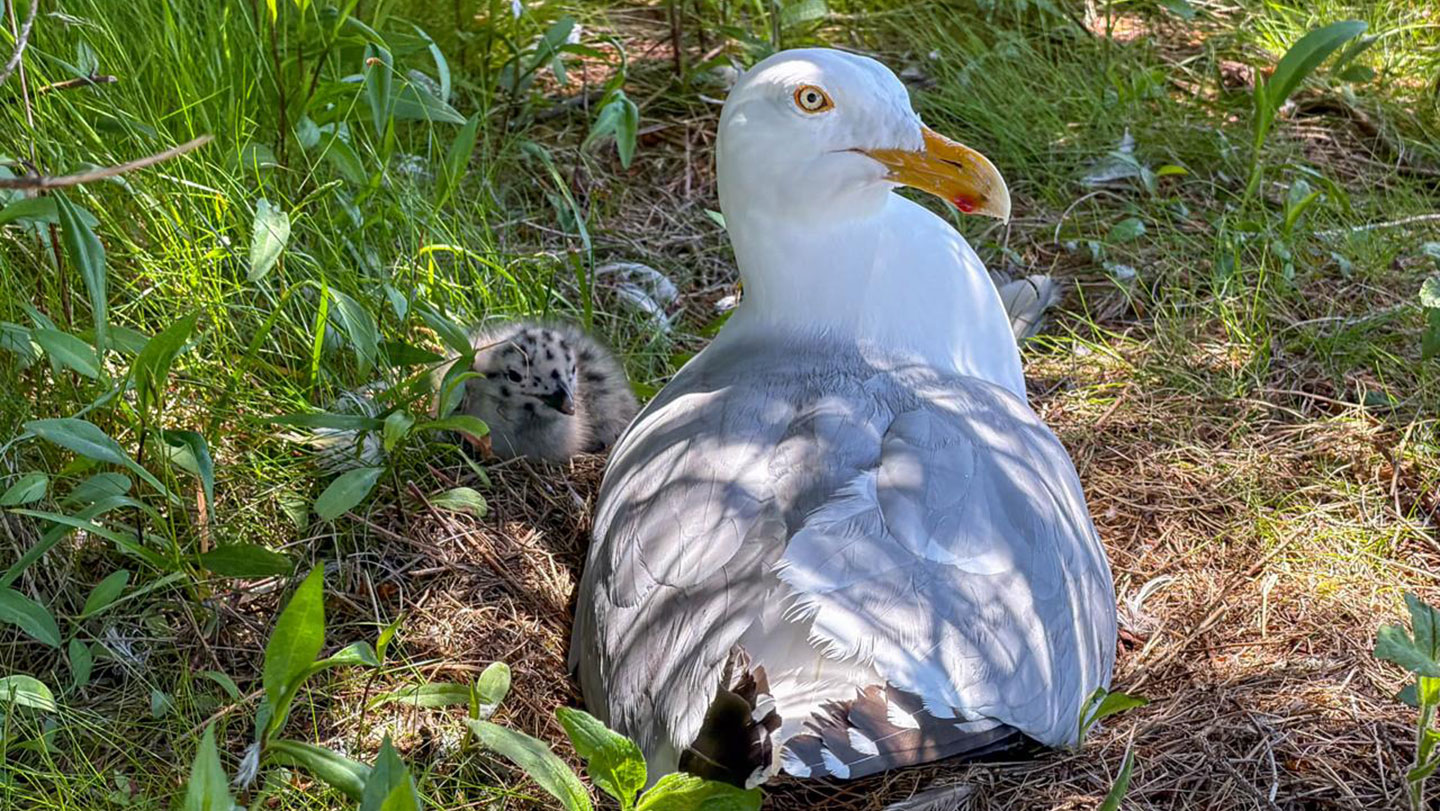
In the vast, unpredictable theater of avian evolution, the transition from a fragile hatchling to a self-sufficient adult is usually a race against time, a swift and urgent transformation completed in a matter of fleeting weeks or months. Yet, for an intriguing subset of the world’s seabirds, the biological clock seems to stall, lingering in a prolonged, seemingly awkward adolescent phase that can persist for several years. During this extended twilight of youth, these adolescent birds carry a muted wardrobe of mottled grays and dull browns, starkly contrasting with the striking, pristine whites, deep blacks, and sharp, commanding grays that define their mature, breeding counterparts. For decades, naturalists and evolutionary biologists have quietly pondered the adaptive value of this delayed plumage maturation, wondering why nature would design a creature to spend so much of its life looking unfinished. In the merciless calculus of natural selection, appearing drab and immature would seem to invite disadvantage, making these young birds look like social outcasts or easy targets. However, a groundbreaking study published in the journal Animal Behavior offers an elegant, highly intuitive explanation for this biological delay: these drab feathers serve as a vital social passport. Focusing on the American herring gull (Larus smithsonianus), a team of dedicated researchers has demonstrated that these unimposing adolescent colors operate as a visual truce, signaling non-threatening immaturity to aggressive, deeply territorial breeding adults during the most chaotic periods of the nesting season.
To truly appreciate the necessity of such a protective visual shield, one must understand the absolute mayhem of a wild seabird nesting colony—a place where any romantic notions of serene coastal nature quickly dissipate into a dizzying wall of sound, smell, and fury. The field research, spearheaded by Molly Hill during her undergraduate years at Yale University alongside fellow researcher Liam Taylor, was conducted on the rugged, wind-swept shores of Kent Island, nestled in the cold waters of New Brunswick, Canada. Here, the dense breeding grounds of the American herring gull present an environment that is decidedly not for the faint of heart, characterized by a cacophonous, overstuffed metropolis of birds where active nests are squeezed aggressively close together, often separated by a mere two or three feet. Navigating these colonies requires immense physical and mental endurance, as researchers must wade through a constant sensory assault of screaming birds, flying feathers, and relentless aerial dive-bombs from protective parents. Remarkably, amid this terrifying gauntlet of nesting couples and their fragile chicks, researchers recurrently spotted immature, non-breeding gulls lingering in the crowds. For these young transients, who no longer require parental care and are years away from mating, entering these crowded biological hot zones is an immensely risky gamble, raising pressing questions about why they choose to be there in the first place and how they manage to survive the volatile social dynamics of the colony.
Driven by the hypothesis that the teenagers’ drab plumage might act as a visual olive branch to appease hot-tempered nesting adults, Hill and her team devised an ingenious field experiment utilizing custom-painted, three-dimensional plastic models of gulls. The researchers meticulously painted these lifelike decoys to represent two distinct stages of a gull’s life: one group was adorned in the mottled, chocolate-brown and slate-gray feathers typical of a naive, one-year-old adolescent, while the other was decorated with the bold, high-contrast white chests, gray wings, and dark markings of fully mature, breeding adults. Armed with these synthetic stand-ins, the researchers carefully braved the chaotic nesting grounds to place the decoys at precise, standardized distances from active, occupied nests. By introducing these silent, plastic intruders directly into the territory of nesting pairs, the team created a controlled, highly repeatable scenario designed to measure the raw, immediate reactions of protective parents. The researchers then retreated to safe, unobtrusive vantage points to painstakingly observe, categorize, and record every nuance of the living gulls’ behavior, transforming the chaotic avian battlefield of Kent Island into a structured open-air laboratory where the silent visual dialogue between real birds and plastic decoys could be deciphered.
The reactions of the nesting herring gulls to these artificial interlopers were immediate, diverse, and telling, ranging from cool indifference to dramatic, highly physical displays of territorial outrage. In some encounters, the nesting birds barely acknowledged the silent plastic intruders, while in others, they erupted into vocal, neck-stretching trumpet calls or initiated highly ritualized territorial demonstrations, such as furiously ripping up mouthfuls of grass and throwing them to the ground. This “grass-pulling” behavior, as Hill colorfully explains, is the avian equivalent of drawing a hard line in the sand—a clear, physical manifestation of a bird declaring its sovereign domain, warn-offs, and building intentions to anyone who dares approach. When compiling the behavioral data, a striking pattern emerged: the nesting gulls unleashed their aggression on the adolescent-colored decoys in only about thirty percent of the trials, whereas they were nearly 1.5 times more likely to launch hostile, defensive actions against the adult-colored models. Furthermore, the nesting birds displayed a telling hesitation when dealing with the young-looking decoys, taking an average of seven seconds longer to mount any aggressive response compared to the rapid, decisive defense triggered by the mature-looking decoys. This temporal window of hesitation suggests that the drab plumage of the young gulls acts as a psychological speed bump, buying the inexperienced birds precious time to assess a tense situation, back away safely, and avoid physical harm.
The profound implications of these findings reach far beyond the rocky shores of New Brunswick, offering evolutionary biologists a compelling answer to one of the most persistent puzzles surrounding marine bird development. As Gavin Leighton, an evolutionary biologist at Buffalo State University who was not directly involved in the study, points out, this research takes a massive leap forward in explaining why so many diverse seabird species retain non-adult plumage for such an unusually protracted segment of their lives. In the unforgiving wilderness, an adolescent’s primary challenge is not merely securing food, but learning the complex, unwritten social etiquette of their species without paying the ultimate price for a simple misunderstanding. Just as a human teenager needs time to adjust to the daunting, unwritten rules of a packed high school or university campus, an adolescent gull needs a safe period to observe the social structures, hierarchies, and spatial boundaries of a breeding colony. By signaling their status as non-breeding, non-threatening outsiders through their drab, low-profile coloration, these young gulls essentially wear a visual badge of childhood that disarms the territorial instincts of their elders. This protective social shield allows them to loiter safely on the fringes of the colony, observing mature foraging strategies, nesting behaviors, and communicative displays, thereby acquiring the vital life skills necessary for their own future reproductive success.
Ultimately, this study bridges a critical gap in our understanding of animal communication and evolutionary adaptation, opening an exciting new doorway to the study of other long-lived marine bird species. Delayed plumage maturation is not a developmental quirk isolated to the American herring gull; rather, it is a wonderfully widespread evolutionary strategy that has emerged independently across completely unrelated avian lineages, including majestic albatrosses, striking gannets, and elegant terns. The fact that such diverse species have converged on the same developmental trajectory suggests that the social and environmental pressures of dense colonial living are incredibly powerful drivers of animal evolution, favoring peace-keeping signals over early physical maturity. According to Hill, future research could dive deeper into the specific social and environmental catalysts that push these far-flung, disparate species toward this shared developmental strategy, perhaps exploring how colony density or food scarcity alters the efficacy of the adolescent shield. By showing that a drab coat of feathers is actually a sophisticated shield against societal violence, this research illuminates the hidden, nuanced diplomacy of the animal kingdom, reminding us that sometimes the quietest, most unremarkable colors are the ones that ensure survival in a loud and hostile world.