






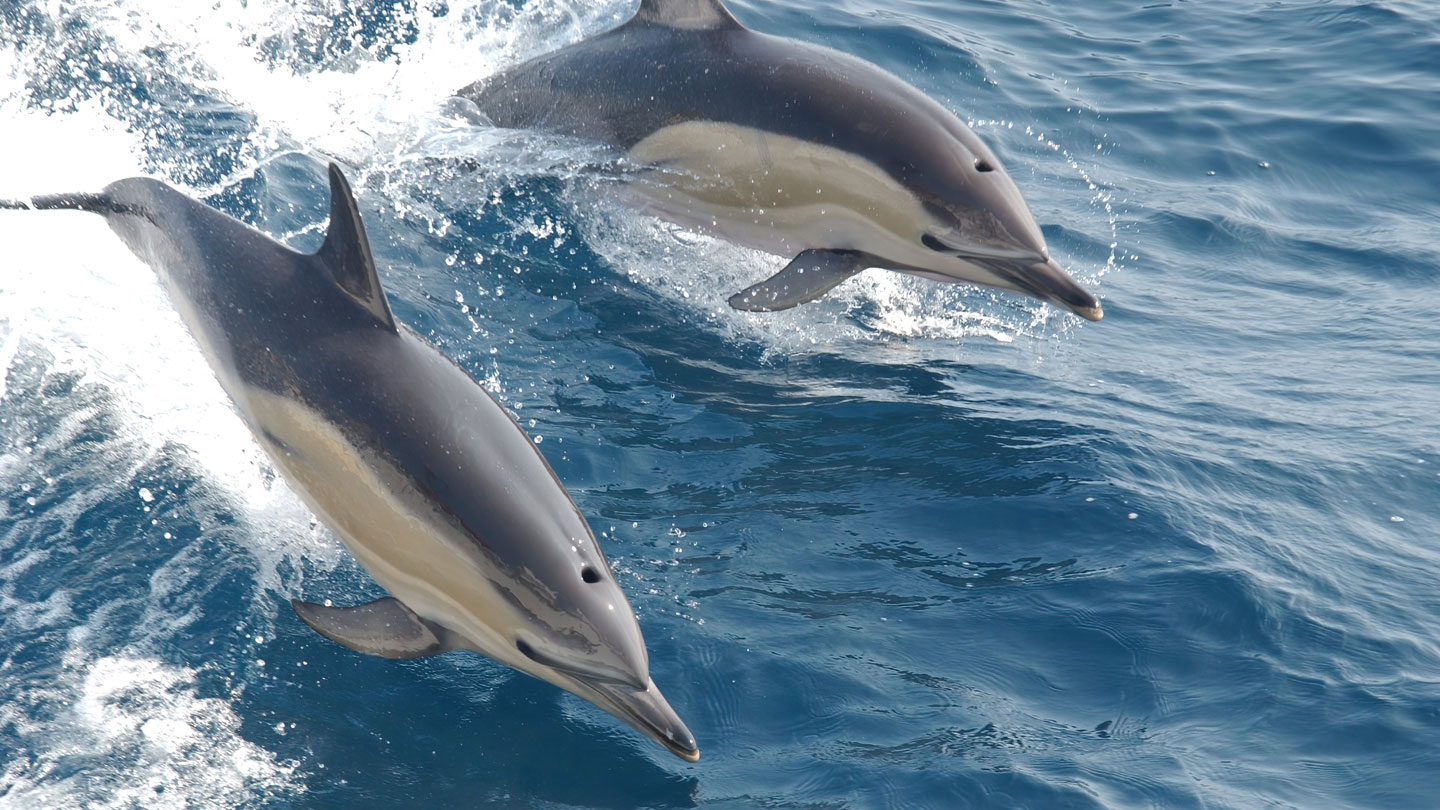
For as long as humans have gazed out across the open ocean, dolphins have held a sacred place in our collective imagination. They are celebrated as symbols of raw freedom, high intelligence, and kinetic grace, riding the bow wakes of massive ships and leaping through the breaking surf with an apparent, infectious joy that directly mirrors our own best qualities. Yet, beneath the sparkling, sunlit surface of the world’s oceans, a quiet and deeply insidious crisis is unfolding, one that has been entirely written by human hands. Over the course of the industrial era, our rivers, coastal estuaries, and storm drains have washed an invisible, unrelenting torrent of toxic substances out to sea: heavy metals from mining operations and manufacturing plants, alongside highly complex synthetic creations known as per- and polyfluoroalkyl substances, or PFAS. These compounds, widely referred to as “forever chemicals” because their extremely strong chemical structures prevent them from breaking down naturally in the environment, have silently climbed up the marine food web. Groundbreaking new scientific research has revealed that this toxic accumulation is doing something far more sinister than simply making marine life sick; it is actively robbing dolphins of their youth, accelerating their biological aging processes, and leaving them vulnerable to chronic diseases traditionally reserved for old age. By turning our global waterways into a dumping ground, we have inadvertently fast-forwarded the ancient genetic clocks of these creatures, sending a chilling warning about the biological toll of our modern lives.
This alarming connection between environmental pollution and premature aging lies at the heart of an eye-opening and sobering new study led by marine biologist Dr. Karen Stockin of Massey University in Auckland, New Zealand. Published recently as a pre-print on bioRxiv.org, the research steers our attention toward a highly sophisticated metric of systemic well-being: the distinct divergence between chronological age and biological age. Chronological age is a straightforward concept—it is the simple count of the years, months, and days an animal has physically existed on Earth. Biological age, by contrast, is a measurement of the body’s actual wear and tear at the cellular level, particularly represented by the integrity and molecular state of its DNA. Over a normal lifetime, genetic material naturally degrades and shifts in highly predictable, species-specific patterns, a phenomenon that geneticists refer to as the epigenetic clock. However, external pressures such as physiological stress, poor nutrition, and chronic pollutant exposure can cause this clock to slip into hyperdrive, forcing an organism’s cells to age prematurely. To investigate how ocean contaminants influence this delicate, internal timeline, Dr. Stockin and her international team of researchers meticulously analyzed liver and kidney tissue samples collected between 2000 and 2023 from 75 common dolphins (Delphinus delphis) that had perished along coastlines in unrelated incidents, ranging from accidental strandings to devastating fishing gear entanglements.
What the research team uncovered within these tissue samples was both startling and highly specific, upending long-held assumptions about wildlife toxicity. Dr. Stockin entered the investigation with the reasonable hypothesis that the sheer, total volume of pollutants built up in a dolphin’s body over its lifetime would dictate how quickly its cellular structures degraded. Instead, the final data painted a far more complex and troubling picture, demonstrating that the acceleration of the dolphins’ biological clock was driven not by the total quantity of chemical burdens, but rather by the presence of a few highly aggressive and destructive chemical subsets. In the realm of PFAS—a vast family consisting of tens of thousands of individual synthetic compounds used globally in everything from non-stick frying pans to firefighting foams and water-resistant textiles—specific chemical structures stood out as uniquely devastating. The primary synthetic compound linked with the dolphins’ runaway biological aging was perfluorobutanoic acid, or PFBA, a short-chain PFAS chemical that was once introduced to the market under the guise of being a safer alternative to older, banned chemicals. Another closely associated compound was perfluorononanoic acid, or PFNA, which is notorious in medical science because it has already been directly linked to accelerated biological aging in humans, showing how these synthetic molecules lodge inside the vital organs of mammals and act as microscopic monkey wrenches thrown into the ancient cellular machinery of life.
The tragedy of this fast-tracked aging process becomes even clearer when examining the role of trace metals, which the study revealed to be colluding with PFAS to degrade the dolphins’ DNA. In a balanced natural world, trace elements like zinc, copper, and selenium are essential nutrients, required in tiny doses to support vital metabolic and physiological functions. However, decades of industrial runoff, atmospheric deposition, and intensive mining activities have completely overloaded coastal environments, turning these key biological building blocks into severe toxic hazards. Dr. Stockin’s study identified selenium as the single most devastating metallic driver of accelerated biological aging in the common dolphin. While selenium is crucial for immune function and is well-known for helping to neutralize mercury poisoning in marine life, it exists on a razor’s edge; once exposure crosses a highly sensitive threshold, it undergoes a biological heel-turn, manifesting as a destructive systemic toxin. Other metals, including zinc, copper, aluminum, and manganese, were also heavily implicated in widening the gap between the dolphins’ chronological age and their biological reality. Collectively, this specific cocktail of metals and forever chemicals accounted for more than half of the premature epigenetic aging observed in the dolphins, emphasizing that our industrial legacy is actively warping the biological timelines of marine wildlife.
This study does far more than just expose the environmental struggles of the common dolphin; it holds up a deeply unsettling and undeniable mirror to our own human health. In the scientific community, dolphins are regarded as an invaluable “sentinel species”—living ecological surrogates whose physical condition directly forecasts the health of our shared planet. Because dolphins are long-lived mammals that share our mammalian biology, nurse their young with milk, breathe the exact same coastal air, and consume the very same wild seafood that fills our supermarket shelves, their cellular distress is a direct projection of our own biological future. When we observe a dolphin whose vital organs show the molecular signatures of an animal decades older than its actual years, we are gazing upon the potential future of human coastal populations. The fact that mother dolphins can transfer these persistent forever chemicals across generations through nursing milk is a heartbreaking biological parallel to the microplastics, heavy metals, and PFAS frequently detected in human breast milk and placentas today. If the invisible currents of chemical pollution drifting through our coastlines are strong enough to fast-forward the genetic clock of an animal as resilient as the dolphin, it is highly likely that they are silently doing the same to us, manifesting as early-onset cancers, endocrine disruption, and chronic age-related diseases in human communities across the globe.
Ultimately, the plight of these marine sentinels highlights the extreme and immediate danger of what scientists call the “cocktail effect.” In the natural world, wildlife and humans are never exposed to a single toxin in sterile isolation; rather, we swim, breathe, and live in a daily, swirling soup of mixed pollutants, where plastics, heavy metals, industrial flame retardants, and household wastes constantly intersect. Ecotoxicologists like Baylin Bennett of the University of California, San Francisco, emphasize that our current regulatory and research frameworks, which painstakingly evaluate chemical safety on a one-by-one basis, are flatly failing to capture the synergistic devastation that occurs when these substances collide inside a living organism. By demonstrating that a specific combination of trace metals and PFAS compounds can explain the majority of premature biological aging in marine life, Dr. Stockin’s research serves as an urgent call to action. We must rapidly transition away from a culture of reckless, unregulated chemical synthesis and toward one of deep ecological responsibility, recognizing that the health of the dolphin and the health of the human are fundamentally, irrevocably intertwined. If we do not make the conscious decision to clean up our shared biomes and severely restrict these long-lasting pollutants, we will continue to force the natural world to pay for our temporary conveniences with its very lifespan, leaving us with a quiet, prematurely aged sea and a future running out of time.