


Paragraph 1
Every meaningful journey begins with a single step, and for Gabriela Farfan that step was into a small natural history museum in Madison, Wisconsin, the city where she grew up. She was young, not yet old enough to map out a career or fully understand the ways of the Earth, but she was old enough to be stopped in her tracks by wonder. The museum was not grand or famous. It had the quiet intimacy of a place where visitors could stand close to the displays and feel as though the exhibits had been waiting just for them. When Farfan reached the case of minerals, everything changed. There were minerals in every color she could imagine—deep amethysts, pale shimmering whites, honey-toned crystals, stones the color of a summer sky. Some were rough and earthy, as if they had just been pulled from a hillside; others were polished and luminous, catching the overhead lights and throwing back tiny rainbows. She pressed her face close to the glass, studying the improbable angles, the sharp edges, the hidden sparkle inside what looked like ordinary rock. It felt like a secret: nature had been quietly making these beautiful objects deep beneath the surface for millions of years, and now here they were, arranged in rows, asking to be admired. In that single moment, Farfan felt a pull she could not explain. It was more than curiosity; it was recognition. “From that point forward, I knew I wanted to become a geologist someday,” she says. She did not just dream about it the way children dream about being astronauts or princesses. She held onto that vision, through school and university, through the difficult hours of laboratory work and the patience needed to understand crystals and chemical bonds, until the dream became her life. That glass case in Madison was the beginning of everything.
Paragraph 2
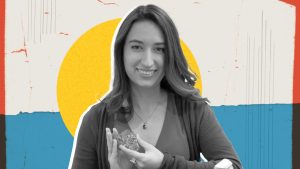
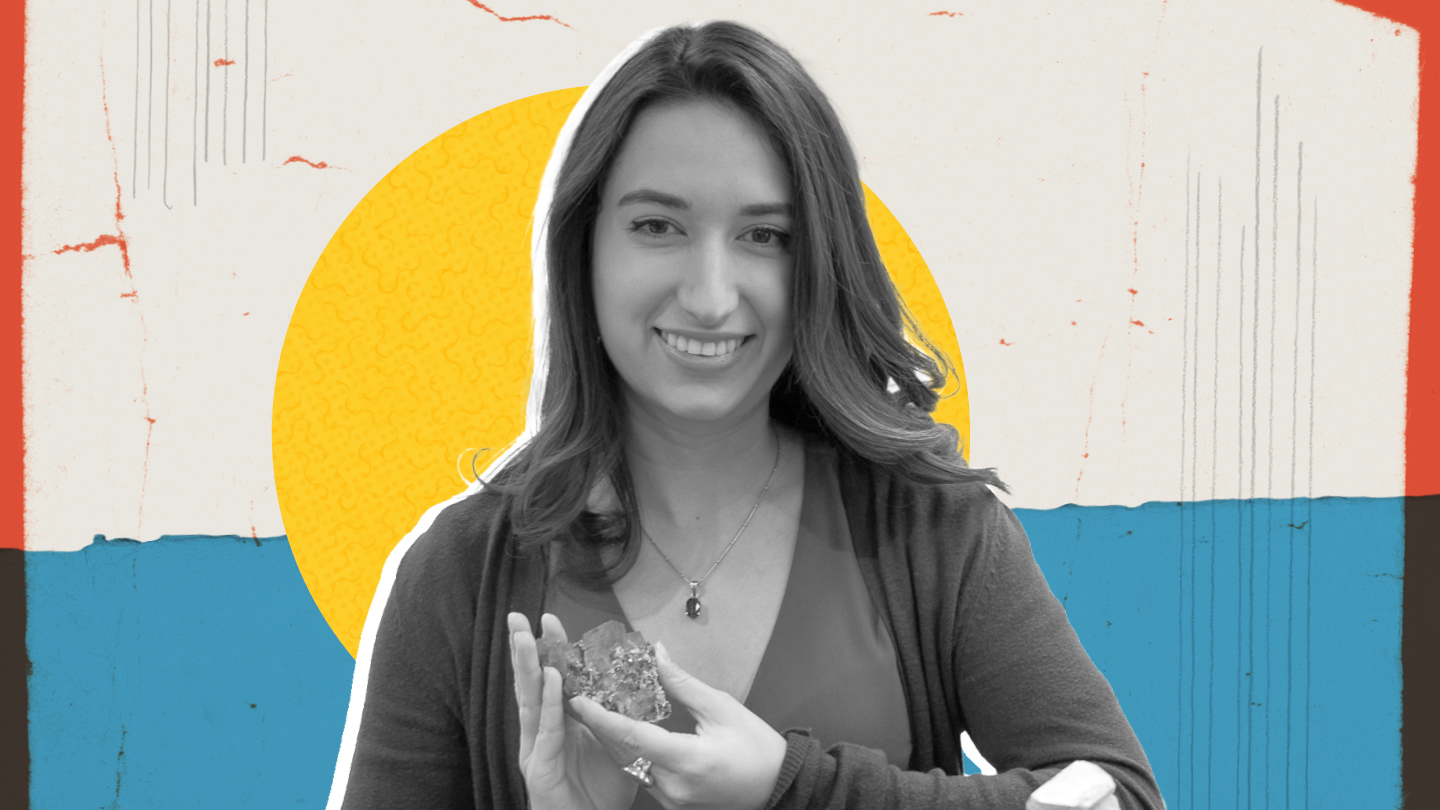
Today, Gabriela Farfan is living the selfsame dream she once whispered in a small museum hallway. She serves as the curator of gems and minerals at the Smithsonian National Museum of Natural History in Washington, D.C., one of the most celebrated collections of natural treasures in the world. The building is enormous, with grand marble halls and galleries crowded with visitors from every country, but in her own way she is still that girl trying to understand the splendor before her. Her specialty is biomineralization, a field that sounds intimidating but is really about one of the oldest, most magical acts on Earth: the way living organisms transform simple ingredients from water and air into hard, lasting structures. Corals build skeletons; shellfish assemble pearly layers; pearls grow around an irritant until they become objects of beauty. Bones, too, are part of this story. Biomineralization sits at the crossroads of biology and geology, connecting the living world to the mineral kingdom. Farfan studies how these structures form, how the chemistry of the environment becomes locked inside them, and what those mineralized stories can tell us about the past. She asks questions that sound poetic but require meticulous science: how does a coral choose its shape? How does a shell trap the memory of the seawater in which it grew? What can the subtle arrangement of crystals reveal about a creature’s health, an ocean’s temperature, a planet’s changing climate? To answer these questions, she dives deep into crystal structures and chemical fingerprints, using skill and patience to read the messages written in stone. Her work is a reminder that minerals are not dead objects. They are records, diaries, time capsules waiting to be opened by people who know how to listen.
Paragraph 3
Much of Farfan’s research focuses on the stories hidden inside corals. Corals biomineralize by building layers of calcium carbonate, a mineral formed from calcium and carbonate ions in seawater. As the coral grows, it adds new layers, much as a tree adds rings, and in each layer it incorporates chemical traces from the water surrounding it. Those traces are like tiny signatures left by the ocean at the moment of growth. They can record changes in temperature, shifts in salinity, the presence of pollutants, and even episodes of stress or disease that affected the living organism. A single sample of coral can therefore act as a living archive of its environment, preserving decades or even centuries of natural history in its crystalline walls. To unlock these records, Farfan uses sophisticated tools such as X-ray and Raman spectroscopies. The techniques work by bouncing beams of radiation or light off the sample and analyzing how the beams interact with the material. Each mineral has a characteristic response, a kind of fingerprint, that can reveal its chemical composition, its crystal structure, and the subtle changes it has undergone over time. By brushing these beams across a coral skeleton, Farfan can map the chemical journey of the ocean year by year, layer by layer. The resulting data tell all kinds of stories—about disease outbreaks that swept through coral colonies, about heat waves that bleached reefs, about historical fluctuations in sea level and ocean temperature. Farfan is, in a very real sense, an interpreter of the deep past. Her work connects the hard and permanent with the fluid and fleeting, proving that the ocean writes our planet’s history even in structures we might dismiss as simple stones.
Paragraph 4
For all the technical complexity of her work, Farfan has a simple and profound hope: that visitors to the museum will come to see minerals the way she first saw them—not as lifeless decorations, but as natural history objects with extraordinary stories to tell. In a museum filled with dinosaur skeletons, mummified animals, pressed plants, and fossilized shells, it can be easy to overlook the gem and mineral galleries as beautiful but somehow separate. Sparkling gemstones are often associated with jewelry, wealth, and fashion, not with biology or climate science. Farfan wants to break that assumption. When a visitor looks at a sapphire or a growing crystal, she wants them to remember that these things came from the same natural processes that shaped the earth, the seas, and the creatures that live in them. “Minerals are actual natural history objects,” Farfan says. “Those are actually formed by Mother Nature and it’s spectacular.” That word—spectacular—is crucial. It suggests that wonder is not reserved for rare, polished stones. The same awe should be available in a handful of sand, a chip of granite, or a coral skeleton. Minerals are not artificial; they are products of deep time and intense pressure, born from volcanic heat, shifting continents, and the patient movement of groundwater. They change, grow, dissolve, and reform. They interact with life in countless ways, from the bones inside our own bodies to the shells of the tiniest marine organisms. By championing the natural history of minerals, Farfan invites visitors to expand their definition of living things—and of the histories that are written into the material world around us. She gives them permission to admire not just the glitter, but the process behind it.
Paragraph 5
Farfan’s work also carries a sense of urgency that goes beyond scientific curiosity. Corals are among the most vulnerable organisms on Earth. Rising ocean temperatures, ocean acidification, pollution, and disease have devastated reefs across the planet. When corals are stressed, they expel the symbiotic algae that give them color, a phenomenon known as bleaching, and if conditions do not improve, they die. The chemical records locked in their skeletons are therefore more than an academic treasure; they are a warning system, a set of clues that can help scientists understand how marine ecosystems are responding to human-driven changes. By studying those mineral layers, Farfan and her colleagues can identify the precise moments when a reef experienced stress, when the health of a colony began to decline, when an outbreak of disease swept through a community of animals that cannot speak but still leaves traces of its suffering. In this sense, her work humanizes the nonhuman world. It asks us to recognize that creatures like corals have biographies, that the material structures they build are not simply chemical formations but expressions of their lives. Farfan is a translator between the living world and the mineral record, between the language of crystals and the language of stories. Her laboratory work is a form of listening—deep, careful, respectful listening to what the earth has to say. In the face of climate change, this kind of listening is essential. The minerals contain evidence of the world that once was, and they also hold clues to what the future may hold if we continue on our current path. Farfan understands that science must be both rigorous and compassionate, and she brings a quiet passion to every sample she studies, every beam of light she uses to read a stone’s hidden memories.
Paragraph 6
Perhaps the most beautiful part of Gabriela Farfan’s story is that she has never lost the childlike awe that first led her into geology. She still walks through galleries and feels the same shiver of delight she felt in that modest museum in Wisconsin. The color, the shape, the improbable perfection of crystals still stop her in her tracks. She wants everyone to share that feeling, to walk into a museum and understand that the minerals before them are not merely objects of beauty or wealth, but chapters in the natural history of our world. Every gemstone has spent eons forming, waiting through pressure, heat, and time to become what it is today. Every shell and pearl carries the signature of the environment where it was born. Farfan’s journey from a curious girl to a Smithsonian curator is a reminder that dreams formed in childhood can genuinely shape a life, and that science is one of the best vehicles for preserving wonder. When visitors leave the museum, she hopes they carry with them not only a memory of glittering displays but also a deeper appreciation for the intricate, astonishing processes that made those treasures possible. “Minerals are actual natural history objects,” she reminds us, “those are actually formed by Mother Nature and it’s spectacular.” Her work is a bridge between the strange and pure world of crystals and the messy, breathing, changing world of life. In those shimmering stones, she can read the story of an ocean, the life of a coral, the breath of a planet. And in that sharing of stories, minerals stop being just things. They become companions in our long attempt to understand the earth and our place within it. The girl from Madison would be proud—because she always knew there was something important hidden inside the rocks.