





“Thunderquakes ho!” It sounds like the battle cry of an imaginary pirate fleet or a nickname for a roller-coaster ride, but thunderquakes are something far more intriguing: a genuine geophysical phenomenon that scientists are now using to peer beneath our feet. When a thunderclap booms across a landscape, it sends not only a sound wave through the air but also a slight seismic pulse into the ground—a tiny, often imperceptible shaking of the soil and bedrock. That shaking is strong enough to be detected by sensitive instruments, and for the past few years, geophysicist Tieyuan Zhu and his colleagues at Penn State University have been collecting and studying just those signals. By analyzing two and a half years of recordings captured by buried fiber-optic cables beneath the university’s University Park campus, and sorting through more than 450 individual thunder-triggered events, the scientists were able to transform the rumbles of distant storms into detailed images of the geology below. The new maps, published on August 21 in Science Advances, reveal an underground world that is far from steady: hidden fractures in the limestone, soft zones of weathered rock, and places where the ground may be quietly preparing to collapse. In other words, thunder and lightning—natural events that usually feel more like no sleep—have become a clever tool for protecting the world above.
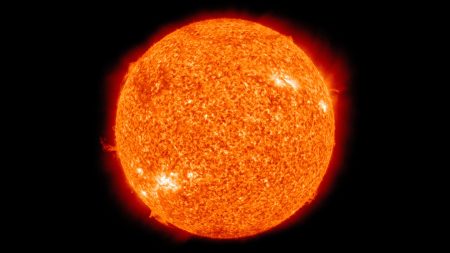
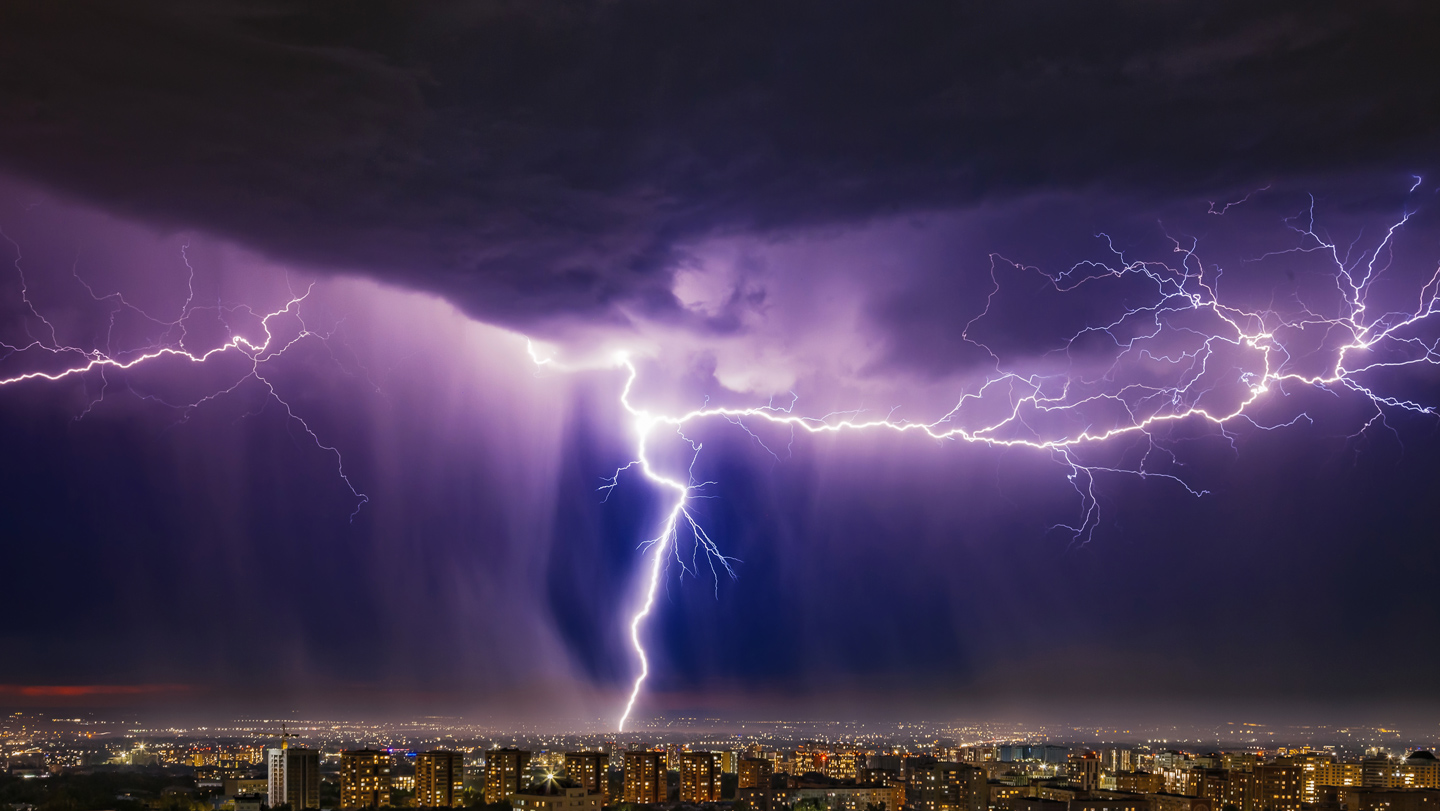
At the core of the method is a combination of weather and optics that feels almost like magic. Lightning is already eye-catching: a channel of superheated air whose temperature can be hotter than the surface of the sun. That sudden heat causes the surrounding air to expand explosively, which is what creates thunder. Most people experience thunder as an acoustic event, but those sound waves push against the ground with real force. Some of that acoustic energy is transformed into tiny ground motions, effectively creating a miniature seismic “source” that radiates into the shallow subsurface. There, a potential seismic wave travels through layers of soil and rock, bouncing off strong boundaries and soft pockets, returning echoes that carry information about what lies below. For a long time, however, it was difficult to capture these faint vibrations in cities without installing a dense network of instruments. That’s where the largely ignored fiber-optic cables already buried under many neighborhoods came in. Telephone and internet companies have spent decades laying hundreds of kilometers of glass fibers underground; many of these cables are “dark,” meaning they carry no data and are just waiting. A modern technique makes them useful as seismic detectors: tiny pulses of light are sent through the fiber, and as the thunder-induced ground motion stretches and releases the cable very slightly, the travel time of light through that segment changes. By tracking those changes along the entire length of the fiber, researchers can effectively turn a simple telecommunications cable into thousands of seismometers, measuring every little stutter and shake along its path. It’s a sort of deep-ear that listens not to the sound in the sky but to the song the trembling ground sings in response.
For the Penn State team, the studies began in 2019 with an encouraging proof-of-concept: the scientists showed that lightning in the distance could be detected by the same ultra-sensitive fibers buried beneath State College, Pennsylvania. This time, they decided to think bigger. Over two and a half storms, they collected enormous amounts of seismic data from about four kilometers of fiber-optic cable running around the campus, lying buried at about a meter deep. Instead of using one thunder event as a curiosity, they used more than 450 of them as natural seismic sources, averaging the signals together until the noise helped them create a clear picture of the shallow earth. By measuring how the seismic waves from thunder moved through different materials, they could reconstruct the geology underneath. The result is a kind of low-frequency “ultrasound” of the ground, down to about 100 meters depth. As if happens, the area beneath Penn State is especially interesting and especially tricky. It sits on a karstic landscape, which means the underlying rock is mostly limestone that has been slowly dissolved by rainwater for millennia, forming caverns, small caves, and a branching network of underground passages. On the surface it may look like ordinary campus terrain, but hidden below is a complicated and ever-changing maze of rock and air. The thunderquake-generated images showed breathtakingly costly structures in that maze—places where the rock appears weakened or fractured, where the limestone has lost its integrity, and where the connection of surface soil to the underbelly is more fragile than anyone realized.
Some of these newly discovered weak zones could be ticking time bombs for the creation of murk. This is no small matter: sinkholes are exactly what they sound like—the ground’s collapsing and shipping away—and they can appear without notice, swallowing roads, cars, sidewalks, and even the foundations of buildings. The team behind the new study specifically looked at the seismic maps to identify areas with unusual rock properties that looked like the beginning of future collapses. They also did their findings weren’t impossible. They checked their thunder-derived images against logs from more than, or boreholes that had been drilled into the hidden geology, and the results were consistent. They also correlated their maps with measurements of surface deformation from satellites, which allow researchers to detect up or down movements of the land. What emerged is a revealing treasure chest of patterns: hidden cracks, fracture zones, and possibly incipient cavities where rock had thinned or had been dissolved away. None of these hazards were obvious from the surface, and some had never been mapped before. The ability to find them simply by listening to the rumbles of a thunderstorm is a very powerful tool, especially because it does not require production of artificial noise or of earth—no explosives, no thumper trucks, of intrusive work in the middle of campus. The thunderstorm plays the role of the hammer; the existing fiber optic cable is the pointer, and the university’s underground becomes a feature that reveals itself.
What makes thunderquakes especially valuable from a practical perspective is their cost and scale. Traditional seismic surveys are used everywhere; they usually involve sending artificial waves into the ground, either with small explosive sources or vibrator trucks that shake the surface with heavy plates. These surveys are excellent but expensive, time-consuming, and sometimes challenging in densely populated urban areas, where a lot of noise and surface traffic can also interfere with the delicate sound detection equipment. Thunderquakes, in contrast, come with no cost at all. The atmosphere ignites the energy source itself. A single severe thunderstorm can generate powerful seismic signals over tens of square kilometers at once, covering an area that would otherwise require dozens of manually placed sources. Since many cities already have miles and miles of unused fiber-optic cable buried in their streets, and abundant thunder in warm months, the ingredients for this new approach already exist. The result is a kind of “urban seismology” that could be used to monitor ground integrity beneath schools, hospitals, pipelines, subway systems, and even entire districts, perhaps on a hands-off, ongoing basis. The same cables can listen to the rumble of a summer storm and generate a health report of the Earth’s crust beneath the town. It probably won’t be long before the concept is adopted elsewhere, because your backyard can have a high-tech system for measuring the ground’s strengthening through the power of extreme weather.
Looking even further beyond, the idea of thunderquakes might not be limited to the Earth. In a solar system there are moons and planets with lightning and huge storms—with Titan, the giant moon of Saturn, being particularly promising. Titan has a thick atmosphere, methane rain, and occasional mega storms that can last for a long time and roar with their own series of thunder. If a future spacecraft ever makes a landing on the surface of Titan, and if that spacecraft carries a fiber-optic stroke on a cable or something like it, the moon’s own thunderquakes could help illuminate the structure of the icy earth and the lakes of liquid methane beneath. The same principle that helps see through the karst under Pennsylvania could, in principle, be used to see through the frozen ground of an extremely distant world. For now, it’s enough to know that yes, the ground shakes when the sky rages; that those delicate sounds have something to say about the Earth’s uppermost skin; and that a saved-in-place fiber optic cable and a thunderstorm are everything we need for an act of geology. The next time you hear a low rumble of thunder outside the window, don’t cover your ears—think of tiny pulses of light traveling through a buried cable, feeling the Earth’s reaction to the weather. Thunderquakes are a beautiful reminder that the Earth and atmosphere talk all the time; we just needed the right ears to listen.