






# The Surprising Secret of Worms That Speed Up in Tight Spaces
When you think about getting from point A to point B, you probably assume that having more room to move makes things easier. A runner on an open track can sprint freely, while someone squeezed into a narrow corridor has to slow down and carefully navigate. That seems like common sense. But nature has a way of surprising us, and researchers recently discovered that tiny blackworms completely flip this logic on its head. These small aquatic creatures actually move faster when they’re compressed into tight, narrow channels than when they have plenty of open space to wiggle around in. It’s a counterintuitive finding published in the journal Physical Review Letters that challenges our assumptions about how creatures move through their environments.
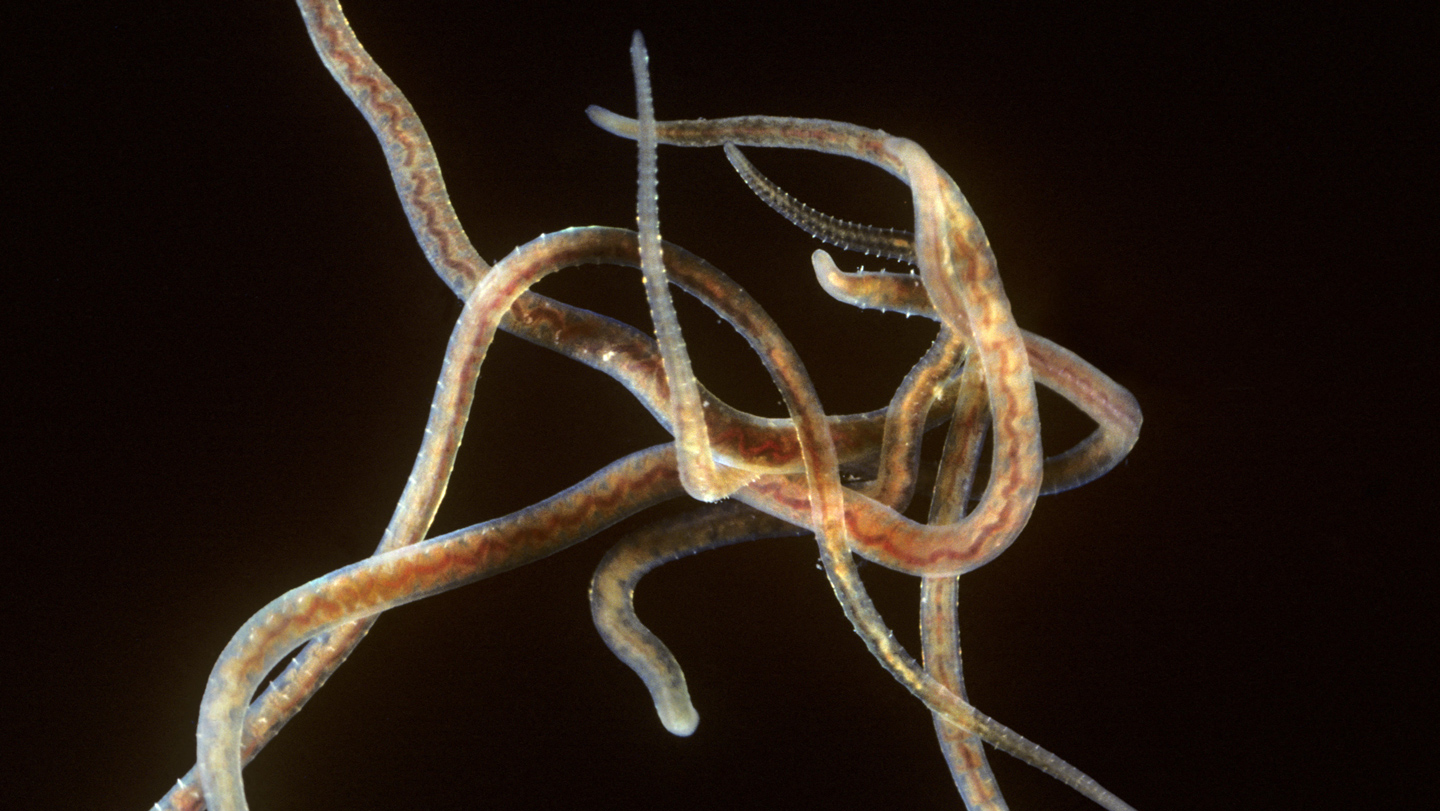
The research team, led by scientists at the University of Colorado Boulder, wanted to understand something that might seem simple at first glance: how does the width of a space affect how quickly a worm can travel through it? To answer this question, they turned to California blackworms, scientifically known as Lumbriculus variegatus. These are slender, flexible creatures that measure only about half a millimeter wide and grow to be between 2.5 and 5 centimeters long. They’re the kind of worms you might find wiggling around in the mud at the bottom of a pond. The researchers placed these worms in glass channels of varying widths and watched how they moved. What they found was genuinely unexpected. When the channels were roughly twice the width of the worm itself, the creatures could shoot through at remarkable speed, reaching the other end in about a minute. But when the channels were wider, giving the worms more room to maneuver, they actually became slower and more inefficient.
To understand why this happens, you need to think about how worms move. Unlike humans who have legs to push off the ground, worms use a wriggling motion, contracting and expanding their muscles in waves that travel along their bodies. This type of movement works well when a worm has something to push against, but when it’s in an open, spacious environment, the worm’s body has nowhere to anchor itself. It ends up flailing and reorienting constantly, wasting energy in directions that don’t help it move forward. In a narrow channel, however, the walls provide natural support. The worm’s body presses against the sides of the confined space, giving it something solid to brace against. Instead of wasting energy wiggling in all directions, the worm pushes off the walls and shoots forward like a bullet. The confinement actually eliminates the distractions and inefficiencies of open movement, forcing the worm to use its energy more productively.
The researchers didn’t just observe this behavior in real worms; they also built sophisticated computer simulations to understand the physics behind it. They created virtual models of the worms as strings of beads and squeezed these digital worms through channels of different widths in a simulated environment. The computer models behaved almost exactly like the real worms, which confirmed that the researchers were onto something fundamental about how these creatures move. Through these simulations and mathematical analysis, they identified the key factors that control worm speed: how bendy the worm is and how much room it has to move. They eventually boiled it down to a single mathematical ratio, the square of the channel width divided by the worm’s stiffness. When this number is small, meaning the worm is in a tight space relative to its flexibility, it moves quickly and efficiently in a straight line. When the number is large, with plenty of open space, the worm’s constant wriggling slows it down considerably.
This discovery is fascinating for several reasons, not least because it seems to defy common intuition about movement and space. Bioengineer David Hu at Georgia Tech, who wasn’t involved in the study, pointed out how rare this kind of behavior is in nature. His own research on snakes showed that they move more slowly through narrow spaces, which makes intuitive sense. Most creatures need elbow room to move efficiently, but blackworms are clearly different. Physicist Raghuram Chelakkot from the Indian Institute of Technology Bombay also noted how remarkable it is that such a simple model could capture the essential features of this complex worm movement. The fact that worms can move faster with less room challenges our assumptions and shows how diverse and adaptable biological systems can be.
Beyond the sheer wonder of this discovery, there are practical implications that could affect future technology. Saad Bhamla, a biomolecular engineer at CU Boulder, sees this research as potentially valuable for designing soft robots. These are flexible machines that can squeeze into tight spaces where rigid robots can’t go, and they could be incredibly useful for inspecting pipes, searching through rubble after earthquakes, or even delivering medications inside the human body. If engineers can figure out how to make soft robots move the way these worms do, moving more efficiently when space is tight, it could revolutionize how we design these devices. The key insight is that constraints can actually improve performance, and that sometimes the best thing you can do for efficient movement is to limit the options available. Next time you’re stuck in a crowded hallway, you might think of the humble blackworm and wonder if there’s a lesson hidden in its surprising speed.