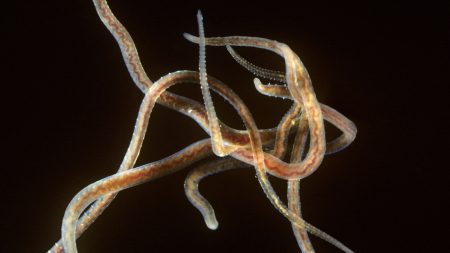






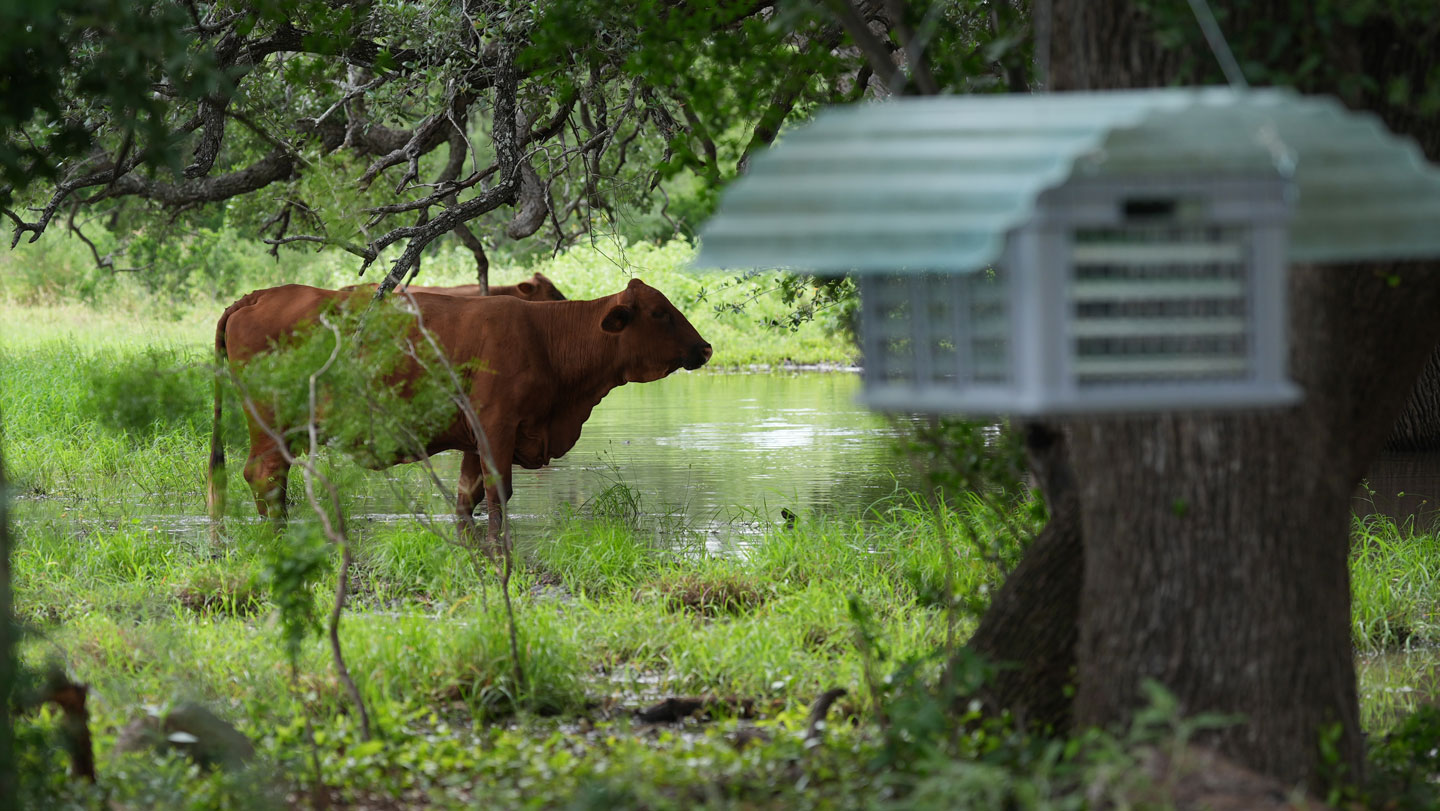
The quiet landscapes of the American Southwest are facing an unwelcome and deeply unsettling ghost from the past. After more than forty years of domestic eradication, the New World screwworm has quietly slipped back across the southern borders of the United States, sending shivers through ranching communities and veterinary circles alike. By late June, agricultural authorities had confirmed fifteen harrowing cases of these flesh-eating, hook-mouthed parasites spanning across Texas and New Mexico. The discovery of the first case in early June—found burrowed inside the wound of a vulnerable, three-week-old calf in Texas’s Zavala County—shattered decades of hard-won biological security. For families who make their living raising livestock, this is not merely an academic concern or an isolated ecological anomaly; it is a visceral, stomach-churning threat. The female of this subtropical blowfly species, known scientifically as Cochliomyia hominivorax, is driven by a ruthless biological instinct to search for any mammal with an open scratch, tick bite, or fresh branding mark. Once she finds a wound, she deposits her eggs, and within hours, the emerging larvae begin their painful, destructive feast, burrowing deep into the living flesh of host animals, which can range from domestic pets and livestock to local wildlife and, occasionally, unsuspecting humans.
For families and pet owners, the immediate question of personal safety naturally triggers high anxiety, yet experts urge a balanced perspective on the actual threat to human health. While the phrase “flesh-eating maggot” understandably conjures visions of a horror movie, history and modern epidemiology reassure us that human cases in developed areas remain incredibly rare. Edwin Burgess, a veterinary entomologist at the University of Florida, emphasizes that while internet search results can easily turn up terrifying anecdotes, the statistical chance of a person contracting a screwworm infection is extraordinarily miniscule when looked at against the backdrop of our massive population. When human infections do occur, they are almost impossible to ignore: the larvae create an intensely painful, deeply localized burning sensation accompanied by a highly distinct, foul odor, which thankfully prompts immediate medical attention. In the rare event of human parasitism, the treatment is direct, manual extraction of the larvae, coupled with proper wound care to prevent secondary bacterial infections. Nevertheless, for those living near the active zones in Texas and New Mexico, the threat to local livelihoods is monumental. If the infestation spreads wide enough to echo the historic Texas outbreak of 1976, economic models predict the financial toll on livestock industries could easily exceed $1.8 billion annually. Ranchers, however, can find solace in one absolute truth: our food supply remains completely secure, as screwworms cannot host in processed meat, fruits, or vegetables, and affected live animals can make a full, painless recovery if they are diagnosed and treated early.
To appreciate the scale of the current mobilization, one must look back at one of the greatest triumphs in the history of agricultural science: the original eradication of the screwworm. During the middle of the twentieth century, when the parasite ran rampant across the American South, scientists developed a brilliant, elegant strategy known as the Sterile Insect Technique (SIT). This method weaponized a unique quirk in the biology of the female blowfly—specifically, that she mates only once in her entire lifetime. By capturing millions of male flies, sterilizing them using targeted, low-dose radiation, and releasing them via low-flying aircraft over infested regions, scientists successfully disrupted the reproductive cycle of the species. When the wild, fertile females mated with the sterile, released males, they produced entirely unviable eggs, causing the wild population to rapidly collapse. By 1982, this persistent, massive aerial campaign had completely purged the United States of the pest, creating a biological barrier designed to keep the screwworm restricted to South America. For decades, this barrier held strong, managed jointly by international commissions that released sterile flies along the narrow Isthmus of Panama to act as a living shield protecting Central and North America from reinvasion.
The breakdown of this geographic containment and the subsequent northward march of the screwworm can be attributed to a perfect storm of environmental shifts and structural vulnerabilities. In recent years, global warming has progressively shifted climate patterns, transforming areas that were once too cold for the tropical pest into warm, inviting environments where blowflies can easily survive the winter months. Recent environmental studies warn that as global temperatures continue to climb over the next twenty years, the potential geographical range of the screwworm will expand significantly further into North America, turning historical emergency zones into permanent habitats. This ecological shift has been exacerbated by administrative and logistical challenges; following the historic victories of the twentieth century, a sense of complacency led to the closure of several key sterile fly breeding facilities due to high operational costs. This left a single, high-stakes facility in Panama—the Panama-United States Commission for the Eradication and Prevention of Screwworm (COPEG)—to bear the entire burden of global eradication. Furthermore, veterinarians point out that the unchecked, illegal movement of livestock across domestic and international borders has acted as a biological superhighway, quietly transporting infested animals past inspection checkpoints and allowing the parasite to establish new footholds far ahead of containment lines.
In response to this modern crisis, agricultural scientists and federal agencies are refusing to rely solely on the playbooks of the past, instead deploying an array of sophisticated, next-generation technologies to reclaim control. The United States Department of Agriculture (USDA) is now utilizing advanced meteorological data and real-time epidemiological tracking models to predict precisely where wind currents and humidity levels might carry wild blowflies, letting authorities drop sterile males with surgical precision. To address the severe shortage of sterile flies, massive infrastructural investments are underway, including the rapid reactivation of a production facility in Metapa, Mexico, and a cutting-edge dispersal center at Moore Air Base in Edinburgh, Texas. Perhaps the most revolutionary weapon in this updated arsenal is the development of the “Novo Fly” strain, a genetic breakthrough that allows scientists to breed broods of flies that are entirely male. By introducing an inherited gene that causes female larvae to perish early in their development, rearing facilities can effectively write females out of the equation, instantly doubling the capacity of their facilities to produce active, competitor males. Instead of wasting valuable space and food rearing equal numbers of males and females, researchers can now produce a pure, high-potency army of sterile males ready to overwhelm wild populations.
While the modern scientific response is undeniably impressive, experts agree that the journey back to complete eradication will be a long, challenging road requiring immense public patience and substantial financial investment. The federal government has already committed over $100 million to fund emergency response efforts, construct breeding facilities, and establish early-warning surveillance systems to alert communities before outbreaks expand. Simultaneously, the Food and Drug Administration has stepped in by issuing emergency-use authorizations for highly effective veterinary treatments, such as Dectomax, an injectable systemic insecticide that diffuses through an animal’s tissues and neutralizes the burrowing larvae before they can cause permanent, systemic damage. Although the construction and optimization of these new defensive facilities in Texas and Mexico will take at least another year to become fully operational, the sentiment among veterinary entomologists and agricultural leaders remains resolutely optimistic. This campaign is not merely about managing a troublesome farm pest; it is a vital act of stewardship aimed at protecting our shared ecosystems, preserving rural economies, and ensuring the health and dignity of domestic animals. By merging historic scientific principles with modern biotechnology, we are poised to once again push this resilient predator back, proving that human ingenuity and collective resolve remain our most powerful shields against the unpredictable forces of nature.