



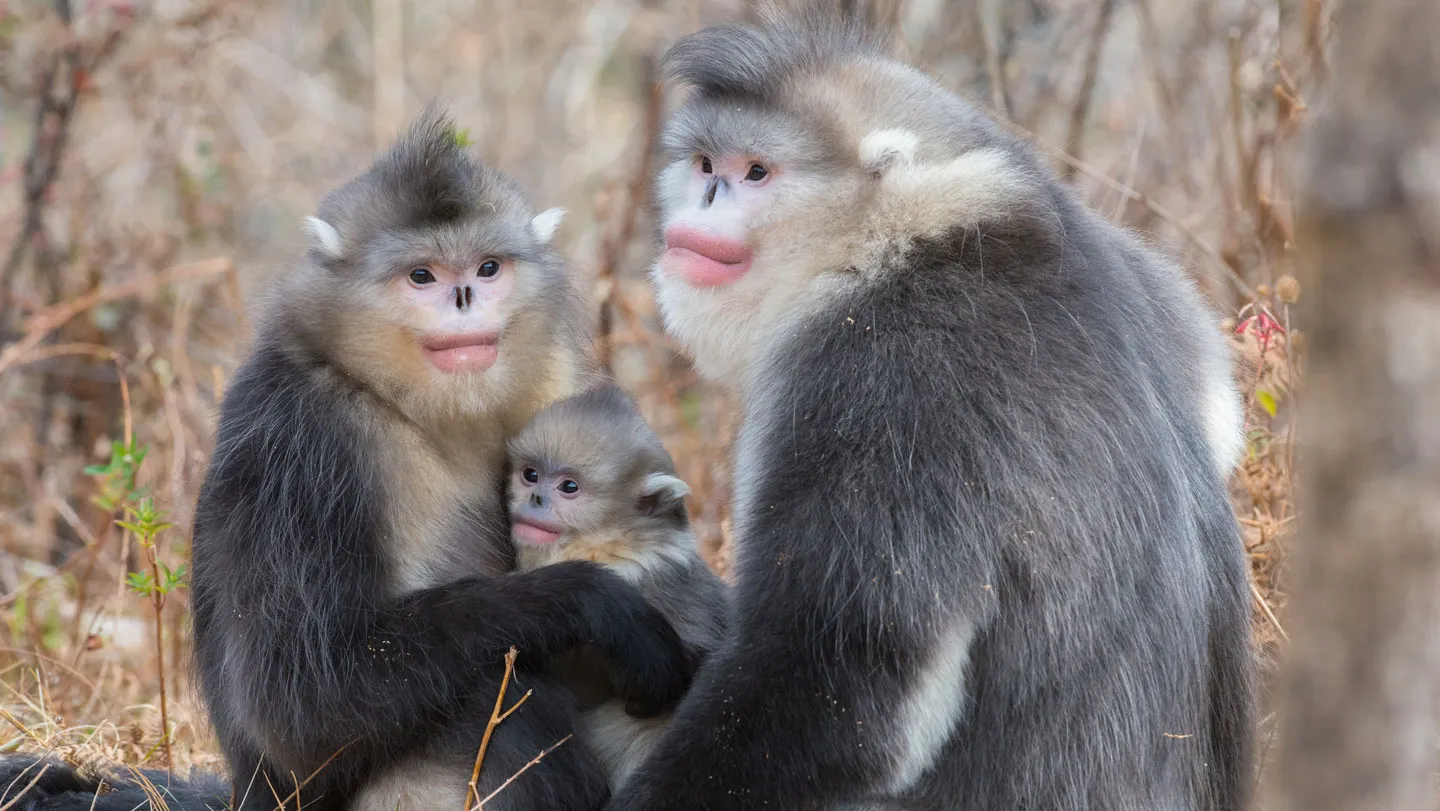
Imagine wandering through a bustling city neighborhood where the locals are eyeing each other suspiciously over backyard fences. You notice that in some families, the dads are towering figures, seemingly built like tanks compared to their wives. Is it just because the guys want to intimidate the other neighborhood fellas for a shot at the best BBQ grills or the coziest spots on the park bench? In the animal kingdom, particularly among primates—those clever monkeys, apes, and lemurs we’ve all heard so much about—there’s a similar phenomenon called sexual size dimorphism. That’s the scientific way of saying males in many species are noticeably bigger than females. For example, take baboons or gorillas; males can be double the size of their female counterparts. It’s not just a random quirk of evolution; it’s tied to survival strategies. Traditionally, scientists thought this size difference was all about competition within social groups, where bigger males muscle out the smaller ones to claim the most attractive mates. But what if there’s more to it? What if living in a world where every encounter with outsiders feels like a potential standoff is the real driver? Researchers are now suggesting that territorial tensions between rival groups might be the key reason males bulk up, turning them into natural bouncers who say, “Stay out of our territory—literally.” This makes the phenomenon more relatable to us humans, who often invest in strength training or assertiveness courses not just for internal workplace rivalries but to face external threats from competitors. It’s like how athletes hypetrain not only to win championships in their own leagues but to intimidate rivals from neighboring cities. In primate societies, this “monkey mean, monkey big” dynamic could be evolution’s way of keeping the peace—or at least reducing the constant skirmishes over food, shelter, and partners. By making males larger, evolution might prevent full-blown wars, opting instead for a silent standoff that keeps everything in check. Personal stories from primate watchers often highlight this: imagine a troop of monkeys peacefully foraging until a neighboring group approaches, and the alpha male’s sheer bulk discourages any aggression. It’s a reminder that in crowded, interactive worlds—whether human or primate—size isn’t just about personal gain; it’s a strategic investment in deterrence. This study opens up new ways to think about power dynamics, showing how external pressures shape our bodies, much like how city dwellers might unconsciously bulk up in response to urban crowding. Ultimately, it’s a testament to how evolution crafts responses to social environments, turning subtle tensions into visible traits that define species for generations.
When we think about why primates show such dramatic differences in male and female body sizes, the classic explanation has always been straightforward: competition among males within the same group. Picture a high school drama class where everyone vies for the lead role—same idea. In primate troops, males are often closely related, like cousins or brothers, and they battle it out physically to secure mating opportunities with the females. Bigger, stronger guys can dominate these internal squabbles, intimidating or outright fighting off rivals to become the top dog. This isn’t pure aggression for fun; it’s rooted in natural selection, where the largest males get to pass on their genes more effectively. Gibbon societies, for instance, show minimal size dimorphism because their mating systems are monogamous and less combative internally—think of them as the laid-back hippies of the primate world. On the flip side, gorillas have evolved massive males because their groups are harems dominated by one dominant male who knocks out the competition. It’s like how in human sports, taller basketball players dominate the court not just because they’re better at scoring but because they can block opponents from challenging their position. This in-group rivalry theory has dominated primate studies for decades, supported by countless observations of chimpanzees chest-thumping or bonobos negotiating alliances. It makes sense on a personal level too—think of the “alpha male” trope in movies and books, where the biggest guy gets the girl. But as evolutionary anthropologist Cyril Grueter from the University of Oxford points out, this view might be too narrow. In real-world primate communities, isolation isn’t an option. Groups overlap territories, share resources, and bump into each other regularly. These inter-group dynamics add a layer of complexity, where the brawls aren’t just about impressing the ladies at home but also about preventing invasions from outsiders. It’s akin to neighborhood watch programs in human suburbs, where vigilance against external threats shapes community’s behavior. Ignoring this broader social context means missing half the story, much like analyzing a team sport by only watching practice sessions instead of the actual games against rivals. Grueter’s skepticism stems from his graduate research, where he noticed patterns in African leaf-eating monkeys that didn’t fit the traditional mold. These monkeys, with their frequent cross-group interactions, had exaggerated male sizes that seemed disproportionate to internal mate competition. It prompted him to dig deeper, questioning if the evolutionary pressure came from territorial standoffs rather than romantic rivalries. This humanizes the primates by drawing parallels to our own pressures: we build bigger homes not just to woo partners but to signal wealth and deter burglars. In essence, the old model is incomplete because it treats primate societies as self-contained bubbles, overlooking the messy reality of interdependencies that mirror our interconnected global village.
Diving into Grueter’s revelation, it’s fascinating how a simple observation during his Ph.D. sparked a rethinking of primate evolution. He was studying African leaf-eating monkeys—those furry, foliage-munching critters that look like they’ve stepped out of a jungle-themed animated movie. These guys aren’t solitary; they’re social butterflies (well, primates) that mingle with other groups more than you’d think. Grueter noticed their males were exceptionally large relative to females, a dimorphism that seemed exaggerated beyond what in-group competition alone could explain. It wasn’t just random genetics; it correlated directly with how much contact they had with neighboring troops. This got him curious: what if these interactions were driving the size evolution? To find out, Grueter collaborated with a team to expand the scope. They scoured the scientific literature for data on 146 primate species—everything from tiny lemurs to majestic orangutans. It was like piecing together a giant puzzle of primate biographies, each with tales of mating habits, territory overlaps, and encounter frequencies. They looked at female and male body masses as the key variable, but instead of just focusing on internal group dynamics, they measured proxies for between-group tensions. How much did home ranges overlap? How often did groups cross paths? And crucially, how aggressive were those meetings? Grueter recalls the thrill of analyzing these datasets, much like a detective uncovering clues in a mystery novel. The traditional metrics, like mating systems (polygamous harems versus monogamous pairs), were factored in as controls, but surprisingly, they didn’t sway the results as much as expected. Instead, the big reveal was that species with high inter-group contact—crowded social landscapes where territories bled into each other—had the largest males. It’s comparable to how urban planners design taller skyscrapers in densely populated cities to make statements to surrounding developments. For Grueter, this empirical approach humanized his subjects; he envisioned the monkeys not as abstract data points but as characters in a social drama, where size became a peacemaker’s tool rather than just a fighter’s weapon. One anecdote from the field resonates: watching troops approach a border, the bigger males posturing without full combat, silently declaring, “This is ours.” It mirrors human conflicts, like border issues between countries resolved through displays of military might rather than outright war. Grueter’s work highlights how evolution responds to perpetual social friction, turning biology into a mirror of our own strategic adaptations in competitive environments.
With the findings in hand, it’s clear that territorial tensions are reshaping our understanding of sexual size dimorphism in primates. The study’s results, published in Biology Letters, paint a vivid picture: male primates bulk up primarily to deter rival groups, not just to win internal scraps for mates. Think of it as evolutionary diplomacy, where size acts as a deterrent, averting conflicts before they escalate into full-blown fights. Grueter explains that in species where territories overlap significantly and encounters are frequent, males are disproportionately larger—sometimes by as much as double the female mass. This isn’t linear; aggressive interactions amplify the effect, making bigger males the equivalent of nuclear deterrents in primate geopolitics. Surprisingly, the mating system—a proxy for in-group mate competition—had negligible impact, suggesting that inter-group pressures have been the underappreciated force. It’s like discovering that the reason football linemen are so massive isn’t just to block teammates in drills but to intimidate opposing teams during games. Grueter theorizes this “chronic cold war” supercharges size evolution, where the persistent threat of altercations selects for bulkier builds over generations. Consider baboons, those earthy, raucous monkeys; their males grow large to navigate overlapping savanna ranges fraught with resource competition. Or gorillas, whose silverbacks patrol misty forests, their size discouraging encroachments from wanderers. Human analogies abound: in gang territories or corporate expansions, larger figures project authority to fend off rivals. Grueter acknowledges that male size likely evolves under multiple influences—intra-group rivalry, mate quality, and even parental investment—but inter-group dynamics emerge as a key gap in prior research. By discouraging escalation preemptively, bigger males conserve energy and resources, fostering stability in crowded primate worlds. It’s a pragmatic strategy, akin to how we invest in security systems not just for inner peace but to keep neighborhood bullies at bay. This insight could extend beyond primates, influencing studies on other mammals like lions or wolves, where territory disputes shape behaviors. Overall, the research underscores how social landscapes mold physical traits, reminding us that evolution isn’t a solo act but a response to collective pressures, much like how community norms shape individual human identities. The team’s dataset, though limited by available literature, reveals patterns that challenge decades of assumptions, inviting a broader view of animal hierarchies.
Looking ahead, these discoveries open up exciting avenues for exploring sexual dimorphism’s broader impact, potentially rewriting evolutionary biology textbooks. If inter-group tensions drive male size, could the same logic apply to other traits, like those intimidating canine teeth in baboons or vocal calls in chimpanzees? Grueter is enthusiastic about probing these questions, envisioning studies on how territorial pressures influence primate displays—roars, postures, and even alliances. It humanizes primates further, turning them into relatable strategists: a monkey inflating its chest isn’t just showing off; it’s negotiating social space. Similarly, in human societies, we see this in everything from athletic builds to symbolic displays of power in politics. The implications ripple out to other species too—think red deer males locking antlers in territorial battles or alpha eagles defending vast aerial domains. Perhaps migrations, climate changes, or even human encroachment amplify these traits, creating new evolutionary landscapes. Grueter’s study suggests that crowded habitats select for vigilance strategies, where size becomes a currency of deterrence. This could inform conservation efforts, helping predict how primates adapt to shrinking forests or urban invasions. It’s not just academic; it touches on wildlife management, like ensuring sanctuaries account for inter-group dynamics to reduce stress-induced conflicts. Anecdotally, wildlife photographers often witness this: a lone primate approaching a group boundary, its larger male countering with a simple stare-down that de-escalates tension without bloodshed. In our lives, we parallel this—big guys at bars diffusing con}>