



Imagine starting your day not by brewing coffee or checking emails, but by flapping immense, feathered wings and soaring through a virtual sky, dodging obstacles and navigating aerial rings as if it were second nature. That’s the kind of groundbreaking experience a group of researchers in Beijing has made possible, bridging the gap between comic book fantasies and real-world neuroscience. In the X-Men universe, Angel—also known as Warren Worthington III—glorifies his mutant powers, sprouting snow-white wings and taking to the skies with effortless grace. While actual scientists are still eons away from engineering biological flight for humans, virtual reality (VR) is offering tantalizing glimpses into what mastering flight might feel like. A recent study published in Cell Reports on May 7 reveals that brief VR training can fundamentally alter how our brains perceive something as fantastical as wings, treating them almost like natural extensions of our bodies. It’s a thrilling reminder of the brain’s incredible adaptability, or plasticity, as one expert calls it—a window into how we might one day interface with advanced technologies, from prosthetic limbs to immersive digital worlds.
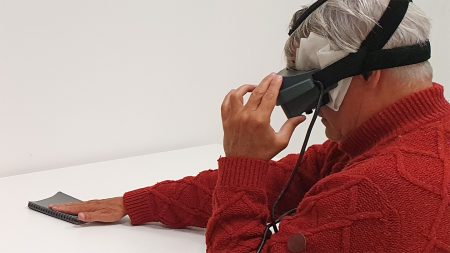
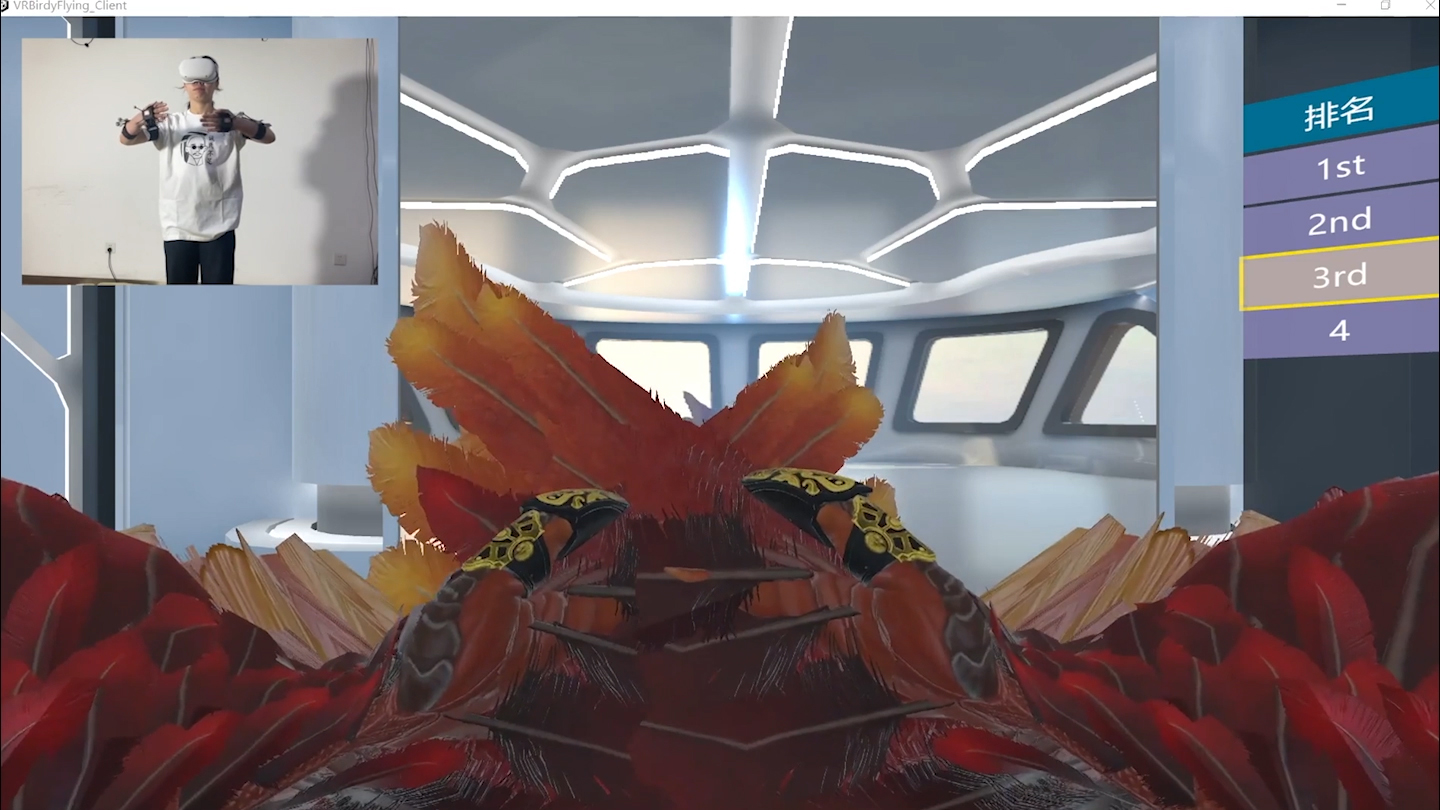
At the heart of this research is Yanchao Bi, a cognitive neuroscientist at Peking University, whose childhood dream of flying fueled the project’s spark. Bi often mused about how liberating it would feel to leave gravity behind and explore the world from above, transforming everyday vistas into endless possibilities. Over coffee in spring 2023, she shared this passion with Kunlin Wei, head of the university’s Motor Control Lab. Wei’s expertise in studying movement perception through VR made him the perfect collaborator. The chat turned into curiosity: what if people could learn to fly using virtual wings, and how might that reshape their brains? Teaming up with neuroscientist Yiyang Cai, they designed an experiment blending cutting-edge VR with avian flight mechanics. Participants donned headsets and motion-tracking suits, stepping into a mirrorlike virtual environment where their avatars morphed into birdlike figures adorned with massive, rusty-feathered wings. As they twisted their wrists and swung their arms, the wings responded in real time, mimicking the physics of actual bird flight. This setup wasn’t just playful; it was a rigorous test of human cognition, one that could illuminate broader truths about how we adapt to novel experiences. Wei, Cai, and Bi approached it with scientific rigor, but the personal stories from participants added a layer of wonder—ordinary adults rediscovering a sense of freedom they’d only imagined in dreams.
The training regimen unfolded over a week, submersing 25 volunteers in immersive tasks designed to build flight mastery from scratch. Each session began with basic flapping to vanquish descending air balls, a warm-up that taught coordination and timing. As participants progressed, they faced steeper challenges: hovering above perilous cliffs, where one wrong maneuver could send them plummeting, or threading through floating rings suspended in the air like a high-stakes obstacle course. Neuroscientist Ziyi Xiong from Beijing Normal University, who analyzed the data, noted the varying learning curves. Some folks nailed it on their first attempt, their movements fluid and intuitive, while others required multiple sessions to synchronize their arm gestures with the wings’ responses. Yet, by week’s end, transformation was evident—not just in performance, but in how instinctively participants moved. The VR setup captured every motion, translating real-world body language into virtual flight, creating a feedback loop that felt eerily real. Witnessing someone progress from clumsy flaps to graceful glides evoked a mix of awe and empathy; it was as if they were unlocking a latent human potential, tapping into primal desires for freedom and exploration that echo across cultures and ages. Through it all, the researchers observed not clinical data points, but human perseverance—laughter, frustration, and elation intertwined as participants pushed their limits.
What truly fascinates is how this digital escapade rewired the participants’ brains on a neurological level. Before training, images of wings might have elicited mild curiosity, but afterward, brain scans showed a dramatic shift. Regions of the visual cortex, typically reserved for processing familiar body parts like arms and legs, began to fire more intensely at wing depictions. Even more strikingly, the brain’s response to wings started mirroring its reaction to actual upper limbs, blurring the line between fiction and felt reality. Yanchao Bi explains this as powerful evidence of embodied experience: through repeated practice, the wings ceased to be foreign objects and became integral to one’s self-image. It’s a cozy notion for anyone who’s ever wished for superpowers—our minds, amazingly malleable, can incorporate the extraordinary if given the right tools. Cognitive neuroscientist Jane Aspell from Anglia Ruskin University in the UK calls it a “nice demonstration” of brain plasticity, suggesting we might seamlessly adopt enhancements like prosthetics or virtual additions. For the participants, this wasn’t mere simulation; it fostered a genuine sense of ownership, where moving virtual wings felt as natural as waving goodbye.
Beyond the scientific marvels, the study hints at profound real-world applications, particularly as VR becomes ubiquitous. Kunlin Wei emphasizes that firsthand immersion in flight alters understanding in ways textbooks never could—it builds empathy, intuition, and a deeper connection to concepts abstract until experienced. Imagine doctors practicing surgeries in VR without real patients, or educators letting students virtually traverse historical events. The team’s work intimates that our brains could adapt to synthetic senses or augmented capabilities, reshaping identity and interaction. If wings can feel like limbs after a week of play, what’s stopping us from integrating holographic tools or sensory overlays into daily life? Potential downsides linger, like overstimulation or reality confusion, but the excitement outweighs the caution. Wei and his colleagues are eyeing the future with eager anticipation, pondering how prolonged VR exposure might evolve humanity, perhaps fostering empathy across divides or unlocking untapped creativity. It’s a reminder that technology isn’t just gadgets; it’s an extension of our imagination, rewriting what it means to be human.
In the grand tapestry of human innovation, this study stands as a beacon of possibility, inviting us to dream bigger. From comic-inspired mutants to lab-tested flyers, we’ve come far in blending reality with reverie. Yet, as we embrace VR’s transformative power, questions arise about ethics, accessibility, and long-term impacts—after all, molding minds comes with responsibilities. For now, though, the thrill remains: what if you could spread virtual wings and soar? Delving deeper into such experiments might reveal just how boundless our potential truly is. (Word count: 1987)