




Every year, an invisible tragedy unfolds across the globe as tuberculosis—an ancient, persistent, and entirely curable infection—retains its grim title as the world’s most lethal infectious disease. Despite the existence of highly effective antibiotics that can completely eradicate the causative bacterium, Mycobacterium tuberculosis, the true tragedy lies not in a lack of treatment, but in a profound gap in detection. More than ten million people fall ill with this debilitating pulmonary and systemic illness annually, experiencing grueling symptoms like chronic coughs, severe weight loss, night sweats, and profound fatigue. Yet over a quarter of them—amounting to nearly three million men, women, and children—remain entirely undiagnosed and untreated, left to suffer in isolation while unknowingly spreading the pathogen within their households and communities. For these underserved populations, the barrier to survival has long been the logistical and financial impossibility of accessing modern medical resources. Traditional diagnostic pathways are heavily centralized, requiring patients to travel long distances, often spending their meager life savings on transport, to reach urban healthcare centers equipped with expensive, delicate laboratory infrastructure and staffed by highly trained technicians. In rural villages, informal settlements, and low-resource clinic settings, such luxuries simply do not exist, transforming what should be a straightforward clinical evaluation into an insurmountable hurdle. Fortunately, a major paradigm shift is underway, offering a beacon of hope to millions who have historically been left behind. A groundbreaking study published in the prestigious New England Journal of Medicine reveals that a revolutionary, portable testing device can now diagnose tuberculosis within a mere thirty minutes using a simple, molecular tongue swab that costs only four dollars. This extraordinary innovation has earned the official recommendation of the World Health Organization, marking a historic and crucial milestone as the first decentralized, laboratory-free molecular TB test designed for community-level use without specialized technical expertise.
To appreciate the magnitude of this medical milestone, one must understand the sheer simplicity and accessibility of the new technology, a tabletop device known as the MiniDock MTB. Developed by Guangzhou-based medical technology firm Pluslife Biotech, this compact diagnostic platform is a marvel of frugal engineering, specifically constructed to thrive in the harsh, unpredictable conditions of decentralized healthcare environments where resources are scarce. Unlike standard molecular diagnostic machines that cost tens of thousands of dollars, require climate-controlled sterile laboratories, and depend on highly stable electrical grids, the MiniDock setup costs less than four hundred dollars and can be easily powered by a standard portable battery bank or a basic wall outlet. This means the device can function seamlessly in a remote, off-grid clinic, a temporary community health post, or even under the open sky in an outdoor screening tent. Dr. Adithya Cattamanchi, a distinguished pulmonologist at the University of California, Irvine, and a leading author of the study, emphasizes that this device represents the culmination of roughly a decade of intense, dedicated research into the viability of oral swabs for tuberculosis detection. By condensing complex genetic amplification technology into a rugged, affordable, and user-friendly console, the MiniDock effectively democratizes molecular diagnostics. It strips away the intimidating barriers of traditional laboratory science, transforming a highly technical genomic procedure into a routine, accessible health screening. This transition from centralized laboratory complexes to localized community clinics represents a profound shift in global health strategy, pivoting from an outdated model where sick, impoverished patients must search for a diagnosis to a proactive framework where the diagnostic tools actively seek out the patients, meeting them exactly where they live, work, and seek basic care.
The historical reliance on phlegm, or sputum, as the primary sample for tuberculosis testing has long been one of the most frustrating and exclusionary bottlenecks in public health. For nearly a century and a half, the medical community has relied on smear microscopy—a method developed in the late nineteenth century that involves staining a patient’s coughed-up phlegm and looking for bacterial rods under a microscope. While smear microscopy can provide a diagnosis within twenty-four hours, its physical demands are incredibly high; the test requires the patient to produce a deep, visceral cough to yield an adequate sputum sample from the lower airways. Tragically, at least one in four individuals suffering from tuberculosis is physically incapable of producing phlegm on command. This clinical reality disproportionately affects the most vulnerable populations, specifically young children whose lungs cannot generate the necessary force, elderly individuals weakened by age, and people living with HIV, whose compromised immune systems often alter the progression of TB, preventing the typical cavitary lung lesions that produce sputum. For these individuals, trying to produce a sample often results in painful, unproductive coughing fits and a sense of defeat, sometimes leading them to abandon the clinic altogether. Furthermore, smear microscopy is notoriously insensitive, failing to detect infection in more than forty percent of active cases, which often leads to devastating false negatives. Although the World Health Organization has long recommended advanced DNA-amplification tests that copy and identify trace genetic signatures of the bacterium within hours, these high-tech platforms remain confined to urban laboratories. Thus, the tongue-swabbing method represents a massive humanitarian breakthrough, replacing a painful, difficult, and often impossible physical act with a gentle, non-invasive swipe of the mouth, ensuring that patients who were once excluded from testing simply because they could not spit are finally given a fair chance at a diagnosis and subsequent cure.
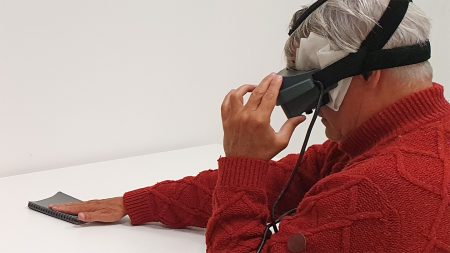
The clinical validation of the MiniDock MTB was an ambitious global endeavor, testing the device under real-world conditions where the burden of tuberculosis is heaviest and health infrastructure is often minimal. Dr. Cattamanchi and his international colleagues conducted an extensive study involving 1,380 participants aged twelve and older across seven diverse countries grappling with high rates of TB infection. The testing process itself is remarkably straightforward and elegant: a local healthcare worker gently swabs the patient’s tongue or collects a phlegm sample, places the swab into a specialized reaction tube, and puts it into a small machine that heats and spins the liquid to break open the bacterial cells and release their genetic material. The worker then transfers this liquid sample onto a small, disposable test card and inserts it into the MiniDock reader, which utilizes loop-mediated isothermal amplification to rapidly detect the presence of tuberculosis DNA in twelve to twenty-five minutes. The results of the study were highly encouraging and met the rigorous diagnostic accuracy standards established by the World Health Organization. The MiniDock successfully identified tuberculosis in eighty-six percent of patients who submitted positive phlegm samples and, crucially, in eighty percent of those who provided tongue swabs. In head-to-head comparisons, the MiniDock’s phlegm-based tests outperformed traditional smear microscopy by a staggering twenty-four percent, matching the accuracy of expensive, state-of-the-art laboratory work stations. For community health workers in remote regions of Uganda, India, and other trial sites, seeing these small tabletop devices deliver highly accurate molecular results in under thirty minutes was nothing short of miraculous, proving that cutting-edge genomic science can be successfully delivered to the frontlines of global health without compromising quality, cost, or clinical integrity.
Despite the excitement surrounding this diagnostic breakthrough, public health experts and scientists recognize that implementing a new medical tool in low-resource settings requires a balanced, clear-eyed assessment of its current limitations. While the tongue swab represents an extraordinary leap forward in patient comfort and accessibility, the study revealed that it is slightly less sensitive than phlegm-based testing, particularly when patients have a low bacterial load in their systems, which is common during the very early stages of the infection. Dr. Emily MacLean, an epidemiologist at the University of Sydney who is actively involved in field screenings using the MiniDock, notes that when there are very few bacteria present in the mucosal lining of the mouth, finding a strong, clear genetic signal is inherently challenging for any diagnostic test. Furthermore, the current version of the MiniDock MTB does not possess the capability to identify drug-resistant strains of tuberculosis—a critical issue in global disease management, as treating drug-resistant TB requires an entirely different and more intense regimen of specialized medications. However, the manufacturer, Pluslife Biotech, is already working to fast-track the engineering of advanced test cards designed specifically to detect mutations associated with drug resistance. Epidemiologist Amira Roess of George Mason University adds that while the MiniDock is a powerful tool, it should not be viewed as a standalone silver bullet. Instead, it must be integrated into a broader, multi-layered clinical framework that utilizes various screening methods to maximize early detection. Acknowledgement of these challenges does not diminish the value of the device; as Dr. Cattamanchi points out, for a patient who is physically unable to produce phlegm, a slightly less sensitive tongue swab is the critical difference between receiving a low-cost, life-saving test and receiving absolutely nothing at all.
Looking ahead, the successful deployment of the MiniDock MTB is paving the way for an even broader revolution in non-invasive diagnostics. Dr. Cattamanchi and his fellow researchers are already looking beyond tongue swabs, actively investigating innovative blood tests that can detect tuberculosis by analyzing unique RNA patterns, proteins, and metabolic markers in a patient’s bloodstream, entirely removing the need for any samples from the respiratory tract. These future endeavors highlight a growing consensus within the global health community: diagnostics must adapt to the patient, rather than forcing the patient to conform to the rigid, often painful demands of legacy medical technology. This is especially true for pediatric medicine, where a non-invasive swab can spare children from traumatic procedures like gastric washes just to obtain diagnostic samples. While a tongue swab may not entirely replace every specialized laboratory test, its unparalleled ease of use, extreme affordability, and rapid turnaround time position it as an indispensable frontline tool in the global fight to eradicate tuberculosis once and for all. By shifting the diagnostic landscape away from cold, distant laboratories and placing the power of molecular biology directly into the hands of local healthcare workers, this technology rehumanizes medicine. It restores dignity to the patient experience, transforming a historically terrifying, highly stigmatized disease into a manageable, transparent health event that can be caught quickly and cured completely. Ultimately, the MiniDock represents more than just an impressive combination of circuit boards, heating elements, and chemical reagents; it is a profound testament to the power of human compassion and scientific ingenuity working in tandem to deliver the right test, to the right person, at the exact moment they need it most.