






The Remarkable Engineering of Snail Slime: Nature’s Versatile Masterpiece
In the natural world, few substances are as underappreciated as mucus. We tend to think of it as merely a nuisance—something to wipe away or avoid. But in the animal kingdom, mucus is a wonder material, performing extraordinary feats that human engineers can only dream of replicating. From hagfish that unleash clouds of gunk to choke predators, to tubelip wrasse fish that use their snotty lips to safely graze on stinging corals, mucus serves a dazzling array of functions. It can form protective shields, create sticky gripping surfaces, or provide a slick pathway for movement. Now, scientists have discovered that a humble land snail takes this versatility to an entirely new level by crafting no fewer than five distinct varieties of slime, each with its own unique properties and purpose. This remarkable finding, published in the journal Science, reveals a sophisticated biological system that could inspire the next generation of smart materials.
The story begins with a curious observation by biochemist Franziska Jehle at the Max Planck Institute of Colloids and Interfaces in Potsdam, Germany. While watching terrestrial snails in her laboratory, she noticed something puzzling about the way they interacted with surfaces. When snails wanted to attach themselves firmly to a surface, they used their mucus in one way. But when they wanted to glide across that same surface, they used it in a completely different manner. This seemed contradictory—how could the same substance be both an effective glue and a slippery lubricant? Jehle was determined to understand what distinguished the mucus used for sticking from the mucus used for locomotion. What she discovered was far more complex than anyone had anticipated. The snails weren’t simply using one versatile substance for different purposes; they were actually manufacturing multiple distinct types of slime, each with its own chemical recipe tailored to specific tasks.
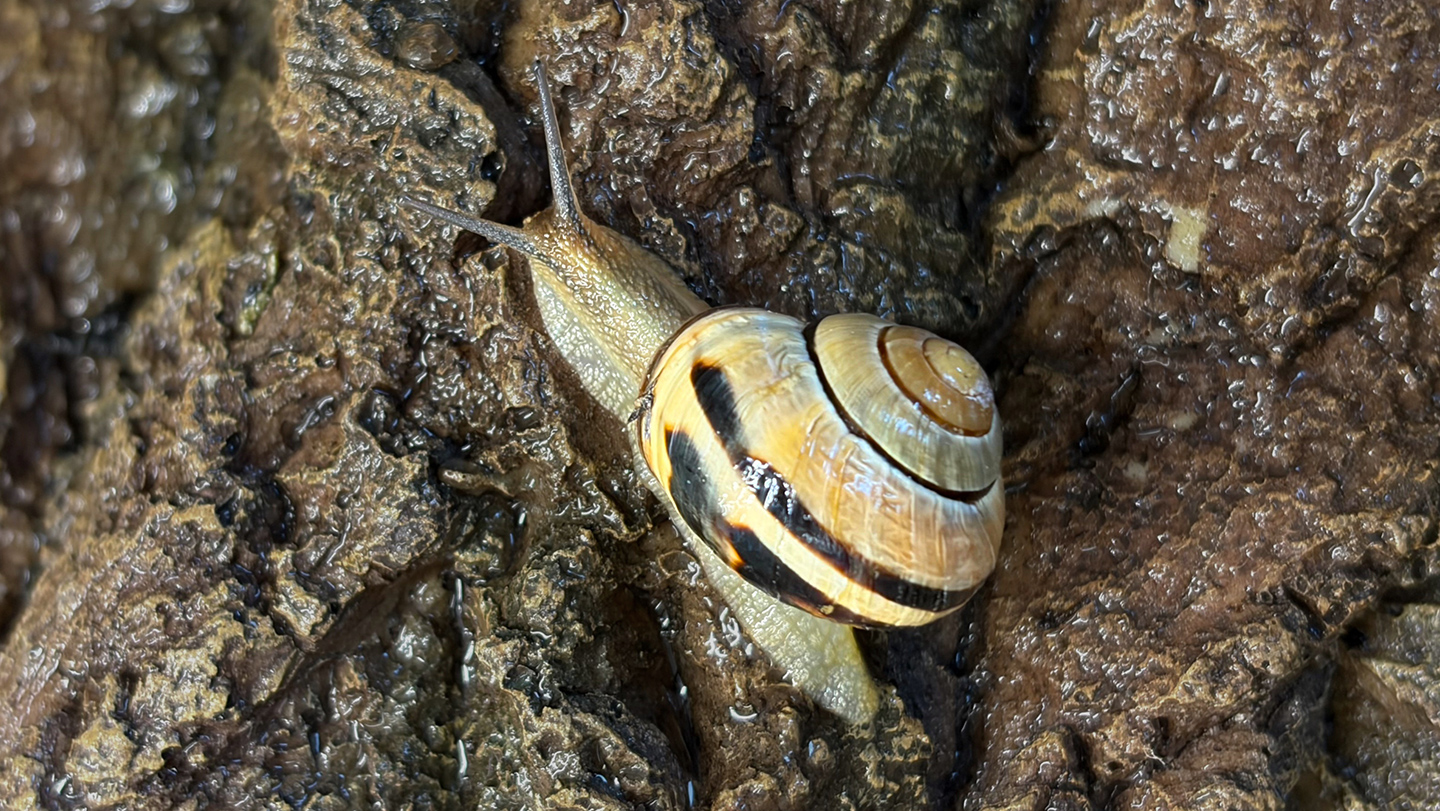
Through careful laboratory work, Jehle and her team collected and categorized the different mucus types from grove snails (Cepaea nemoralis), a common species found throughout Europe. Their collection methods were creative and patient. They scraped lubricating mucus from glass bowls after snails had slid across them, capturing the trail left behind. They carefully plucked sticky mucus from the shell openings of snails that had glued themselves to the inside of their terrarium. In especially clever fashion, they even dragged a spatula along the snails’ shells to provoke a defensive response, coaxing the creatures into producing mucus in a threatened state. When they analyzed all these samples, they identified five distinct types of mucus, each with its own character. There was an iridescent adhesive slime for sticking firmly to surfaces, a lubricant for gliding along on their muscular foot, and a thin film called an epiphragm that seals the shell opening during hibernation. Additionally, the snails produced two defensive substances: a bubbly foam and a thick, yellow mucus designed to deter predators.
The chemical analysis of these different slimes revealed a fascinating pattern. The same types of structural proteins, dominated by a form of collagen, were present across all five mucus varieties. However, the amount of protein varied significantly, with the highest concentrations found in the two defensive slimes. But the real surprise came when the researchers measured the concentrations of different chemical elements in the mucus. They discovered that calcium levels differed dramatically between each variety. The stiff epiphragm, the film that seals snails during hibernation, contained a staggering 420 milligrams of calcium per gram—nearly 17 times higher than the concentration found in the lubricant mucus. This discovery pointed to a sophisticated mechanism: the snails weren’t just changing how much protein they put into their slime, but were also carefully controlling the mineral content to achieve different physical properties.
When the researchers examined the mucus-making glands in the snail’s foot using high-powered microscopy, they found dense stockpiles of calcium carbonate waiting to be deployed. This led them to propose that snails modify the basic formula of their slime by adjusting both protein inputs and calcium levels excreted from their mucous glands. The calcium serves a crucial structural role by linking molecules together, effectively cross-linking the slime to make it stiffer or stickier. Even more impressively, the snails appear to control which chemical form of calcium gets incorporated into each type of slime. The epiphragm and adhesive types, for instance, are reinforced with calcite, a crystalline form of calcium carbonate that gives them extra strength and rigidity. This level of control over material properties is remarkable, especially considering that calcium is traditionally associated with hard, mineralized tissues like shells and bones, not with versatile soft materials like mucus.
The implications of this discovery extend far beyond understanding snail biology. Victor Ajisafe, a biomaterials scientist at the University of Texas at El Paso who was not involved in the study, noted that this research reveals calcium playing a much broader materials function than previously appreciated. Because calcium can link molecules together in ways that dramatically alter mechanical properties, the snails’ approach to creating different slimes could inspire new approaches to materials science. The lubricant mucus, for example, reportedly becomes more fluid when subjected to stress and more solid-like when relaxed—a property highly desirable for materials that need to flow during application but remain in place afterward. Such adaptive materials could be useful in protective coatings, wound healing, tissue repair, and countless other applications where materials need to respond dynamically to changing conditions.
Before these properties can be translated into human applications, however, researchers need to understand precisely how the snails fabricate and assemble their mucus varieties. Jehle and her colleagues are now turning their attention to studying the snail glands and tissues in greater detail, hoping to uncover the biological machinery that allows these creatures to create such diverse materials from a relatively simple toolkit. The more we learn about the natural world’s materials, the more we realize how far human engineering has to go. Snails have been perfecting their slime technology for millions of years, developing a system that allows them to produce glue, lubricant, shield, and weapon from the same basic ingredients. Understanding this system could open doors to a new class of smart materials that can change their properties on demand—materials that might one day revolutionize everything from medicine to manufacturing. It’s a reminder that sometimes the most extraordinary solutions can be found in the most unassuming places, and that nature’s humble creatures often harbor the most sophisticated technology of all.