







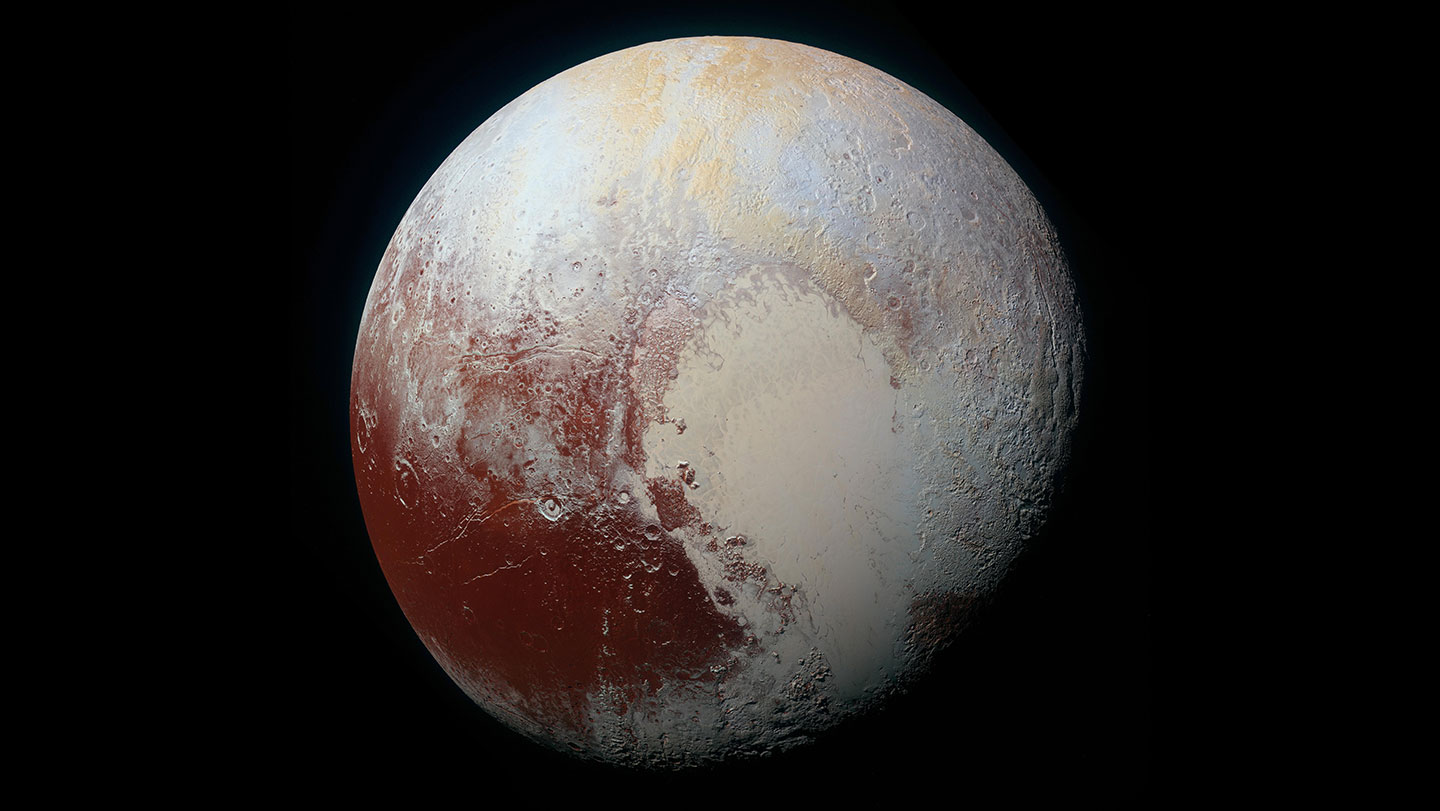
For a long time, the frozen, quiet outer reaches of our solar system seemed to hide their geologic secrets well. We have long known that Earth and other rocky bodies—such as Mars’ moon Phobos or the massive asteroid Vesta—experience landslides in spades. Yet, until recently, Pluto seemed to be the odd one out. Despite possessing all the necessary ingredients for dramatic downslope movements, including rugged mountainous terrain and active surface processes, the dwarf planet had never definitively shown signs of these sudden shifts. That mystery has finally been solved thanks to a closer look at the historic data gathered by NASA’s New Horizons spacecraft during its famous 2015 flyby.
According to a study published in the journal Icarus, researchers have officially identified six massive landslides on Pluto. This discovery is particularly exciting for planetary scientists who study how different worlds shape themselves over time. As Maria Teresa Brunetti, a physicist at the National Research Council in Perugia, Italy, points out, gravity and steep slopes naturally conspire to create these events. Landslides do more than just destroy; they actively sculpt landscapes and distribute surface materials and nutrients to new areas. Finding them on Pluto represents a major milestone in understanding the geological vitality of this far-flung icy world.
To make this breakthrough, Brunetti and her colleagues carefully reanalyzed high-resolution imagery from New Horizons. They specifically searched for the classic visual signatures of a landslide: sharp, sheer cliffs juxtaposed against run-out zones where collapsed material has a distinctly different tone and texture than the surrounding terrain. All six of the verified landslides were found clustered around the steep inner rims of impact craters located near Sputnik Planitia, Pluto’s famous heart-shaped nitrogen-ice plain.
The sheer scale of these features is spectacular. The largest of the six landslides spans an area of roughly 130 square kilometers—leaving a footprint about twice the size of Manhattan. In terms of sheer volume and surface area, this puts Pluto’s largest landslides right near the upper limit of what we typically observe on Earth. Each slide dropped from a height of 1,500 to 2,200 meters. What makes them truly fascinating to physicists, however, is not just their height, but how far the debris traveled after the initial collapse.
Compared to similar landslides on Earth or Mars, the falling ice and rock on Pluto traveled incredibly long distances relative to the height of their fall. This hyper-mobility suggests that the debris encountered surprisingly little friction as it swept across the surface. The team believes this low-friction behavior offers invaluable clues about the physical properties of the materials that make up Pluto’s crust, helping scientists understand how exotic ices, such as water ice mixed with nitrogen or methane, behave under extreme cold and low gravity.
Ultimately, these six discoveries are likely just the tip of the iceberg. The researchers suspect that Pluto’s rugged terrain holds many more ancient and recent landslides waiting to be found. Uncovering them will empty the remaining secrets of the New Horizons dataset, but fully mapping Pluto’s dynamic geology will require new, dedicated space missions to the outer solar system. Until then, these silent, icy avalanches serve as a beautiful reminder that even at the cold edge of our solar system, worlds are still actively shaping themselves.