






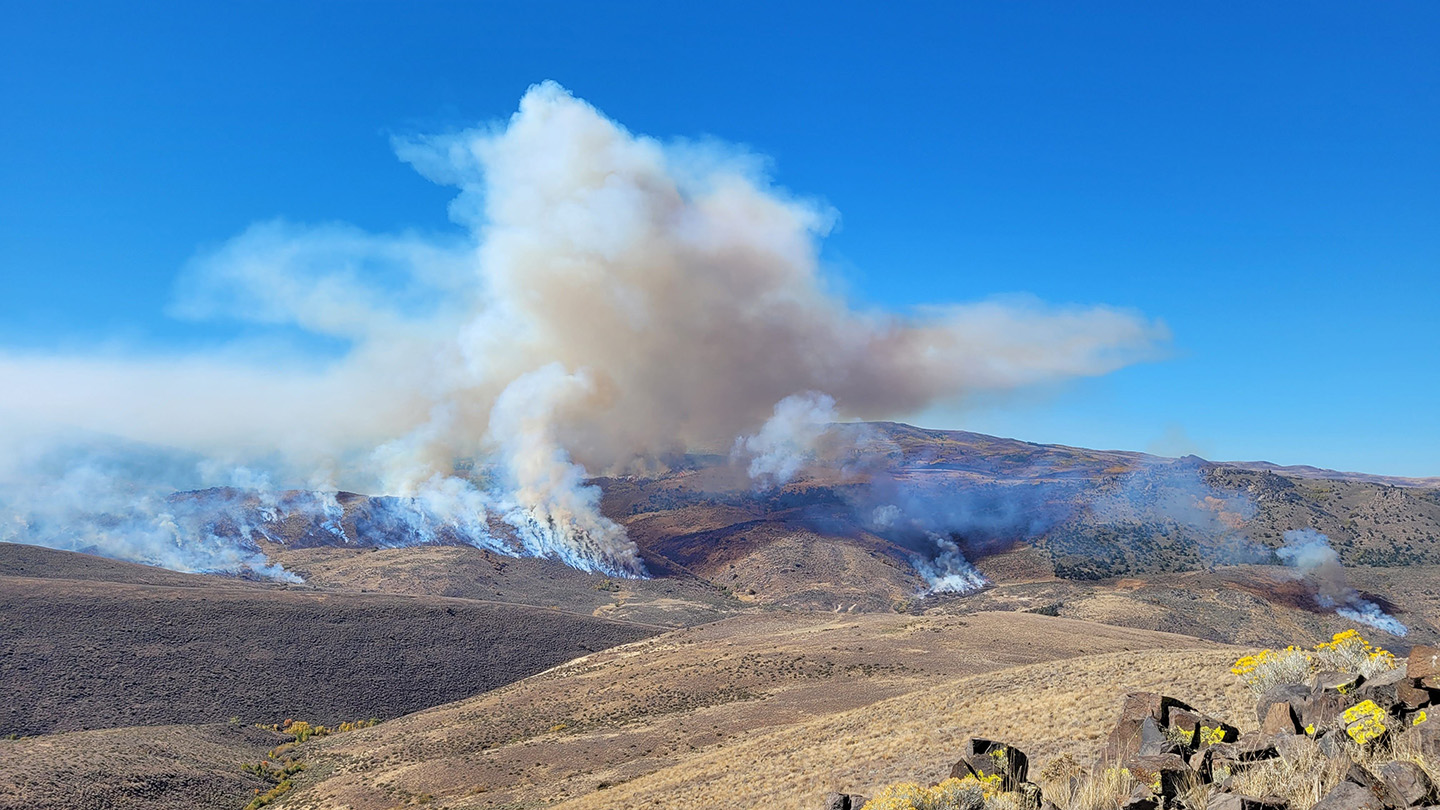
For generations, our battle against the destructive power of wildfires has relied almost entirely on our sense of sight. In the early twentieth century, this meant lonely lookouts stationed in wooden towers perched atop remote mountain peaks, scanning the horizon for the first thin wisps of smoke. Today, that watchful vigil has transitioned to high-tech digital eyes, with orbiting satellites and high-altitude drones monitoring the Earth’s surface for thermal anomalies and blossoming plumes of ash. Yet, despite these massive leaps in aerospace technology, our visual reliance remains fundamentally flawed. When thick storm clouds roll in, or when a fire burns beneath the dense, multi-layered canopy of an ancient forest, those eyes in the sky are rendered temporarily blind. Smoke itself, the very indicator we look for, ironically acts as a physical barrier that obscures the true boundaries and behavior of the flames beneath it. Environmental scientists like Cody Evers from Portland State University point out that almost all traditional monitoring systems require an unobstructed, direct line of sight to be effective. When that line of sight is broken by weather, topography, or heavy vegetation, emergency responders are left working in the dark. This critical vulnerability has driven researchers to ask a fascinating question: if we cannot always see a fire, can we learn to listen to it instead?
The answer lies in a hidden acoustic world that exists just beneath the limits of human perception. While our ears are finely tuned to register vibrations between 20 and 20,000 hertz, wildfires are busy composing a deep, low-frequency symphony that vibrates between 1 and 20 hertz—a realm known as infrasound. This deep rumble is generated by a physical phenomenon often described as the “puffing” of a fire. As a blaze consumes organic matter, it continuously releases massive plumes of superheated gas that violently expand into the atmosphere, creating a low-pressure vacuum behind them that eagerly draws in rushes of cold, oxygen-rich air. This cyclical breathing process creates powerful, rhythmic pressure waves that propagate outward through the atmosphere. Because these infrasonic waves have incredibly long wavelengths, they possess an extraordinary ability to travel vast distances without being scattered or absorbed by obstacles. Unlike light waves, which are easily blocked by a single tree trunk or a patch of fog, these low-frequency hums can effortlessly bend around hills, pass through thick stands of timber, and penetrate dense blankets of smoke and clouds. By tuning into this sub-audible orchestra, scientists can capture real-time, highly sensitive updates on a fire’s behavior and movement, even when visual conditions are at their absolute worst.
To put this acoustic theory to the test in a real-world setting, a team of geophysicists from Boise State University, led by Jake Anderson and Madeline Hunt, set out into the rugged, damp grasslands of southwestern Idaho. Their target was a scheduled, controlled burn—a low-intensity fire designed to clear out excess brush. This damp environment presented a unique challenge because wet fuel burns much cooler and quieter than dry, raging forest fires, making it the ultimate test for their experimental technology. The researchers hand-built over 90 custom infrasound sensors, each weighing less than a single kilogram and measuring roughly the size of a paperback novel. They distributed these compact, rugged devices across the landscape, organizing them into eight distinct spatial arrays that ranged in size from three to 44 sensors. Hunt explains that arranging the sensors in these clustered groups is key to deciphering the sounds they record. It mimics the natural mechanics of human hearing; just as our brains compare the tiny differences in sound arrival times between our left and right ears to pinpoint where a voice is coming from, these multi-sensor arrays allow researchers to calculate the exact direction and origin of incoming low-frequency pressure waves.
The results of the Idaho study, published in the journal Geophysical Research Letters, exceeded the team’s expectations. The largest sensor array, positioned nearly two kilometers away from the active burn line, was able to continuously and accurately track the fire’s slow, creeping progress across the grassland over several hours. However, validating the data required some careful detective work. Because the prescribed burn was ignited by a helicopter dropping incendiary devices, the sensors initially picked up a mixture of sounds from both the fire and the aircraft’s thumping rotor blades. The breakthrough moment came when the helicopter departed the area to refuel. Even with the loud aircraft completely gone, the sensors continued to register a steady, unmistakable infrasonic hum emanating directly from the burning edge of the grassland. This confirmed that the damp, low-intensity fire was indeed generating its own distinct acoustic signature, proving that this technology is sensitive enough to detect even relatively weak, smoldering fires from a safe distance without needing a raging forest canopy to create a detectable noise.
While the success in Idaho offers a highly promising proof of concept, transitioning this technology from controlled, predictable burns to wild, raging forest fires presents significant logistical and environmental hurdles. In a real emergency, scientists cannot simply walk into an active disaster zone to carefully calibrate and arrange delicate sensor arrays. To overcome this, Anderson envisions a future where lightweight, durable, and highly automated acoustic sensors are integrated into the standard gear of frontline wildland firefighters, allowing them to rapidly deploy the units as they establish defensive lines. However, even if deployment is simplified, nature introduces its own acoustic interference. As environmental scientist Cody Evers warns, the massive wildfires that threaten communities are almost always accompanied by severe, chaotic winds. High winds are notorious generators of environmental infrasound, creating a loud atmospheric roar that could easily drown out or distort the subtle, low-frequency hum of an advancing fire. Learning how to mathematically filter out this wind noise from the fire’s true acoustic signature remains one of the most critical hurdles researchers must solve before this technology can be reliably integrated into emergency dispatch systems.
Beyond simply tracking the path of a disaster, some innovators are dreaming of a future where sound waves are used to fight the flames directly. A pioneering company based in Cleveland, Sonic Fire Tech, has already begun demonstrating early versions of acoustic fire-suppression systems, showing how targeted blasts of low-frequency sound can literally snuff out small indoor cooking fires. By oscillating the air at specific infrasonic frequencies, these devices disrupt the boundary layer of the flame, separating the burning fuel from its essential oxygen supply and extinguishing the fire instantly without leaving behind the water damage of overhead sprinklers or the chemical mess of traditional extinguishers. While this technology holds incredible promise for enclosed, controlled environments like commercial kitchens, server rooms, or residential homes, experts like Anderson caution against expecting acoustic fire trucks to roll into our forests anytime soon. Because sound waves expand spherically in open spaces, they lose their physical power exponentially as they travel away from their source. Without walls to confine and focus the energy, extinguishing a wild, open-air forest fire with sound remains firmly in the realm of science fiction—meaning that while we may soon use the voice of the fire to track its every move, the brave men and women on the ground will still be the ones doing the heavy lifting to put it out.