



Most of us meet static electricity before we understand it. We shuffle across a rug in winter socks, reach for a doorknob, and receive a tiny, sharp pop that makes us pull our hand back. We rub a balloon against our hair and watch it lift the strands upward, or we hear the crackle of a fleece jacket being peeled off on a dry day. In her editor’s letter for the September issue, Nancy Shute, editor in chief of Science News, begins with a confession that will feel familiar to anyone who has ever been puzzled by these small sparks: static electricity has been surprising people for thousands of years, and scientists still cannot fully explain it. There is something almost magical about the way two ordinary objects can generate lightning in miniature, and Shute uses that wonder to launch the issue’s cover story. But she does not dwell on childhood memories alone. Instead, she treats static electricity as the perfect entry point into a broader celebration of science—a field in which simple observations, even ones we think we know, can suddenly open into deep and strange frontiers. By starting with a phenomenon that everyone has experienced but almost no one truly understands, Shute sets the tone for a magazine issue full of unexpected revelations about the natural world.
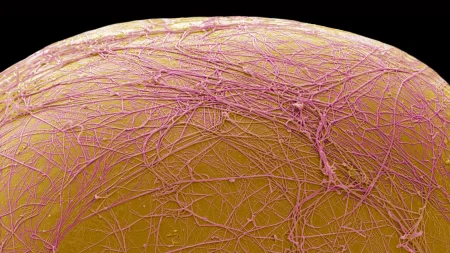
The story of static electricity, as described in the issue, begins with what seems like a simple question: why do two surfaces become electrically charged when they are rubbed together? For centuries, the standard explanation involved friction. People assumed that rubbing created heat, and that heat somehow stripped electrons from one material and deposited them on the other. But scientists have gradually learned that the real mechanism is much more subtle. When two surfaces touch, their microscopic peaks and valleys collide and deform, bending like tiny springs under pressure. These physical distortions produce what engineers call strain, and strain can cause electrons to redistribute across the boundary. The electrical charge that builds up is not simply a byproduct of friction; it is a product of contact, pressure, and the strange behavior of materials at the smallest scale. In recent experiments, researchers have shown that even identical materials can become charge-separated when pressed together, which overturned the old assumption that charge transfer required different substances. The new work suggests that the jolt we feel when we touch a metal doorknob is actually the echo of countless tiny mechanical events happening across the surface of our skin. It is the sound of microscopic protrusions bending, relaxing, and releasing energy. There is still no single grand theory that explains every last spark, but the September issue presents a vivid portrait of the researchers who are closing in on one, using everything from high-speed cameras to computer simulations to atomic-scale probes. Their work matters far beyond the playground trick of lifting one’s hair with a balloon. Static electricity affects photocopiers and printers, industrial dust collectors, the flow of grain through silos, and even the behavior of dust on the surface of the Moon. A better understanding could help prevent explosions caused by static sparks in chemical plants, improve the safety of packaging, and make certain medical devices more reliable. The humble crackle, in other words, has its hand in both everyday life and outer space.
From this starting point, Nancy Shute broadens her letter to introduce a September issue that is brimming with other science revelations. She reminds readers that science does not always announce itself with headline-grabbing discoveries; sometimes it arrives as a quiet update to a long-standing mystery. One story in the issue follows archaeologists peering into the past with tools that would have seemed like magic a generation ago. Using ground-penetrating radar and ancient DNA analysis, researchers are finding entire civilizations hidden beneath fields and forests, not by digging blind but by listening to the soil and decoding the bones of long-dead people. In another article, readers learn about new work in neuroscience, where scientists are mapping the intricate wiring of the brain and discovering that our emotions and memories are far more intertwined than older maps suggested. The issue also turns its gaze upward. Astronomers have been collecting light that left distant galaxies just a few hundred million years after the Big Bang, images so faint and ancient that they force us to think backwards in time. These stories share a common theme: the universe is stranger, richer, and more beautiful than our narrow everyday perspective suggests. Shute’s editing choices seem to say that science is not a collection of facts to memorize but a way of paying attention. The best researchers are the ones who can be surprised by a crackling sweater or a speck of dust from a comet, and their curiosity ripples outward into new instruments, new experiments, and new ways of understanding what it means to be alive.
The September issue also offers a deep sense of how science is practiced in the real world, with all its false starts and hard-won victories. One article focuses on the slow, painstaking work of climate science: scientists who measure ancient ice cores, ocean temperatures, and leaf fossils to calculate just how much carbon the atmosphere can absorb before the climate tips into a new state. Their conclusions are not delivered in dramatic announcements but in small increments of data collected over decades. Another piece follows medical researchers who are developing a new class of vaccines, not by luck but by thousands of carefully repeated experiments, many of which failed. Nancy Shute uses these examples to humanize science, reminding readers that behind every graph and press release are people with late nights, stubborn ideas, and occasional breakthroughs that feel almost accidental. She tells the story of one researcher who spent years studying a rare species of frog only to stumble upon a clue to a completely different problem in human medicine. That kind of serendipity, she suggests, is not luck alone. It is the reward for staying curious about the world and maintaining a willingness to be led off track by nature’s surprises. The magazine issue, in her hands, becomes a celebration of the scientific mindset: a patient, humble, and endlessly wondering way of being. She writes not as a distant authority but as a fellow reader who has just learned something that kept her up at night.
As Shute’s letter draws to a close, she returns to the image of static electricity, but now with deeper meaning. What looks like a single, sharp zap is actually the result of countless hidden motions—microscopic bumps touching, bending, and releasing. In the same way, each issue of a science magazine is more than the sum of its headlines. It is the product of writers talking to researchers, researchers arguing over data, funders taking risks, and readers like you and me asking questions. Nancy Shute says one of her favorite parts of being editor in chief is watching those connections happen. She describes reading a draft about electrons in a lab and then hearing her neighbor complain that his car door shocked him at the gas pump. Science, she writes, is woven into our ordinary lives more tightly than we realize. The static shock is not a nuisance; it is an invitation. It is proof that even the most familiar parts of our daily routine are still full of unanswered questions. The September issue, with its mix of archaeology, astronomy, neuroscience, and climate science, is an effort to answer some of those questions, but also to enjoy the fact that so many remain open. The goal is not certainty, she reminds us, but the pleasure of asking well-crafted questions and the humility to revise our answers when new evidence arrives.
In the end, Nancy Shute’s September letter is more than a table of contents in prose. It is a gentle, humanizing argument for curiosity. She invites us to treat science as something we can practice in our own kitchens, backyards, and half-remembered school experiments. The same instinct that makes a child rub a balloon on her head is the instinct that drives a physicist to spend a decade studying the surface of a sapphire crystal. Static electricity is a perfect example because it sits at the border between play and seriousness. It sparks in the dark, it makes our hair stand on end, and it has resisted explanation since at least the time of ancient Greek philosopher Thales of Miletus, who noticed that rubbed amber attracted feathers. Amber, in fact, gave Greek its word for electricity. That heritage is humbling: our most sophisticated instruments still struggle to fully explain something that was noticed on a sunny afternoon by a curious philosopher. The September issue, through Shute’s voice, asks us to embrace that struggle. It reminds readers that science is not a fortress of accepted fact; it is a living conversation across centuries, carried on by people who are willing to be startled. And so, after reading her essay, you may find yourself reaching for a sweater, shuffling across the floor, and touching a metal railing—not to prove anything, but just to see if that little spark still lives there, waiting to surprise another generation of curious minds.