





Motor neurons have long been cast as the nervous system’s delivery drivers: the dependable, quiet messengers that carry orders from the brain to the muscles. They are the reason you can lift a cup, blink, or take a step without consciously thinking about which individual muscle fibers need to fire. For decades, scientists treated them as passive relays, wires in a circuit that simply passed along instructions. But a growing body of research is challenging that humble reputation, and a new study in fruit flies adds a striking twist. According to work published August 24 in Nature Neuroscience, motor neurons can send signals back to the brain, and those return signals help shape the very movement sequences the neurons are carrying out. In other words, the messengers are not just delivering the message; they are helping to write it. The finding is a reminder that even the most basic biological processes are often far more collaborative and dynamic than they first appear. And it hints that our understanding of movement—from the way a baby suckles to the way a robot might one day walk—could be transformed by paying closer attention to the voices we assumed were silent.
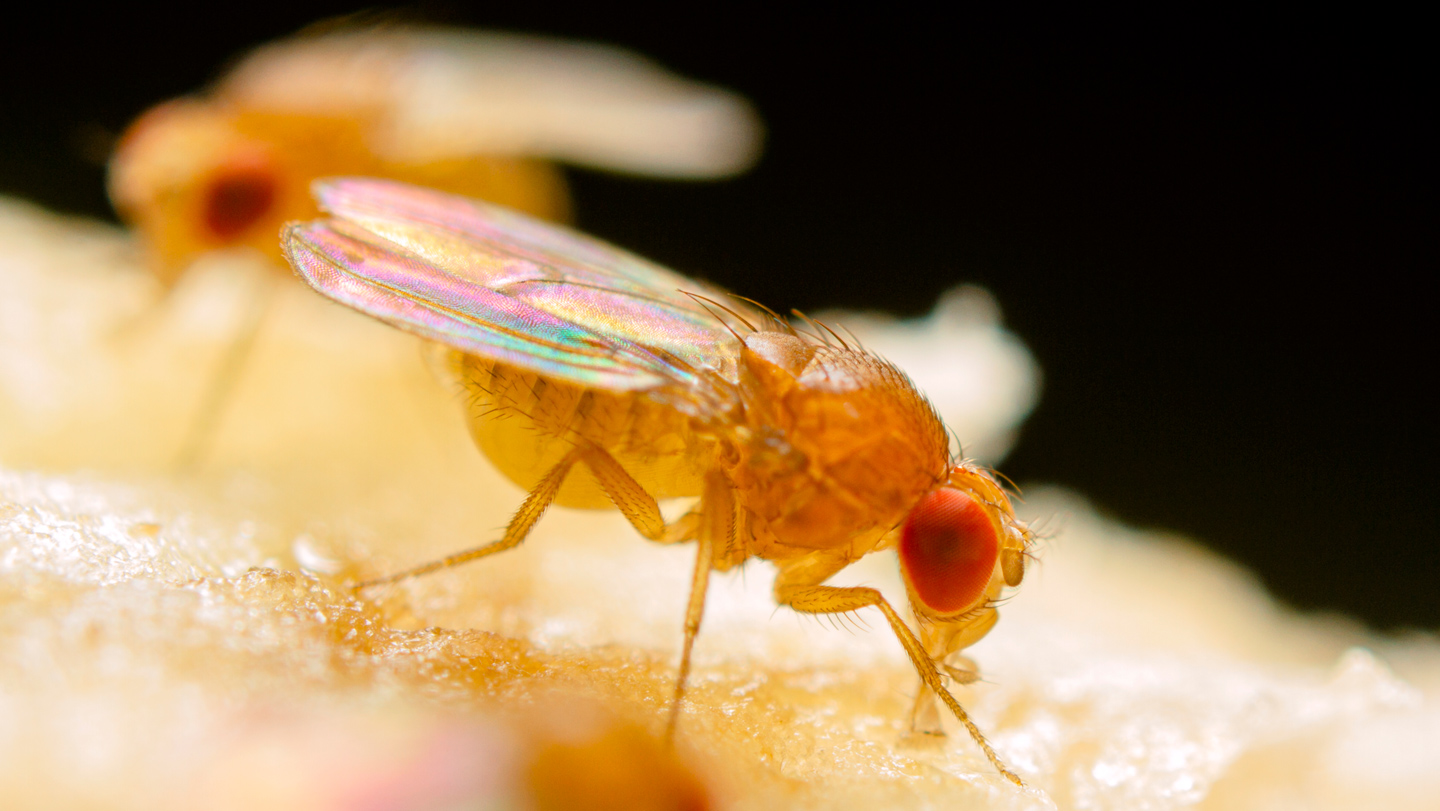
The puzzle at the heart of this research is one that has frustrated neuroscientists for years: how does the nervous system turn a simple intention into a smooth, coordinated sequence of movements? You can map every muscle, every motor neuron, every connection, and still not fully explain the timing. The fruit fly offers a particularly elegant example. When a fruit fly feeds, seven pairs of muscles in its mouth must contract in a precise, repeating sequence. Each pair is controlled by its own pair of motor neurons, and together they create rapid, rhythmic pressure changes that suck food into the fly’s mouth. It is a tiny, almost invisible ballet, but it is also a marvel of timing. Dong-Gen Luo, a neuroscientist at Peking University in Beijing, notes that the motion closely resembles the way an infant suckles. That comparison is striking: a behavior we associate with human tenderness and survival is mirrored in a fly’s feeding, and both depend on the same kind of precisely ordered muscle activity. Yet even with all the muscles and neurons identified, scientists still do not fully understand how the sequence is generated. What tells the third pair of muscles to wait, and the fourth pair to go? Where does the rhythm come from? The new study suggests that at least part of the answer lies in the motor neurons themselves, which are apparently doing something far more sophisticated than simply waiting for instructions.
The discovery came about almost by accident. In 2016, Luo’s laboratory was studying taste perception, not movement. But Xiu-Wen Sui, then a Ph.D. student at Peking University, accidentally triggered repetitive sucking in the flies. Instead of dismissing the behavior as a glitch, the team recognized it as a fascinating window into motor control and decided to investigate. What followed was a painstaking effort to record the activity of individual motor neurons while the flies were feeding. This required inserting tiny electrodes into the flies’ brains, a delicate procedure that demands patience and skill. What the researchers found upended the conventional picture. Some motor neurons were not simply carrying out commands from the brain; they were also sending signals back to it. These feedback signals helped determine when the next motor neuron in the sequence would become active. In other words, the motor neurons were acting as both performers and choreographers. They were not waiting for a central director to give every cue; they were actively influencing the timing of the next step. This kind of two-way communication suggests that the nervous system is less like a strict hierarchy and more like a conversation, with signals flowing up and down, shaping each other in real time.
Luo uses a vivid analogy to describe the process: it is like a chain of falling dominoes. But these are not passive dominoes. Imagine the motor neurons controlling the third pair of muscles receiving a command from the brain. They do two things at once. They activate their target muscles, causing the contraction that moves the fly’s mouth. At the same time, they send a signal back to the brain that effectively releases the “brakes” on the next pair of motor neurons. Once those brakes are released, the fourth pair can spring into action, and then it too sends a signal to release the fifth pair, and so on. The sequence unfolds like a wave, but it is a wave that checks itself at every step. This built-in brake-release system ensures that each part of the sequence begins only when the previous part has actually happened, and only when the conditions are right. It is a form of real-time quality control. The paper does not explain how all seven pairs of muscles are coordinated during sucking, but it offers a principle that could apply far beyond fruit flies. The ability to release a brake only when needed, and only when the actual state of the body allows, could make motor control more stable and more precise. It is a lesson in the value of feedback, and it may even inspire engineers who design robots. A robot that could adjust its movements step by step, based on what its own sensors tell it, rather than blindly following a preprogrammed sequence, might move with far greater grace and adaptability.
The finding also helps bring together two separate lines of research that had been running in parallel. Maarten Zwart, a neuroscientist at the University of St. Andrews in Scotland, offers a memorable way to think about it. Imagine motor neurons as soldiers on a battlefield. Scientists already knew that soldiers were guided by their commanders to act in a coordinated sequence. Other studies had also shown that soldiers could send messages back to the commanders, perhaps reporting on conditions or requesting support. What this study reveals is that those messages can help determine when the next soldier is allowed to act. The soldiers are not just following orders; they are helping to set the timing of the battle plan. This is a significant conceptual shift. It moves us away from a purely top-down view of movement, in which the brain issues commands and the body obeys, toward a more circular view, in which the body and brain are partners in the creation of behavior. It also underscores how much we still have to learn about even the most basic neural circuits. If motor neurons in a fruit fly can play this kind of active role, what might be happening in more complex nervous systems?
Of course, there are limits to how far we can extend these findings. Zwart cautions that some details of the underlying neural mechanisms may differ between flies and vertebrates. The nervous system of a fly is not the nervous system of a human, and the ways in which feedback signals are processed may be quite different. So there is no straightforward answer as to whether the same principles apply to people. Still, the study is a powerful reminder that scientific discovery often begins with curiosity and a willingness to follow the unexpected. A chance observation in a lab studying taste led to a new way of thinking about movement. It also reminds us that even creatures as small as fruit flies have rich inner lives, at least in the sense that their nervous systems are constantly negotiating, adjusting, and collaborating. Motor neurons, it turns out, are not passive messengers at all. They are active participants in the creation of behavior, shaping the sequences they help to execute. The next time you take a sip of water or watch a baby feed, you might pause to appreciate the hidden conversations happening beneath the surface—conversations in which the so-called messengers are speaking up, and the brain is listening.