





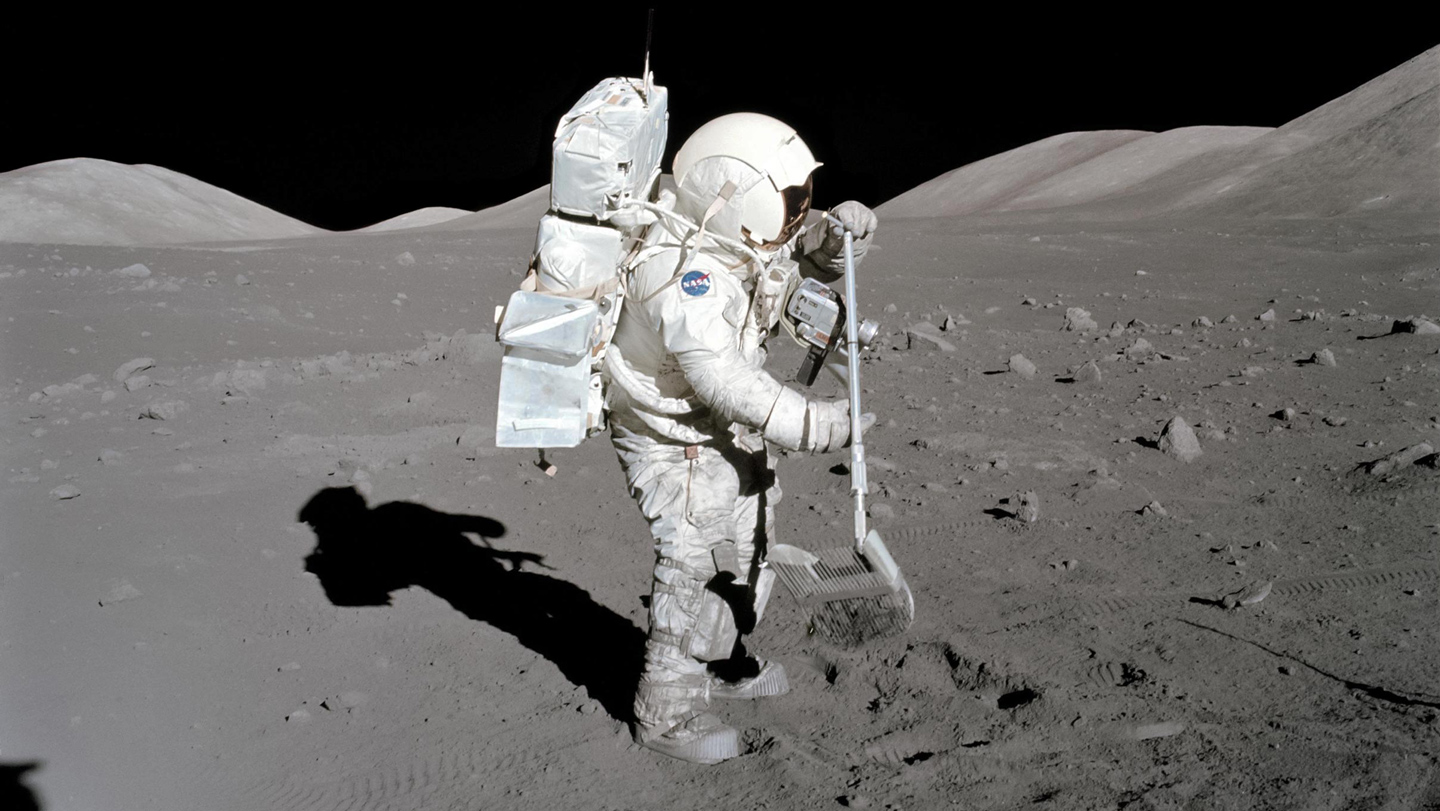
For decades, humanity’s exploration of the moon has been guided by a simple, practical principle: go where it is easiest to land. This strategy led every Apollo mission and most robotic probes to the lunar equator, a region bathed in harsh, unfiltered sunlight and subjected to brutal temperature swings of hundreds of degrees between the long lunar day and night. This environment was, for all intents and purposes, sterile—a place where the harsh ultraviolet radiation and thermal extremes would quickly kill any microbial hitchhiker that might have stowed away on a spacecraft. The equatorial moon, it seemed, was a safe bet for keeping our earthly biological contamination to ourselves. But as NASA prepares to send humans back to the moon with the Artemis program, the destination is changing, and with it, our understanding of what the lunar surface can sustain. The next crewed mission, Artemis IV, is slated for 2028, and it is heading not to the equator but to the moon’s south pole, a region of stark contrast where ancient, permanently shadowed craters hold secrets of water ice and, perhaps surprisingly, could offer a refuge for some of Earth’s most resilient microscopic life. This shift in location forces a new and critical question: Are we bringing life to a place where it could actually survive?
The south pole of the moon is unlike anywhere we have visited before. The sun, which beats down so mercilessly at the equator, barely clears the rim of the deep craters here. As a result, the floors of these craters have not seen the light of day for billions of years. These permanently shadowed regions are the coldest places in the solar system, with temperatures plummeting to around -200 degrees Celsius. There is no ultraviolet radiation to speak of, and the environment is incredibly stable, a stark contrast to the chaotic thermal swings of the equator. This environment, as it turns out, is not too dissimilar from the conditions used by scientists to freeze-dry and preserve microorganisms in the lab. A team of researchers, led by organic geochemist Heather Graham of NASA’s Goddard Space Flight Center, realized that these extreme cold, dark, and radiation-shielded environments might not be the inhospitable death traps they first appear to be. In fact, they could be a surprisingly comfortable overnight stay for some of the toughest organisms our own bodies harbor.
To test this hypothesis, Graham and her colleagues selected five specific types of microbes, all of which are commonly associated with humans and all of which have a proven track record of surviving the rigors of spaceflight. These hardy stowaways have been found on the outside of the International Space Station, clinging to spacesuits, and tucked away inside payload capsules. The team chose three species of bacteria and two species of fungi, and then ran the numbers. They modeled the thermal conditions within the permanently shadowed craters, simulating the exact temperatures and radiation levels that a microbe would experience over a 24-hour period. Their findings, published in the journal Science Advances, were startling. Every single one of the five microbes tested could theoretically not just survive, but thrive, in parts of the lunar south pole. They were all essentially capable of withstanding the frigid, dark conditions for at least a full day. It turns out that the moon, in its far southern reaches, is not the dead world we once thought, at least not when it comes to the potential for biological survival.
Among the tested organisms, one stood head and shoulders above the rest: Aspergillus niger, a black mold that is a common and uninvited guest in our showers and water heaters. This fungus is a biological marvel of resilience, equipped with thick, protective cell walls and a remarkable ability to repair its own DNA, even when it is in a dormant, spore-like state. In the cold, dark safety of the lunar craters, this tough little mold could go one step further than mere survival. The researchers’ models suggest that Aspergillus niger could persist for more than a week, possibly longer, in the most favorable micro-environments. It would sit there, frozen solid, a microscopic time capsule awaiting a return to warmer temperatures. It is a sobering thought: we are planning to send humans to the moon, and we may be bringing along a biological contaminant that is better adapted to the lunar south pole than the astronauts themselves.
However, the researchers are quick to point out a crucial distinction: survival is not the same as colonization. It is highly unlikely that Aspergillus niger or any of the other microbes could actually grow, reproduce, or metabolize in these extreme conditions. They are not going to spread across the lunar surface. The danger they pose is more subtle and insidious. Even a dead or completely dormant microbe is a problem for science. A single bacterial cell, its proteins and chemical signature intact from being flash-frozen, could completely contaminate a pristine sample of lunar ice or rock. If we are so eager to drill into the permanently shadowed craters to search for water and the building blocks of early solar system chemistry, we run the high risk of measuring our own contamination instead. Those ancient ice cores we so desperately want to study could be irrevocably tainted by a speck of earthly mold that hitched a ride on a spacesuit. Protecting the scientific integrity of the south pole is now inseparable from protecting it from our own microbial companions.
The findings of this study are more than just a fascinating fact about the moon; they are a critical blueprint for how we plan future missions. The data will directly inform new decontamination protocols for the Artemis IV mission and all subsequent crewed landings. If an organism can survive on the moon, then we must be even more careful about what we bring with us. And if the stakes are high on the moon, they are astronomically higher on Mars. The Red Planet, with its thin atmosphere, polar ice caps, and evidence of past liquid water, is a far more hospitable place for life than the lunar south pole. The risk of transferring a hardy earthling microbe to Mars and having it find a permanent foothold is a very real concern for astrobiologists. As Graham herself notes, the better we get at clean, careful exploration on the moon, the better prepared we will be to face the immense challenge of keeping Mars pristine. The moon is no longer just a destination; it’s a training ground where we must learn to manage the most dangerous contaminant in the universe—the life we carry with us. The next era of space exploration begins with the humbling realization that we are not just travelers; we are potential carriers of worlds.