





Humanity has always lived under the quiet warmth of a distant fusion reactor: our sun. For nearly a century, our species has harbored an audacious, almost mythological dream: to bring that stellar fire down to Earth, capturing the ultimate source of clean, limitless power. Nuclear fusion—the physical process that powers the cosmos—offers a mesmerizing solution to our planet’s energy crisis; by forcing light hydrogen isotopes, namely deuterium and tritium, to merge under unimaginable pressures and heat, we can unlock energy yields millions of times greater than burning fossil fuels, all while producing zero greenhouse gases and only harmless helium as a byproduct. Unlike conventional nuclear fission, which splits heavy, unstable atoms and leaves behind toxic, long-lived radioactive waste, fusion represents a clean, safe, and virtually inexhaustible holy grail of energy. Yet, translating the physics of a star into a functional, Earth-bound power plant has proven to be perhaps the most complex engineering challenge in human history. To replicate the core of the sun, scientists must build colossal, donut-shaped vacuum chambers called tokamaks, which use insanely powerful magnetic fields to trap a swirling, ultra-hot gas known as plasma. This plasma must be heated to temperatures exceeding one hundred and fifty million degrees Celsius—ten times hotter than the center of the sun itself. At these extreme limits, the plasma becomes highly volatile, behaving like a wild, living beast that constantly twists, bends, and struggles to escape its magnetic cage, threatening to cool down in a millisecond and extinguish the artificial star we have worked so hard to create. For decades, the global scientific community has poured its collective brilliant minds, countless hours of labor, and vast financial resources into stabilizing this chaotic medium, waging a quiet, desperate war against microscopic instabilities to keep our planetary savior alive.
At the core of this monumental struggle lies a chaotic, microscopic adversary known as plasma turbulence. In the fierce environment of a tokamak, where magnetic lines of force loop and twist to contain the superheated gas, the plasma does not flow in a calm, orderly stream; instead, it behaves like a violent, thrashing tempest. Tiny, microscopic eddies, vortices, and electromagnetic waves constantly form within the plasma, carrying precious heat away from the hot core where fusion occurs and leaking it outward toward the reactor’s cold walls. This relentless leakage instantly drops the core temperature, halting the delicate fusion reactions and preventing the plasma from reaching a much-coveted state of self-sustaining ignition. To overcome this, physicists must thoroughly understand every single subatomic actor in this complex, microscopic drama, particularly the mysterious “alpha particles” that are born from the fusion reactions themselves. When deuterium and tritium nuclei fuse, they create a high-energy alpha particle—essentially a helium-4 nucleus—carrying an immense amount of kinetic energy. The fundamental hope has always been that these energetic alpha particles would slow down within the plasma, transferring their energy to the surrounding fuel and acting as an internal heater to keep the reaction burning without the need for massive external power sources. However, for a long time, researchers faced a deeply unsettling and unresolved scientific question that cast a shadow of uncertainty over the entire future of clean energy: would these highly energetic, fast-moving alpha particles stabilize the fragile plasma, or would their sudden, explosive introduction actually trigger violent new waves of turbulence, tearing the magnetic cage apart and ruining our chances of achieving viable commercial fusion? If they acted as a disruptor, the dream of commercial power was doomed.
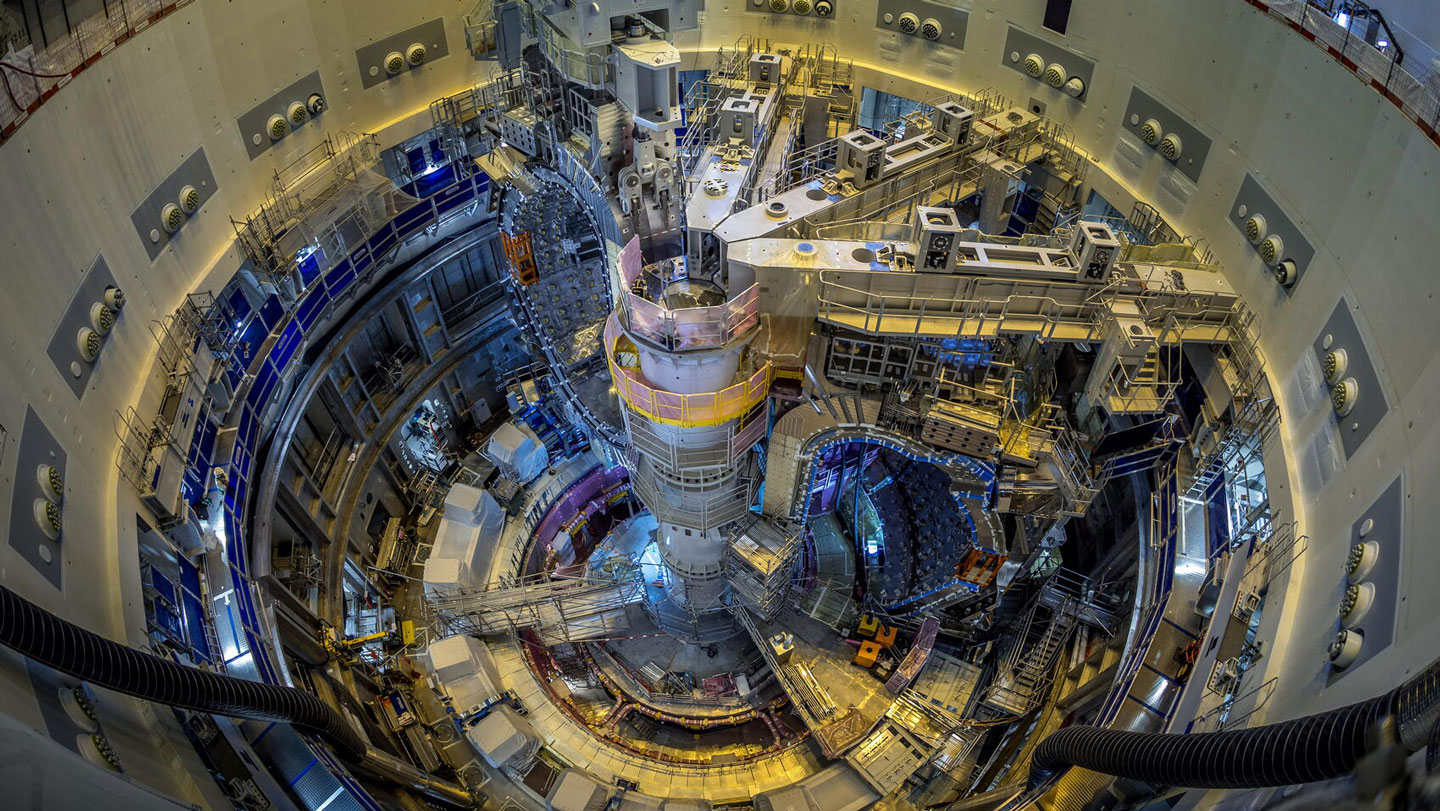
This critical dilemma created a profound philosophical and scientific divide within the global fusion community, leaving researchers suspended in an agonizing state of high-stakes suspense for decades. On one side of this intellectual debate, optimistic theorists hypothesized that alpha particles would behave like gentle, self-regulating warmers, providing the steady undercurrent of heat necessary to maintain a burning plasma without requiring continuous, massive energy inputs from our electric grids. On the opposing side, highly respected skeptics raised serious alarms, arguing that these hyperactive, fast-moving alpha particles would act like metaphorical bulls in a delicate china shop, colliding violently with other particles and generating powerful electromagnetic waves that would amplify turbulence, scattering the precious hydrogen fuel and letting the vital heat escape before it could fuse. Without a clear, definitive answer to this question, designing and constructing the next generation of multi-billion-dollar fusion facilities, such as the monumental International Thermonuclear Experimental Reactor (ITER) currently taking shape in the hills of southern France, felt like navigating a ship through a treacherous, uncharted ocean without a map. The stakes of this debate could not possibly be higher, as humanity’s urgent transition away from destructive fossil fuels desperately requires a clean, reliable, and abundant baseload energy source, and any fundamental flaw in our understanding of alpha particle physics could set our climate timelines back by several decades. For a long time, we simply lacked the technological capability to look directly inside this atomic tempest, as the mathematical operations required to calculate the behaviors of trillions of interacting particles swimming in a turbulent, magnetized plasma are so extraordinarily complex that no human mind, nor any standard computer, could ever hope to solve them.
To break this paralyzing scientific deadlock, an international team of brilliant computational physicists turned to the bleeding edge of modern digital technology, mobilizing some of the world’s most advanced supercomputers to simulate the microscopic chaos of the tokamak’s fiery core. Utilizing highly sophisticated “gyrokinetic” simulations—a brilliant mathematical framework that simplifies the complex, three-dimensional spiraling motion of charged particles into highly detailed, localized, and computationally manageable equations—the researchers were finally able to peer inside this atomic storm with unprecedented clarity and resolution. Day and night, massive networks of supercomputing processors hummed in quiet laboratories, performing octillions of calculations to track the intricate, microsecond-by-microsecond interactions of virtual electrons, deuterium-tritium ions, and highly energetic alpha particles dancing within intense magnetic fields. The passionate team of scientists watched their monitors with bated breath, knowing that the resulting data could either validate decades of theoretical hard work or send them entirely back to the drawing board to redesign the future of clean energy. When the complex simulations finally concluded, the digital screens lit up with a revelation that sent waves of pure joy and profound relief throughout the global scientific community, instantly reshaping our collective understanding of plasma dynamics. Far from being the destructive, chaotic menace that many prominent skeptics had long feared, the virtual alpha particles emerged from the massive databases as unexpected, silent heroes of the reaction, behaving in an incredibly structured way that actually helped keep the fragile, burning plasma intact and healthy.
The high-resolution simulations revealed an extraordinarily elegant and beautiful piece of fundamental physics: the fast-moving alpha particles were actually dampening the surrounding plasma turbulence, acting as an invisible, stabilizing shock absorber within the fiery reactor core. To visualize this counterintuitive phenomenon in human terms, one can imagine a violent, storm-lashed ocean where chaotic waves are constantly crashing into one another, threatening to capsize any vessel; the physical introduction of alpha particles is highly reminiscent of pouring a thick, calming layer of oil over the water’s surface, instantly smoothing out the wild swells and restoring a peaceful equilibrium. In the microscopic reality of the tokamak, the heavy, highly energetic alpha particles travel at velocities much faster than the typical thermal ions in the plasma, allowing them to interact dynamically with the low-frequency electromagnetic waves that drive the turbulent eddies. Instead of feeding energy into these destructive waves and making them grow, the rapid alpha particles actually absorb the wave’s kinetic energy, effectively draining the turbulence of its power and preventing the heat-carrying eddies from expanding. This incredible stabilizing interaction means that the burning plasma can hold onto its ultra-high temperatures far more efficiently than previously thought, significantly lowering the amount of external energy required to keep the fusion reaction alive and self-heating. This discovered synergy between alpha particles and plasma physics proves that nature, in its deep and infinite complexity, has woven a self-regulating, stabilizing mechanism directly into the physics of the fusion reaction, showing that the cosmic fire we are trying to domesticate is inherently designed to help us keep it burning.
This monumental scientific milestone has sweeping, real-world implications that extend far beyond the quiet hallways of academic institutions and supercomputing centers, breathing vibrant new life into humanity’s grand quest for a sustainable future. As our modern civilization stands on the precipice of a devastating global ecological crisis, the definitive confirmation that alpha particles actively assist rather than hinder the fusion process provides crucial, reassuring engineering blueprints for the construction of future commercial reactors. Knowing that the natural byproducts of the fusion process will work in perfect harmony to stabilize the burning plasma removes a massive, terrifying leap of faith from our current reactor designs, allowing engineers to build magnetic confinement systems with an unprecedented level of precision, confidence, and cost-efficiency. This discovery brings us significantly closer to achieving the holy grail of “net energy” in commercial fusion—a tipping point that will unlock a permanent era of abundant, carbon-free energy capable of powering our massive cities, desalinating oceans, fueling deep-space exploration, and lifting billions of people out of energy poverty. Ultimately, the story of unlocking the secret of the alpha particle is a beautifully human one, serving as a powerful reminder that when we dare to look closely into the deepest, most chaotic corners of our universe, we often find a hidden, harmonious order waiting to guide us toward progress. Led by this dazzling new knowledge, our collective dream of capturing the power of a star on Earth is no longer a distant, impossible fantasy of science fiction, but a looming, brilliant reality that will illuminate the path toward a cleaner, safer, and infinitely more hopeful tomorrow for all of generations to come.