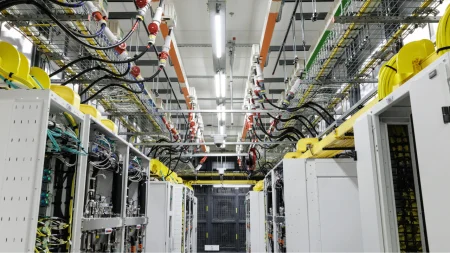




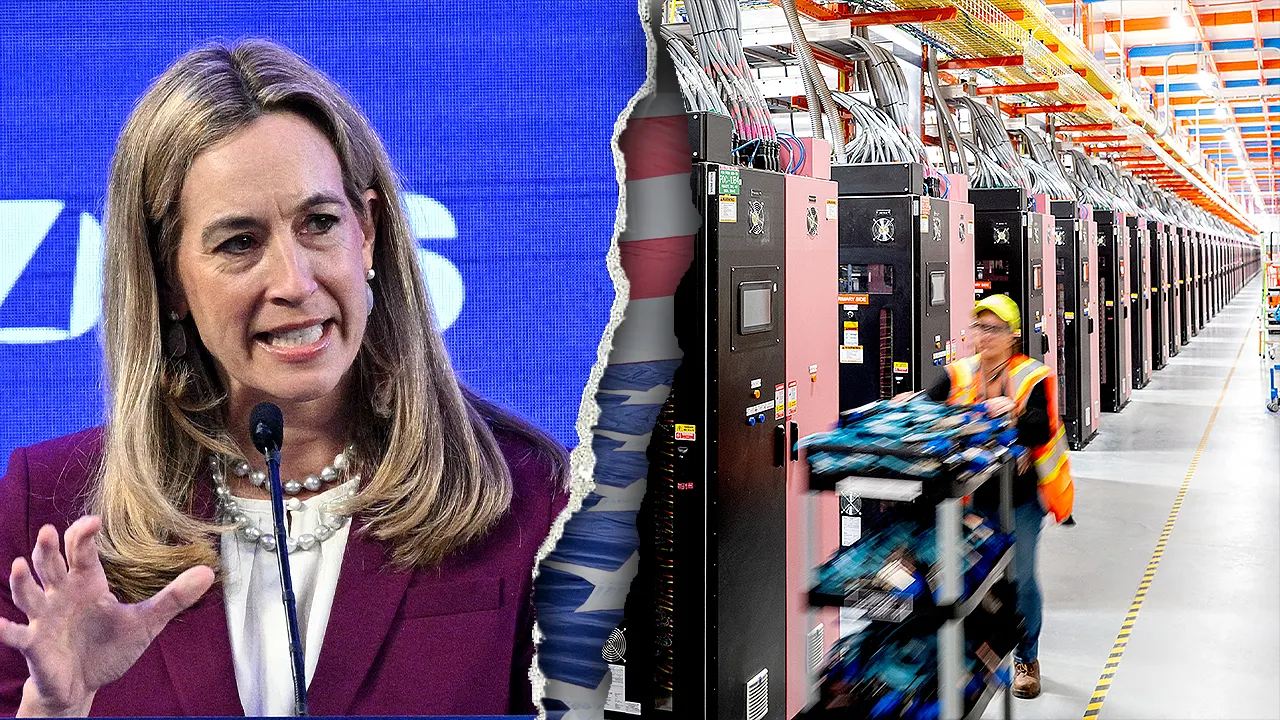
The AI boom has brought us talking chatbots, self-driving ambitions, and an almost invisible but enormous appetite for electricity. Data centers, the windowless warehouses where the digital world lives, are springing up across the country, and they need power around the clock. That need is so vast that it is shaking up the careful math of American utilities, because someone has to pay for the new power plants, substations, and transmission lines. And families are worried that the bill will land in their laps. This isn’t a distant policy fight; it’s about whether your monthly utility statement creeps higher so a tech giant can train its next large language model. Two states are now offering very different answers to that question. New Jersey is putting a skeptical face on the boom, writing statewide rules before large data centers get too comfortable. Indiana is taking a more optimistic, deal-making path, betting that new demand can actually bring rates down for existing customers. Both approaches are imperfect, both are being watched closely, and both speak to a broader national anxiety: how do we embrace an AI future without turning into the ones paying for it? At its core, this is a story about fairness, about who gets the benefit of progress and who gets stuck with the cost. It’s also a story about how quickly the conversation has shifted from “build, build, build” to “wait, who’s going to pay for all this?”
New Jersey has decided to put guardrails up before the data center stampede. Governor Mikie Sherrill signed legislation in July that tells the state’s Board of Public Utilities to create a separate rate structure for large data centers. The idea is simple: if a data center needs a brand-new substation or a major upgrade to the local grid, that cost should not be spread across the bills of ordinary homeowners and small businesses. The law also requires big tech companies to make a serious commitment to their projected electricity use, committing to pay for at least 85 percent of the power capacity they request for a full decade. That means if a data center opens, promises to use a huge amount of electricity, and then cuts back or shuts down, the utility isn’t left holding the bag. The law also nudges data centers to bring their own clean generation or battery storage, to be more energy efficient, and to dial down their power use during emergencies. Sherrill didn’t stop there. She signed another law that forces data center operators to report their energy and water use to the state twice a year, and her administration says new municipal guidance will help local officials understand what they’re dealing with and negotiate smarter with developers. This is a “trust, but verify” approach. It acknowledges that the AI boom may be inevitable, but it also tries to make sure that communities don’t get steamrolled, that small businesses and residents aren’t stuck with the tab, and that the people living near these giant facilities have a little more leverage. Critics might say this is heavy-handed, but supporters would say it’s exactly the kind of careful planning that should have happened years ago.
Indiana is betting on a different philosophy. Rather than writing a rulebook that applies to every data center in the state, Indiana let regulators approve a negotiated agreement involving Indiana Michigan Power, a utility based in Fort Wayne, along with consumer advocates and some of the biggest tech companies in the world. The context is important. Amazon Web Services announced an $11 billion data-center campus near New Carlisle, and Google announced a $2 billion project in Fort Wayne. That’s an enormous amount of new electricity demand all at once. The question was who would pay for the additional power and grid upgrades. The deal that came out of it requires new large customers, including data centers, to make long-term financial commitments to pay for the electricity they request, even if they don’t end up needing all of it. That’s a crucial safeguard, because it means utilities aren’t stuck building expensive infrastructure for a customer who then changes their mind. But the Indiana approach goes a step further by turning that new revenue into a benefit for existing customers. Indiana Michigan Power is now asking state regulators to cut base rates by $59 million in 2027, saying that the revenue from data centers makes the cut possible. If approved, an Indiana household using 1,000 kilowatt-hours of electricity per month would save about $100 a year. The utility is also proposing a three-year freeze on all current rates, so no one’s bill would go up during that time, with any savings starting in the summer of 2027. That’s an unusual and bold promise. It says: we can host the AI revolution and make the lights cheaper for ordinary people at the same time. The gap between New Jersey and Indiana is not just a policy difference; it’s a cultural difference. New Jersey is asking “what could go wrong?” while Indiana is asking “what could go right?” and then trying to lock in the upside.
Energy advocate Daniel Turner, who leads the group Power The Future, has been watching all of this closely, and his take is that Indiana chose the better path, even if neither state has fully figured things out. Turner says Indiana is willing to admit that nobody knows exactly where this boom is headed, and that’s a reason to work together rather than slap on restrictions that stop progress before it starts. But he also thinks there’s a missing piece in both approaches. Turner argues that every data center should be built alongside the power generation needed to run it, and that those facilities should not just consume electricity but add capacity back to the broader grid. In other words, don’t just let a tech company plug into the grid and drain it; make them part of the solution by building new generation as part of the deal. Turner’s point is that data centers have become a political football, with officials too often choosing between sweeping restrictions and open-ended delays, when what they really need is the political will to sit down and solve a problem that isn’t actually that complicated. He’s not saying it’s easy to build a power plant or a solar farm; he’s saying the excuses and the finger-pointing are getting in the way of practical action. If you’re a mayor or a governor facing a data center proposal, you need to answer two questions: will it help my community, and will it hurt my ratepayers? Turner believes those questions can be answered if leaders stop treating the AI boom as an either/or. You can welcome the jobs and the economic development without surrendering the public’s right to fair rates and reliable power. It just takes leadership that cares more about outcomes than headlines.
The federal government is also trying to get in on the act. The Trump administration announced a Ratepayer Protection Pledge, signed by major tech companies including Amazon, Google, Meta, Microsoft, OpenAI, Oracle, and xAI. Under that pledge, the administration says, these companies commit to covering the cost of the additional electricity generation their data centers require rather than passing that cost on to American families. It’s a symbolic move, but it sends a clear message: Washington sees this as a national issue, not just a local headache. Turner sees even bigger stakes here. He argues that the United States can’t afford to fall behind China in the race to build and control artificial intelligence. He points to China’s handling of the early days of the pandemic, the so-called Wuhan flu, and says imagine if that level of disinformation could be deployed across every platform in real time, using AI to twist every piece of intellectual property and public narrative. That alone, he says, should scare Americans into wanting to win the AI race. For Turner, this means we can’t let data center siting debates become endless bureaucratic battles. At the same time, we shouldn’t let fear of the future make us forget the people who pay utility bills every month. The federal pledge is a start, but it’s not law, and it won’t solve every local dispute. It does, however, signal that the conversation has reached the highest levels of power, and that’s a sign of how urgent this moment is.
What all of this means for you, if you’re an ordinary consumer, is mixed. On one hand, the rise of AI could lead to cleaner, more efficient, and more abundant energy systems, if we’re smart about it. On the other hand, huge data centers are showing up in your state, asking for power, and the old rules were never designed for customers that consume as much electricity as a small town. New Jersey’s approach might make you feel safer, knowing there are protections, but it could also make the state a less attractive place for tech investment, and that has its own costs. Indiana’s approach might sound great, especially with the promise of lower bills and a rate freeze, but it depends on a negotiated agreement that could be harder to replicate in states without a single dominant utility and a cooperative set of players. At the end of the day, there is no perfect answer, only trade-offs. We want innovation and jobs, but we also want to feel confident that the AI boom isn’t a hidden tax on our everyday lives. We want to win the global race, but we don’t want to sacrifice our voice in how that race is run. The real question is whether we can have a conversation about these trade-offs that treats ordinary families as partners, not just bystanders. The humanized version of this story is simple: the future is coming, it’s hungry, and we need to decide how to feed it without starving ourselves. Perhaps the best outcome would be a blend of both approaches, using New Jersey’s transparency and ratepayer protections, Indiana’s creativity and willingness to make deals, and a federal commitment to building new power generation alongside every data center. It won’t be easy, but then again, big things never are. What matters now is that we’re paying attention, that we ask hard questions, and that we hold our leaders accountable for balancing progress with protection, because that’s the only way to make sure the AI era benefits us all.