





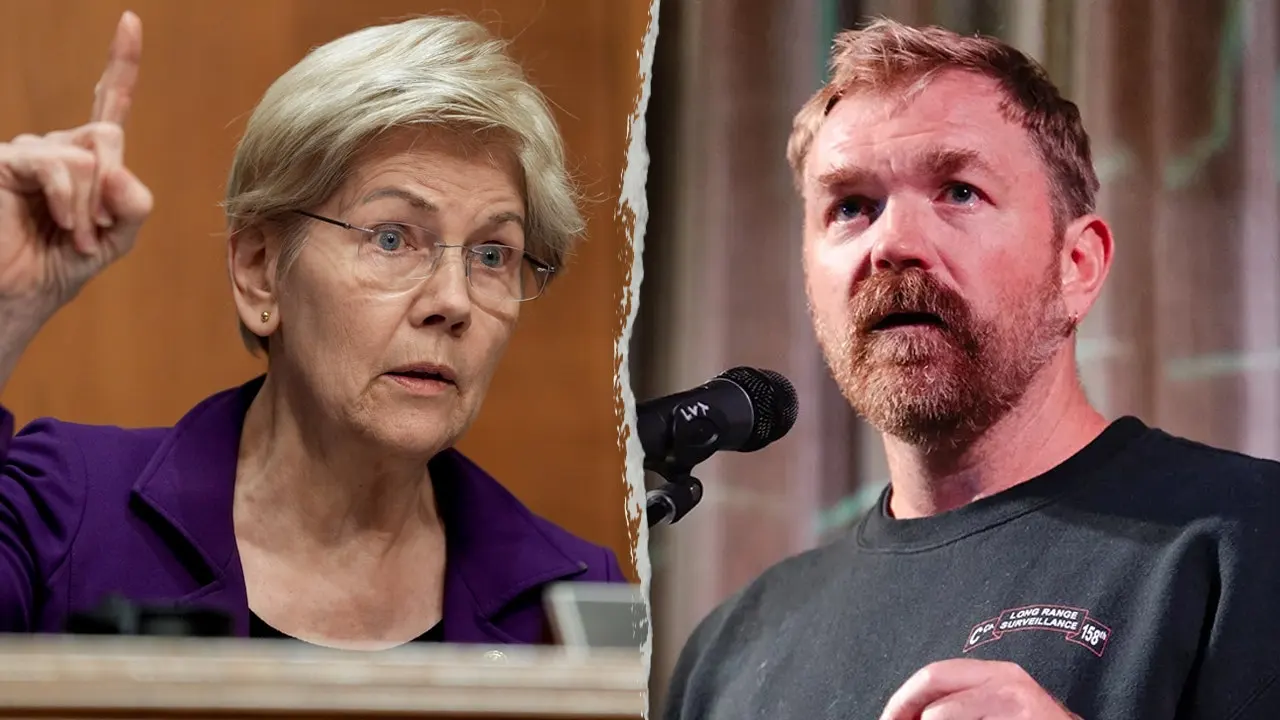
The modern American political landscape is increasingly defined not by legislative debates or policy platforms, but by the digital ghosts that haunt its candidates. In the tranquil, rugged coastal state of Maine, where political independence is cherished like a badge of honor, the Democratic Party believed they had found a unique champion to challenge Republican Senator Susan Collins. Graham Platner presented an appealing, homespun narrative: he was a decorated military veteran of Middle Eastern conflicts, an oyster farmer connected to the local maritime economy, and a progressive outsider ready to fight for working-class voters. However, this meticulously crafted image shattered almost overnight when a vast archive of his past internet interactions was unearthed, exposing a deeply volatile, bizarre, and highly offensive digital life. The revelations were as strange as they were politically damaging, ranging from an eccentric admission of feeling sexually aroused by the chemical smell of blue water in portable toilets, to highly provocative, victim-blaming remarks advising women to act like an adult to avoid being sexually assaulted. The controversy reached an absolute fever pitch when public attention turned to his hostile comments regarding Teddy Daniels, a highly respected Purple Heart recipient who had run for office in Pennsylvania. After viewing a video of Daniels under active military siege by enemy forces in Afghanistan, Platner took to social media to write that the dumb motherfucker didn’t deserve to live, adding that it was ultimately a display of poor marksmanship on the Taliban’s part. This shocking expression of animosity toward a fellow veteran, paired with old posts labeling legendary military sniper Chris Kyle as a psychopathic murderer, instantly transformed Platner from a progressive hopeful into an emblem of modern internet toxicity, triggering a chaotic scramble across the entire Democratic apparatus.
At the absolute center of this unfolding political drama stands Massachusetts Senator Elizabeth Warren, whose enthusiastic and highly vocal support for her New England neighbor has now become a source of profound embarrassment. Warren, renowned for her sharp consumer-advocacy rhetoric and uncompromising progressive ideals, had previously championed Platner as a model candidate for the future of the party. Opponents quickly used this endorsement to highlight the hypocrisy of her alliance, creating a massive public relations headache. On his widely syndicated radio show, Washington-area broadcaster Larry O’Connor created a highly effective and viral audio mashup that juxtaposed Warren’s famous, enthusiastic declaration of “that’s my kind of man” with narration detailing Platner’s most eccentric and offensive online activities. Listeners were treated to O’Connor asking if Warren approved of Platner pleasuring himself to the smell of portable toilet chemicals, immediately followed by the repeated, cheerful audio clip of Warren validating him as her ideal standard-bearer. The satirical contrast was devastating, highlighting how national political figures often hand out endorsements based on ideological alignment while remaining completely ignorant of, or indifferent to, the actual character of the individuals they are elevating to high office. When cornered by Fox News Digital reporters in the halls of Congress, the veteran senator—usually famous for her eager press interactions and lengthy explanations—offered only a silent, frozen smile, refusing to say a single word as she hurried past the cameras into a nearby office building. This quiet evasion stood in stark and uncomfortable contrast to her usual public behavior, illustrating the agonizing vulnerability of a powerful political figure who has been utterly compromised by the behavior of a protégé she had so confidently thrust into the national spotlight.
The controversy surrounding Platner deepened significantly when critics pointed out a glaring and highly visible double standard regarding his physical appearance, specifically a massive chest tattoo featuring Nazi-linked imagery. This became a major focal point for political commentators who sought to expose the deep ideological selectiveness of the Democratic establishment’s moral outrage. Prominent conservative commentator “Western Lensman” and other activists quickly pointed to a comprehensive, thirty-three-page letter that Senator Warren had previously sent to the Secretary of War concerning the nomination of Pete Hegseth in 2025. In that exhaustive document, Warren had aggressively questioned Hegseth about a tattoo on his body containing the Latin phrase “Deus Vult” (God Wills It)—a historical Christian term from the Crusades—characterizing it as a dangerous symbol of right-wing extremism and noting that some of his fellow servicemembers had flagged him as a potential “insider threat” before Joe Biden’s inauguration. Many observers found it incredibly hypocritical that Warren would author a massive, highly detailed dossier attacking a political opponent over a traditional Christian symbol, yet remain completely silent and protective of a political ally who proudly wore actual, documented Nazi-related iconography on his chest. Bernadette Breslin, a former high-ranking aide to Missouri Senator Josh Hawley, captured this frustration by publishing a side-by-side comparison of Warren’s past praise for Platner alongside her current, tight-lipped evasion of the press. Breslin observed how rapidly a politician can change their tune when an ideological ally’s personal baggage transforms from a private quirk into an active, undeniable electoral liability. This stark disparity fueled an intense national conversation about performative progressive outrage, leading many moderate voters to conclude that the left’s frequent accusations of white supremacy are often weaponized strategically against political enemies rather than applied as a consistent moral standard.
This hyper-localized New England scandal quickly metastasized into a highly effective weapon for the national Republican Party, which saw an opportunity to damage the credibility of the entire Democratic brand heading into a critical election cycle. The Republican National Committee’s rapid-response division, RNC Research, began systematically using Warren’s glowing endorsement of Platner to inflict collateral damage on other progressive candidates across the country. A prime example occurred in Iowa, where State Senator Zach Wahls, running a highly competitive campaign to fill the seat of retiring Republican U.S. Senator Joni Ernst, proudly boasted to an audience about being honored to receive Senator Warren’s coveted endorsement. Within hours, the RNC seized on the moment, publicly connecting Wahls to Warren’s poor judgment by reminding voters that the very same Massachusetts senator had enthusiastically endorsed Platner—a candidate who wore a Nazi tattoo, praised the tactical maneuvers of Hamas, and blamed rape victims for their own assaults. This tactical maneuvering forced Democrats nationwide onto the defensive, turning what should have been a powerful, status-boosting endorsement from a progressive icon into an albatross around the necks of moderate candidates in swing states. As the crisis expanded up the chain of leadership, top Democratic lawmakers in Washington desperately tried to distance themselves from the radioactive candidate. House Minority Leader Hakeem Jeffries of New York, when confronted by reporters, resorted to a classic political defense, claiming he had absolutely no knowledge of Platner’s offensive Reddit posts or controversial history. This collective, coordinated retreat by party leaders demonstrated how quickly the camaraderie of national politics evaporates when a candidate’s personal conduct threatens the party’s broader quest for legislative power.
To truly understand the human damage of Platner’s online vitriol, one must look at the perspective of those he targeted, particularly Teddy Daniels, the combat-decorated veteran who survived the brutal realities of war only to find himself the object of a fellow veteran’s digital malice. Daniels, whose life was saved by mere inches during a chaotic firefight in Afghanistan, responded to the resurfaced remarks with a mix of exhaustion, characteristic resilience, and sharp political commentary. In an appearance on Fox News’ “The Bottom Line,” Daniels explained that he had grown thick-skinned after enduring years of relentless attacks from left-wing activists, asserting that Platner’s hostile comments did not personally offend him because he had faced far worse physical threats on the battlefield. However, Daniels did not hold back in analyzing the deeper cultural and psychological rot that Platner’s behavior represented. He pointed out the sheer, absurd irony of a political party that claims to struggle with defining basic biological reality, yet has candidates who suffer hysterical “emotional meltdowns” on social media over video clips of real men facing life-and-death combat situations. Daniels likened Platner’s online outbursts to the behavior of a dramatic “13-year-old girl who just got dumped by her boyfriend,” concluding that such volatile emotional instability is the absolute antithesis of the stable, steady leadership required to govern a complex nation. Through Daniels’ eyes, the entire controversy highlighted a profound, widening chasm in American life: the massive disconnect between the comfortable, terminally online academics who dominate progressive spaces and the working-class people who actually serve in the military, run small businesses, and have to bear the tangible consequences of national policy.
Ultimately, the tragedy of the Graham Platner scandal lies in the complex, deeply human struggle for personal redemption in an era that rarely grants forgiveness. When the weight of his past actions finally collapsed his campaign, Platner did not deny his behavior; instead, he stepped forward to offer a somber, deeply personal explanation, attributing his highly destructive online persona to severe combat-related Post-Traumatic Stress Disorder (PTSD) and a profound period of clinical depression following his military service in the Middle East. Through a public statement, Platner pleaded with the electorate not to define his entire life and character by the “dumbest things” he had ever written during his darkest, most isolated moments on the internet. He expressed a sincere desire to be judged on the person he has worked hard to become today—a quiet, hardworking oyster farmer trying to heal from the psychological scars of war and contribute to his local community. His defense raises a profound and challenging ethical dilemma for a society increasingly governed by cancel culture: can a veteran who put his life on the line for his country, and subsequently suffered severe psychological damage, be allowed a path toward civic redemption, or must he be permanently exiled from public life for the toxic relics of his mental illness? As the political dust settles, this question remains unresolved, leaving Maine voters caught in a delicate balance between demanding basic moral fitness from their leaders and exhibiting grace toward a wounded warrior. The immediate political consequence, however, remains clear and unforgiving: by failing to address these vulnerabilities early, the Democratic Party has severely jeopardized its best chance of reclaiming New England’s last Republican Senate seat, transforming a promising campaign into a sobering cautionary tale about the high cost of digital recklessness.