





1. Introduction: The Raid on Skid Row
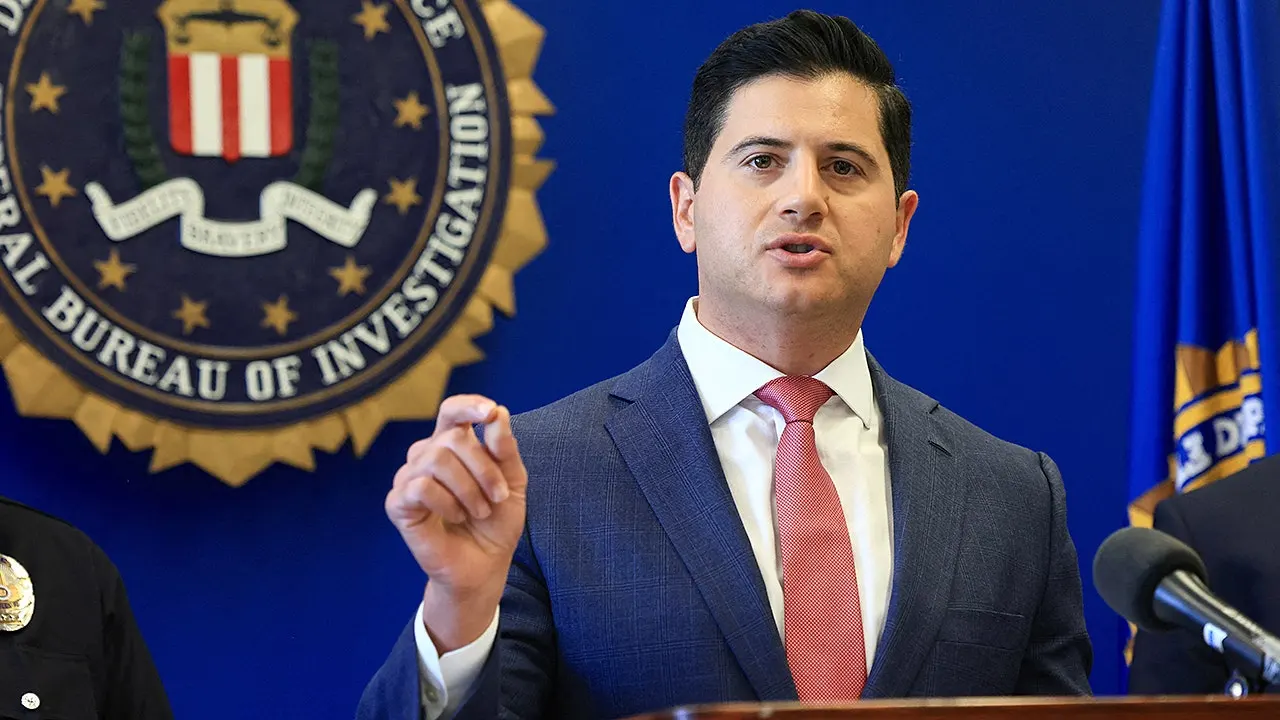
The sun had barely risen over Los Angeles when a convoy of over a hundred police vehicles rolled into Skid Row, a place that has become synonymous with despair and neglect. This wasn’t just another routine patrol; it was a coordinated, federal-led assault on the open-air drug markets that have turned a stretch of downtown into a war zone for the homeless and a playground for gangsters. By mid-morning, federal and city authorities had executed 28 arrest warrants and 44 search warrants, targeting the “Main Street Crips,” the “Grape Street/Raymond Avenue Crips,” and the “Pueblo Bishop Bloods”—gangs that have effectively held an entire neighborhood hostage. Amid the flashing lights and handcuffed suspects, First Assistant U.S. Attorney Bill Essayli stood before cameras, delivering a message that cut through the typical political platitudes. He wasn’t just celebrating the arrests; he was indicting the very system that allowed this crisis to fester. For residents and advocates who have long watched helplessly as their community rotted, the operation was a glimmer of hope—but Essayli’s words made it clear that this was a symptom of a deeper rot that extends far beyond Skid Row, all the way to the state capitol.
2. The Hollowing Out of California’s Justice System
Essayli’s critique was blunt, and it struck at the heart of California’s failed experiment with criminal justice reform. “Unfortunately, states like California have totally watered down their laws, their criminal justice laws. They’ve also emptied their prisons and closed prisons, so effectively, there’s not much of a deterrence on the state side. No one faces any serious consequences on the state side,” he said. These weren’t just abstract policy complaints; they were a reflection of decades of legislative choices—from realignment to Prop 47—that have downgraded felonies to misdemeanors, released inmates early, and shuttered correctional facilities. The result, as Essayli sees it, is a legal landscape where drug dealers and repeat offenders know that the worst they’ll face is a booking and a quick release. On the ground, this means that the same faces appear again and again, resuming their trade with impunity. The human toll is staggering: families torn apart by addiction, children born into chaos, and a permanent underclass trapped in a cycle of exploitation. For the people living on Skid Row, the lack of deterrence isn’t an abstraction—it’s the daily reality of watching dealers set up shop within feet of their tents, laughing at the police, and brazenly collecting government benefit cards from their victims in exchange for a hit of fentanyl or methamphetamine.
3. The Political Blame Game and the War on Cops
Essayli was quick to clarify that his frustration wasn’t directed at the men and women in uniform. “We work really well with our local law enforcement partners,” he emphasized. “Local law enforcement isn’t the problem. It’s more the governor, it’s the legislature, it’s these loud-mouth federal, you know, Congress members who all they care about is attacking the administration, attacking the president.” This was a pointed jab at a political culture that has repeatedly chosen ideology over public safety. While officers on the beat risk their lives to shut down drug dens, they are met with a chorus of politicians demanding defunding, decriminalization, and social services alone. Essayli didn’t mince words: “This is a climate in which you have people right now trying to defund the police. You have people trying to disarm the LAPD, and those people are on the side of criminals. Anyone who’s calling for disarming the police is on the side of the drug dealers that we arrested today. They’re lunatics.” He gave credit where he felt it was due—to Mayor Karen Bass, who finally approved LAPD’s participation—but the underlying message was that the city’s own leadership has been complicit in the decay. For the average citizen, watching these events unfold, it feels like a betrayal: their tax dollars fund programs that coddle offenders while their neighborhoods suffer. The frustration is visceral, and Essayli gave voice to a population that feels forgotten by the progressive elites in Sacramento and Washington.
4. The Scale and Precision of Operation Save Skid Row
The operation itself was a masterpiece of interagency coordination, a stark contrast to the fragmented responses that have historically characterized Skid Row. Over 100 law enforcement vehicles, including marked units and unmarked tactical vehicles, snaked through the narrow streets, sealing off blocks and executing warrants with military precision. The targets were not random street-level dealers; they were the upper echelons of organized crime—gangs that have diversified beyond drugs into human trafficking, robbery, and identity theft. The evidence collected included narcotics, firearms, and documentation of public assistance fraud, a scheme that essentially turned the homeless into unwilling ATMs. For the residents who have been forced to live amidst the violence and filth, the scene was surreal. For the first time in years, they saw law enforcement not as an occupying force, but as a liberating one. As the suspects were led away in zip ties, some onlookers cheered, others wept. One woman, who had been living on the streets for over a decade, told a local reporter that she had never seen anything like it—not because she doubted the police’s ability, but because she had given up hope that anyone in authority actually cared. The raids sent a message not just to the gangs, but to the broader community: that no neighborhood, no matter how marginalized, is beyond the reach of justice.
5. The Vicious Cycle of Addiction and Exploitation
In his remarks, Essayli painted a harrowing picture of the reality on Skid Row. “We are no longer going to have open-air drug markets in the United States, let alone on Skid Row. And that is the reason you see so many homeless people who are experiencing psychotic episodes, who are unwell, they aren’t seeking help, it’s because you have people, like the drug dealers we are arresting today, keeping them addicted and taking their public assistance money to pay for their drugs.” This single statement encapsulates the tragedy that unfolds daily behind the headlines. The homeless are not just victims of circumstance; they are prey. Drug dealers offer the first hit for free, then demand payment—not in cash, but in EBT cards, Social Security checks, and disability benefits. Once hooked, the victims become lifers, their minds so scrambled by methamphetamine and fentanyl that they no longer even recognize their own humanity. The dealers, meanwhile, live in comfort, using the stolen benefits to fund their operations and lifestyles. This is not a mental health crisis alone; it is a predatory crime wave. Essayli’s words challenge the narrative that these are victimless offenses. Every overdose, every psychotic break, every death is a direct result of a system that has failed to intervene, and the drug dealers know it. They exploit that failure with ruthless efficiency. The arrests are a necessary first step, but they are only a step. Without a sustained commitment to enforcement, treatment, and accountability, Skid Row will simply rebuild its open-air markets with new faces.
6. A Call for Moral Clarity and Action
As the last of the suspects were processed and the streets began to quiet, the larger question hung in the air: what comes next? Essayli’s passionate defense of law enforcement and his scathing rebuke of politicians is more than just rhetoric—it’s a demand for a fundamental shift in how we view crime and punishment. He reminds us that there is a moral dimension to our choices. We can choose to see the homeless as pure victims and criminals as products of their environment, but that ignores the clear evidence of predation and exploitation. We can choose to starve our police and soften our laws, but that only empowers the gangs who feed on the weak. Or we can choose a different path—one that combines tough enforcement with genuine compassion, that restores order while offering redemption, and that holds all accountable for their actions. The people of Skid Row deserve more than a one-time operation; they deserve a durable peace. The federal action on this Thursday was a powerful symbol, but symbols are not enough. It will take the sustained will of elected officials, community leaders, and citizens to repudiate the permissive policies that created this disaster. Essayli’s message is clear: the war on drugs may be difficult, but it is a war worth fighting, not only for the sake of the law, but for the souls of those who have been left behind. We owe it to the nameless faces on Skid Row to see them not as a problem to be managed, but as people worthy of rescue. And that begins with the courage to say, openly and without apology, that the criminals who exploit them are not victims—they are predators who must be stopped.