




Humanizing the Future of Air Travel: Insights from Dubai Airports’ CEO
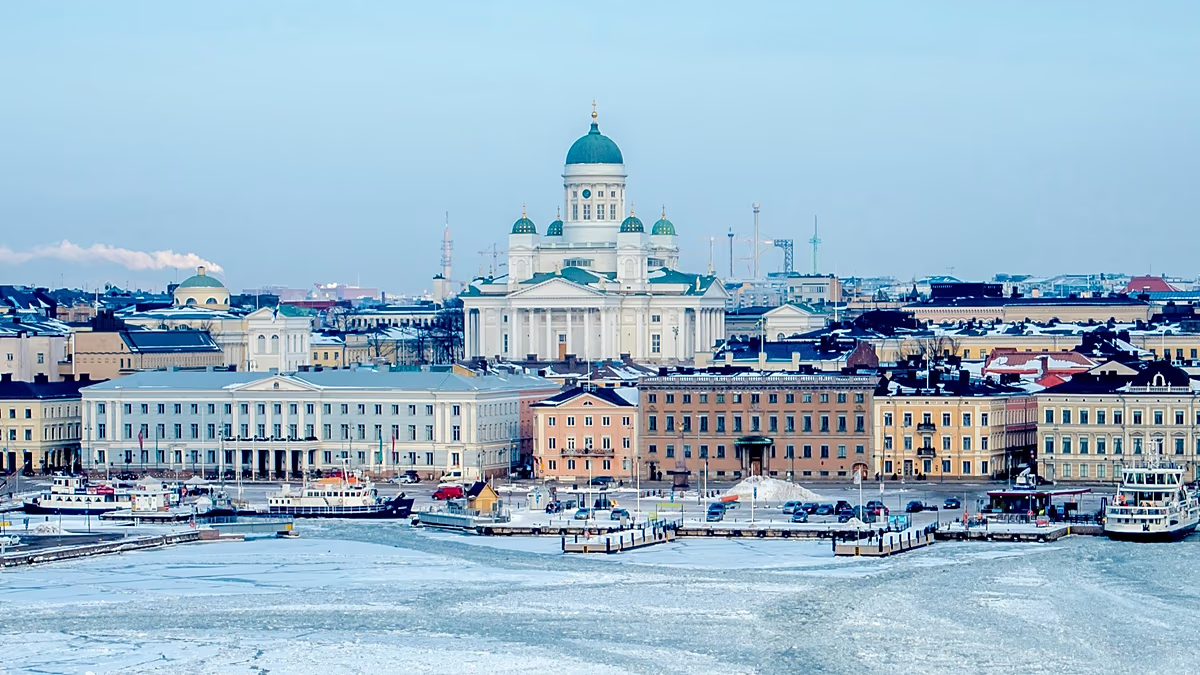
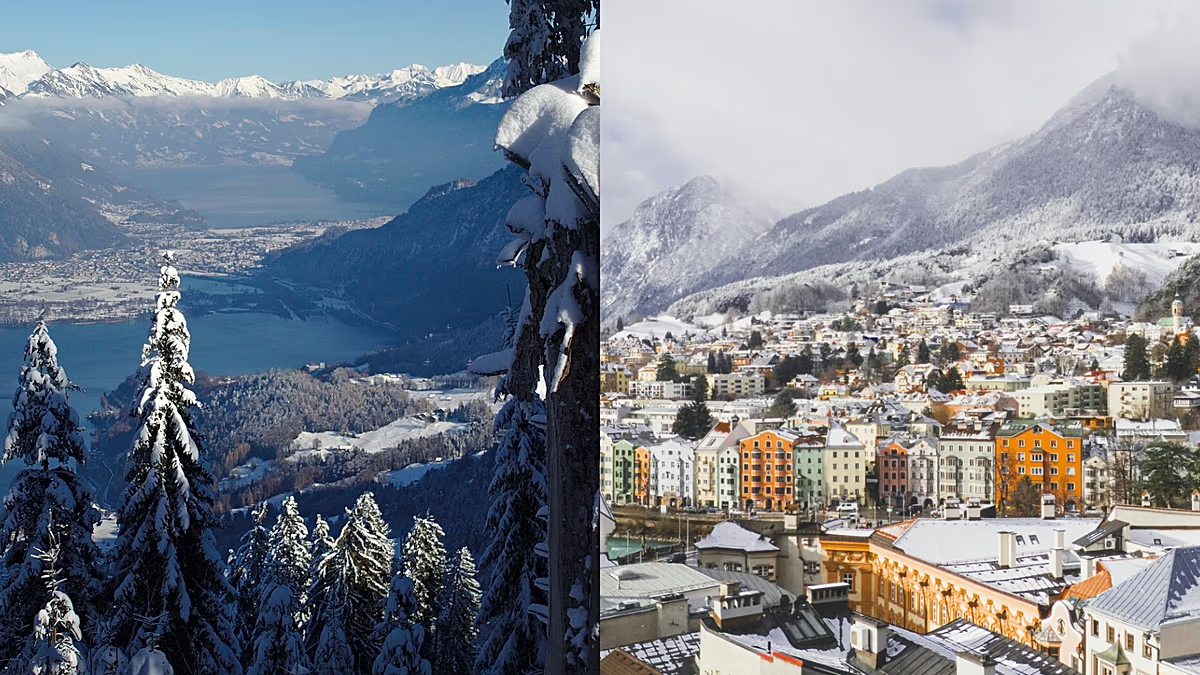
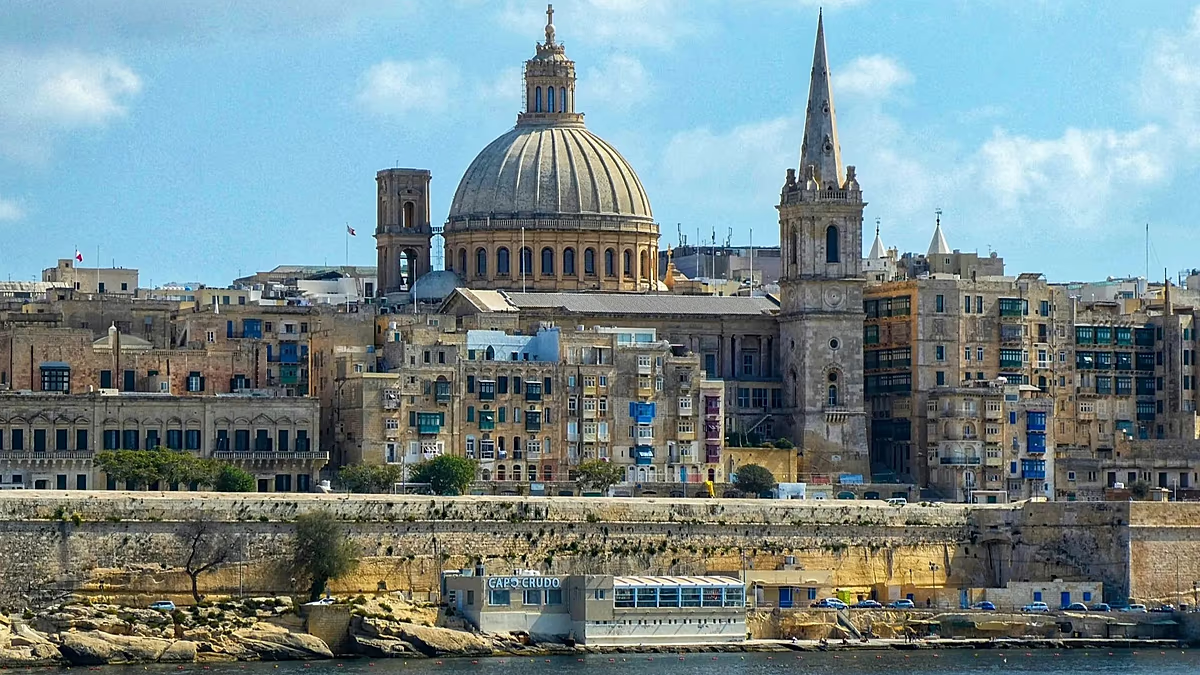
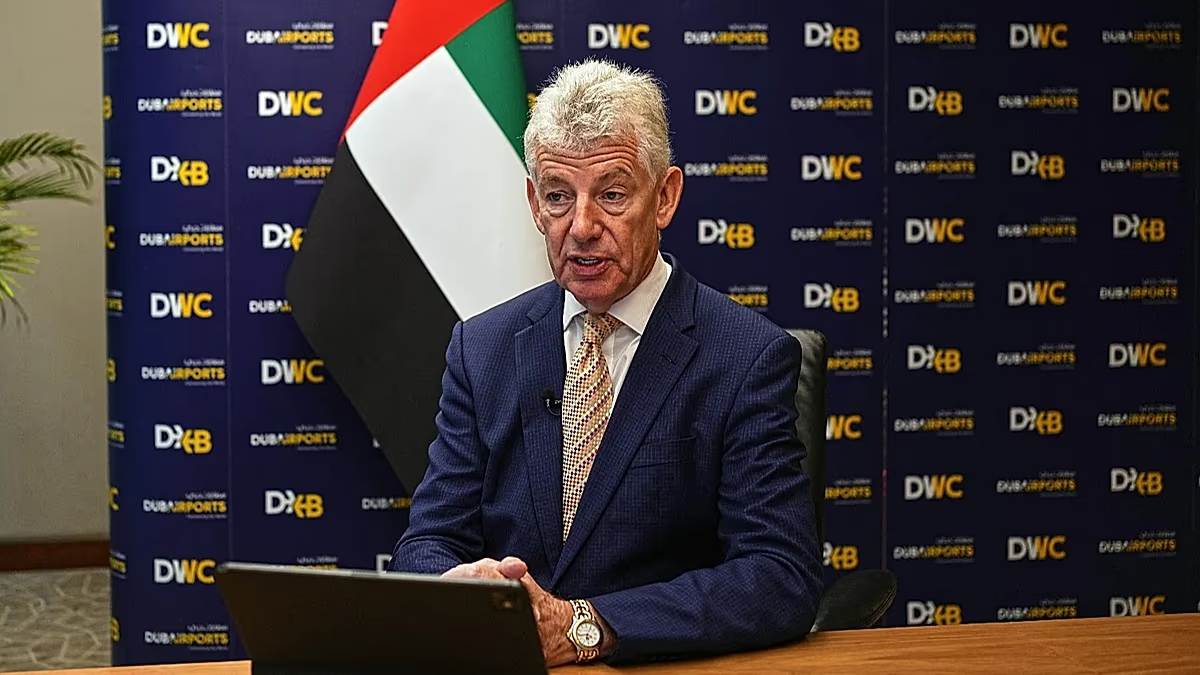
In the sun-drenched halls of the World Travel & Tourism Council’s Global Summit in Malta, a quiet but profound shift in the world of aviation was taking shape. Paul Griffiths, the CEO of Dubai Airports, sat down for a roundtable discussion that would ripple across the industry, painting a picture of a future where the humble aircraft, once a symbol of mass transportation, becomes a nimble thread weaving together the most unexpected corners of the globe. His message was simple yet revolutionary: aircraft technology is evolving at such a pace that smaller planes are now capable of flying longer distances, and this will fundamentally “change the shape of travel.” No longer will passengers be forced through the crowded hubs of major cities to reach a long-haul flight. Instead, the convenience of direct connectivity is about to reach the doorstep of secondary cities—places like Exeter, Valencia, Lyon, Marseille, or even the quaint spa town of Baden-Baden. These destinations, often overlooked in the grand choreography of global travel, are poised to become launchpads for journeys to Dubai and, from there, onward to the farthest reaches of the planet. It’s a vision that promises to democratize international travel, breaking down the geographic barriers that have long kept smaller communities at the margins of the global itinerary.
This ambition is not merely a flight of fancy; it is grounded in the concrete, colossal plans for Al Maktoum International Airport (DWC) in Dubai. Announced in 2024, the project is set to transform DWC into the world’s largest airport, a sprawling marvel of engineering that will feature an astonishing 400 terminal gates and five parallel runways, designed to handle up to 260 million passengers annually. By the time this mega-hub is fully operational in 2032, it will not just be an airport but a city in its own right—a gateway that connects over 600 cities directly to the shimmering metropolis of Dubai. Griffiths’ excitement is palpable as he speaks of this expansion, seeing it as a catalyst for a new era of regional aviation. He envisions a future where the very definition of a “hub” is reimagined—not as a single point to which everyone must converge, but as a web of many points, each able to send travelers into the heart of the action. For the airline industry, this means a fundamental rethink of route networks. For the traveler, it means more options, less hassle, and a world that suddenly feels smaller and more accessible than ever before.
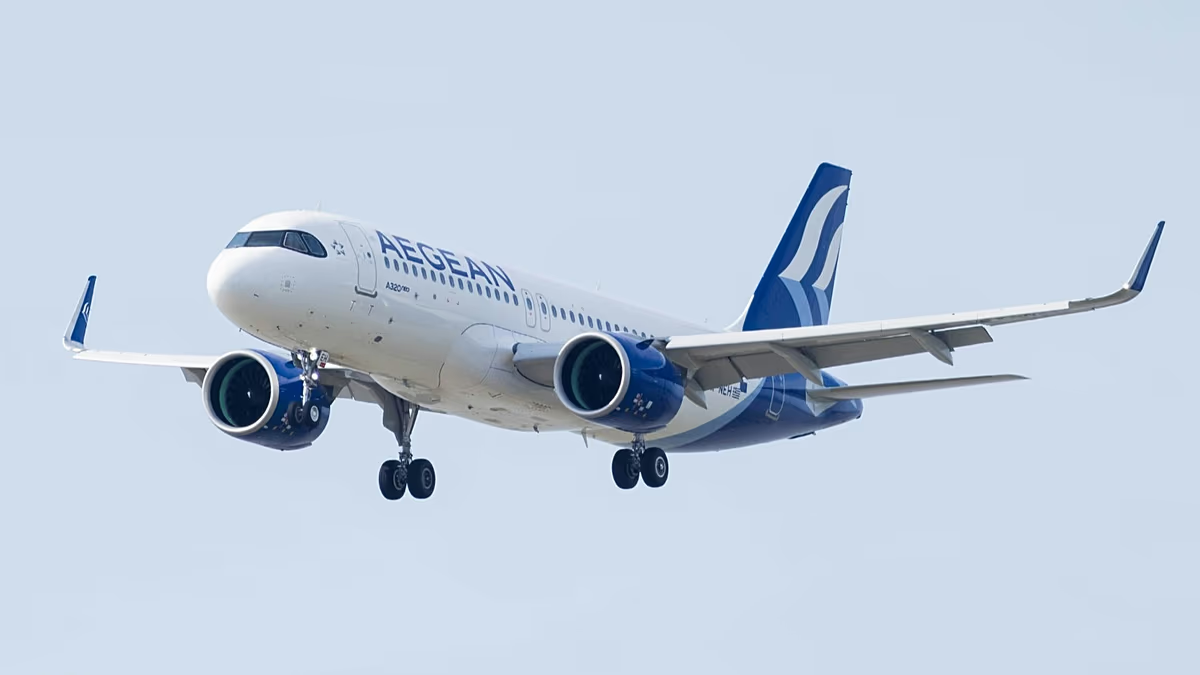
The ripple effects of this transformation extend far beyond the glittering terminals of Dubai, reaching into the economies and communities of regions that have long been left off the aviation map. Griffiths pointed out that narrow-body jets, once confined to shorter routes, are now able to cross the Atlantic and land in smaller destinations where bringing a wide-body aircraft would be commercially unsustainable. This is a game-changer for regional airports, which suddenly find themselves with a golden opportunity to expand their operations and attract new airlines. But as Griffiths wisely noted, this opportunity comes with a condition: these airports must get their surface transport access sorted out—efficient rail links, road networks, and seamless connections to the wider region. Those that do will be wise investments, generating not just air traffic but also a boon for local economies through tourism, trade, and job creation. It’s a message of hope for places that have long depended on sprawling transit hubs, a chance to become destinations in their own right rather than mere waystations. Griffiths’ optimism is tempered with pragmatism, urging local governments to act now to prepare the ground for the influx of travellers that will soon be landing at their doorsteps.
Of course, the conversation about expansion cannot be divorced from the pressing issue of sustainability—a theme that hangs over every discussion of aviation’s future. Griffiths acknowledged this tension directly, highlighting sustainable aviation fuel (SAF) as “probably the only way” for the industry to truly eliminate carbon emissions. He pointed to Singapore’s introduction of a green fuel tax as a model worth emulating, urging governments to mandate the use of SAF and gradually increase the required percentage blended with conventional jet fuel. But mandates alone are not enough; the private sector must be persuaded to invest heavily in SAF production, scaling up the technology to make it economically viable. Griffiths’ message to policymakers was clear: balance the legitimate concerns of communities affected by airport noise and emissions by taking environmental control seriously, while also setting targets and frameworks that allow infrastructure expansion to proceed. This is a delicate act, a high-wire walk between growing the economy and protecting the planet. Yet Griffiths remains hopeful, arguing that the travel and tourism industry can be a force for good, generating income that can be channeled into environmental mitigation, if only the right balance is struck.
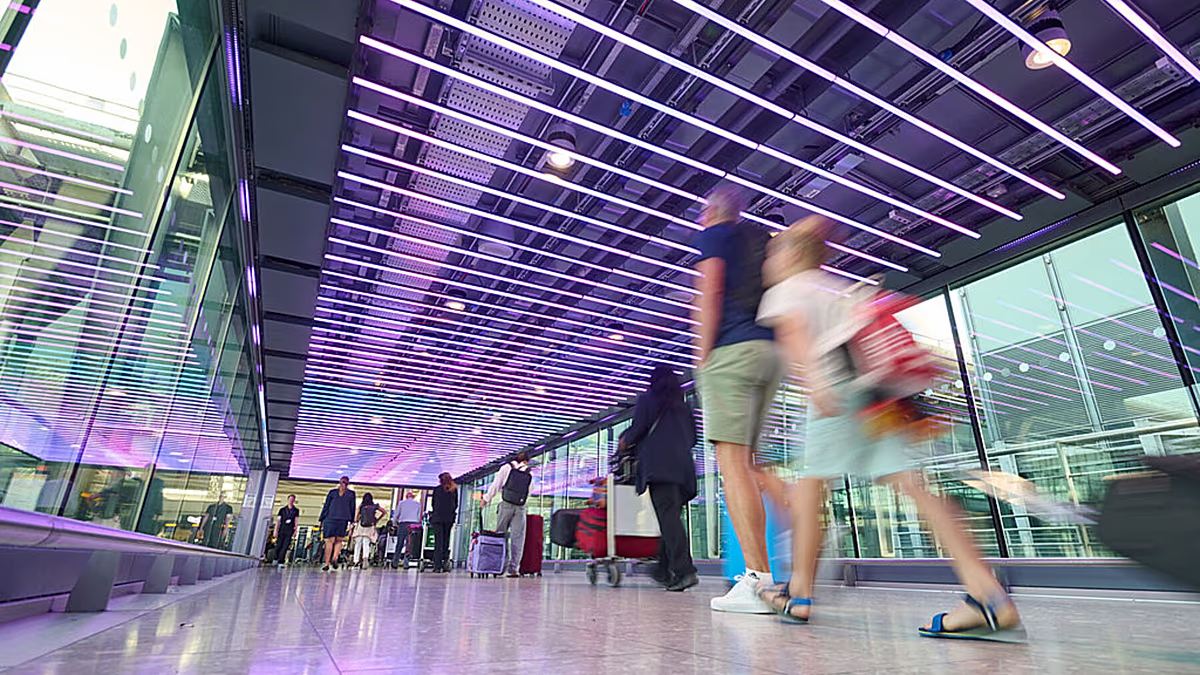
Looking further ahead, Griffiths shared a bold vision for the airport experience itself, one that is both high-tech and deeply human. In a panel discussion on digital identity and resetting the border experience, he predicted that the need for physical passports could be eliminated within the next five years. At the new DWC, the goal is to make all processes so seamless that passengers don’t even notice the technology behind them. As he put it, “I can’t comment on the technology that you see, because hopefully if you don’t see any technology, then we will have done our job incredibly well.” The dream is to make the entire journey—from check-in to boarding—feel like a natural, unobtrusive flow, with facial recognition replacing the need to show a passport or boarding pass at every turn, and AI scanning baggage without the need for x-ray machines cluttering the concourse. This is a radical departure from the often intrusive, stressful, and dehumanizing experience of airport security that Griffiths vividly describes as “probably the most intrusive process that any human being could go through outside of a hospital operating theatre.” His vision is to restore dignity to travel, to strip away the bureaucratic friction and allow the focus to return to the human contact—the smile of a gate agent, the ease of a traveler, the joy of embarking on an adventure.
In essence, Griffiths is painting a picture of an aviation future that is more accessible, more sustainable, and more humane. The expansion of Al Maktoum International is not just about building bigger terminals; it’s about shrinking the world in a way that brings opportunities to forgotten cities and creates a network that weaves communities together. The commitment to SAF and environmental responsibility acknowledges that growth must be tempered with care for the planet. And the reimagining of the airport experience seeks to strip away the anxiety and intrusion of modern travel, replacing it with a sense of calm and connection. Over the next decade, as these plans come to fruition, we may see the very fabric of travel transformed—not just for the wealthy few, but for everyone. Regional airports will thrive, secondary cities will become gateways, and the boundaries between air, land, and sea will blur as technology continues its relentless march. Griffiths’ words are not just a testament to the ambition of Dubai, but a blueprint for the future of global mobility. It’s a future we can all look forward to, one where the journey is as effortless and joyful as the destination itself.