





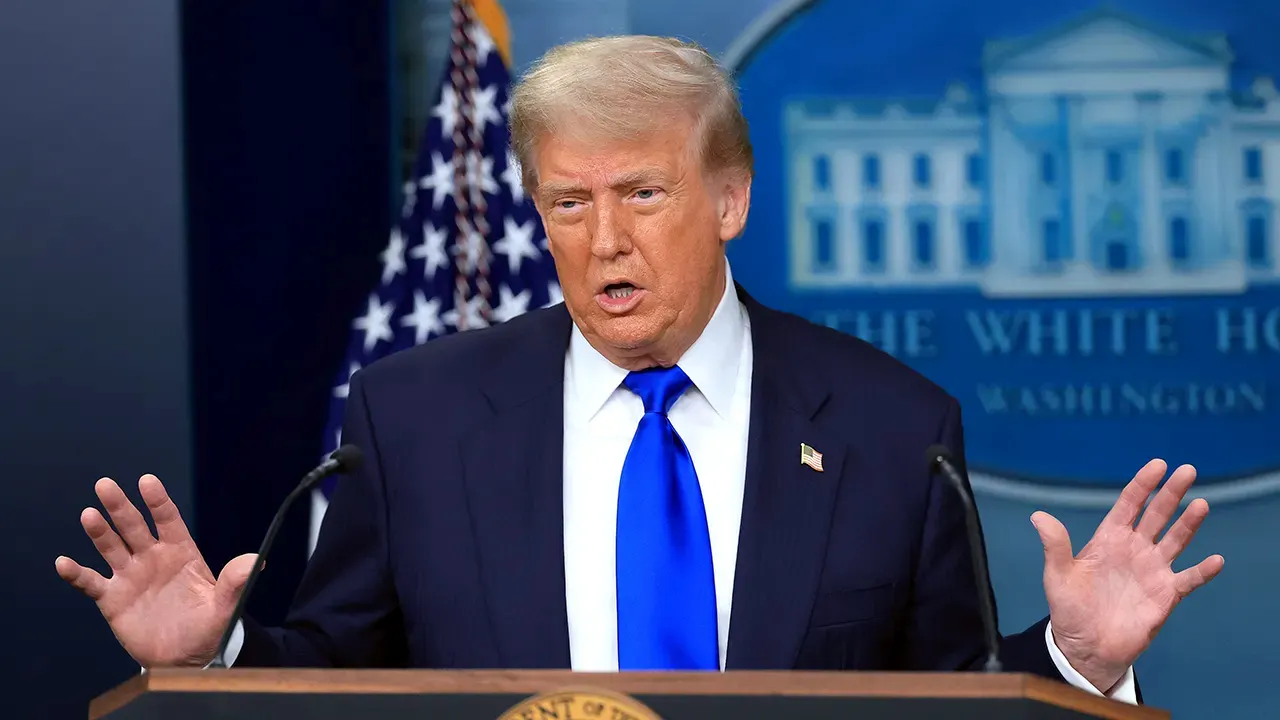
The delicate foundations of American democracy witnessed a series of high-stakes tremors when the United States Supreme Court handed down its highly anticipated decision in the case of Watson v. RNC, a pivotal ruling that legally validated a Mississippi state statute allowing mail-in ballots postmarked by Election Day to be counted up to five days after the polls officially close. This judicial confirmation of late-arriving ballots immediately drew the incandescent, public wrath of former President Donald Trump, who took to his Truth Social platform to vehemently condemn the decision as a catastrophic, systemic setback for the integrity of the nation’s voting systems. What made this particular judicial defeat uniquely painful and deeply personal for the former president was the high-profile involvement of Justice Amy Coney Barrett, his own hand-picked Supreme Court nominee whose rapid appointment was once celebrated as one of the crowning triumphs of his absolute legacy. Rather than aligning with the strict, absolute voting deadlines advocated by conservative election legal teams, Barrett chose to pen a meticulously reasoned opinion that exposed a profound division within the conservative legal movement, clarifying that federal laws establishing a uniform day for elections do not dictate the subsequent operational and administrative deadlines for receiving and counting legally cast ballots. Barrett’s pragmatic constitutional analysis highlighted a highly human, dramatic tension within modern American conservatism, illustrating the clash between a judicial nominee’s ultimate fidelity to strict statutory text and a political creator’s deeply held expectations of personal and ideological loyalty. To Trump and his millions of active supporters, the ruling was far more than a dry, abstract debate over state legislative authority; it felt like a direct, disappointing betrayal by the very physical institutions he helped shape, raising deep-seated personal anxieties about the balance of power and prompting an immediate, highly aggressive demand for sweeping legislative intervention in the halls of Congress, a move he believes is vital to restoring faith in the American system.
Deeply frustrated by what he perceived as a failure of the judicial branch to protect the sacred sanctity of the ballot box, Trump quickly pivoted his political strategy toward the legislative arena, issuing a fiery, non-negotiable demand for the immediate national passage of the SAVE America Act. This sweeping, aggressively designed piece of legislation, championed by Representative Chip Roy of Texas in the House of Representatives and Senator Rick Scott of Florida in the Senate, has fast become the premier legislative rallying cry for conservative election reformers who desire to completely overhaul how elections are conducted across the United States. The act is highly comprehensive in its scope, aiming to mandate strict, nationwide photo identification requirements, enforce definitive proof-of-citizenship checks before registration, and effectively eliminate no-excuse mail-in balloting by restricting paper ballots exclusively to deployed military service members, the severely ill, the disabled, and those with documented, unavoidable travel commitments on Election Day. To build momentum for this dramatic legislative push, Trump employed highly provocative, civilizational language, describing the struggle as an existential battle for the very survival of the American republic against what he characterized as a powerful, dangerous Communist movement operating within the domestic political landscape. In his characteristic, unfiltered rhetorical style, he equated the modern political challenges posed by opposing Democratic lawmakers and several moderate Republican senators to the legendary crises of World War I, World War II, the attack on Pearl Harbor, and the September 11 terrorist attacks, asserting that any politician opposing these measures was actively enabling widespread cheating and the destruction of the nation. This intense, apocalyptic framing reflects the deep human anxiety of a highly polarized society where the standard administrative rules of voting have been elevated to the level of an epic, spiritual war, leaving little room for compromise, rational bipartisan debate, or a calm evaluation of optimal state voting logistics.
However, Trump’s heavy-handed attempt to force legislative compliance within his own party quickly backfired in a highly public and embarrassing fashion when he publicly targeted a select group of five moderate Republican senators—Lisa Murkowski of Alaska, Susan Collins of Maine, Thom Tillis of North Carolina, Bill Cassidy of Louisiana, and Senate Republican Leader Mitch McConnell of Kentucky—accusing them of actively holding up the nation’s salvation. This generic, sweeping accusation drew a swift, sharp, and remarkably candid public response from Senator Bill Cassidy, who wasted absolutely no time pointing out a glaring, undeniable factual error in the former president’s public tirade. In a dryly humorous, sarcastic, and direct retort, Cassidy publicly clarified that he was actually an official, active co-sponsor of the very legislation Trump had passionately accused him of blocking, mockingly advising the former president to double-check his sources or fire the political aides responsible for providing him with such inaccurate, misleading information. Beyond the immediate satisfaction of correcting the record, Cassidy highlighted the real-world, deeply human consequences of running a national government through social media ultimatums and performative battles, rather than focusing on realistic governance. Specifically, the Louisiana senator criticized the highly controversial decision within his own party to delay a vital, bipartisan housing relief bill until the SAVE America Act is fully passed, arguing that it is deeply irresponsible to leave struggling families across the country without financial relief from soaring housing costs just to score temporary ideological points. This friction exposes the complex, daily compromises of governing, illustrating the immense frustration of lawmakers who are genuinely trying to address practical, real-world issues like affordable housing, only to find themselves constantly derailed by highly personalized, online feuds, public finger-pointing, and rigid ideological purity tests that fail to benefit ordinary citizens.
While Senator Cassidy chose to directly and publicly confront the former president’s online attacks, other powerful figures within the Senate Republican establishment opted for a more cautious, deeply strategic silence that speaks volumes about the tense human dynamics inside the corridors of congressional power. The office of Senator John Thune of South Dakota, a key figure poised to ascend to the pinnacle of party leadership, politely declined to provide any further comment on the explosive social media flare-up, while the office of Mitch McConnell quietly acknowledged receipt of the message without offering any immediate public defense, counter-attack, or personal commentary. This carefully measured reticence illustrates the intense, behind-the-scenes survival strategies of veteran politicians who have spent years navigating the highly volatile, unpredictable political landscape of the Trump era. These seasoned lawmakers have learned through painful and repetitive experience that engaging in direct public arguments with the highly popular, populist party leader often yields zero practical benefit, acts as a distraction from legislative business, and only serves to deepen internal party divisions while alienating the passionate voter base they rely on for political survival. By choosing collective silence or minimal, routine administrative engagement, these leaders try to quietly protect their long-term legislative priorities and maintain a fragile, workable semblance of party unity, even as they face intense, daily pressure from a demanding electorate that expects absolute conformity to Trump’s personal platform. This quiet resistance, strategic retreat, and calculated avoidance of conflict highlight the intense personal and professional strain placed on institutionalist politicians who must constantly perform a delicate balancing act, weighing their personal principles and constitutional duties against the stark, modern realities of a political party transformed by a relentless populist movement, an exhausting reality that tests the limits of their political endurance.
In a surprising twist that defied standard partisan expectations and cut through the thick, cynical ideological fog of Washington, the call for systematic election reform found an unexpected, highly independent ally in Pennsylvania’s Democratic Senator John Fetterman, who offered a refreshing, authentic, and deeply human perspective on an otherwise gridlocked national debate. Eschewing the complex, multi-layered policy packages that political party leaders often design to score cheap partisan points, Fetterman signaled a genuine, public willingness to support a streamlined, single-issue bill that would establish a basic nationwide requirement for secure photo identification at the voting booth. With his characteristic, blue-collar directness and unfiltered communication style, Fetterman urged his colleagues in Congress to stop transforming basic election security into a complicated, overstuffed “Christmas list” of voter suppression measures, or using the issue of identity verification as a broader, partisan excuse to launch sweeping attacks against the widely popular and highly convenient practice of voting-by-mail. By bridging the massive partisan divide, Fetterman’s common-sense voice cut through the heated political noise, reflecting a growing sentiment among ordinary, everyday American citizens who simply want a secure, straightforward, and easily understandable voting process without the constant threat of disenfranchisement on one side, or systemic vulnerabilities on the other. His pragmatic willingness to compromise on photo identification—a concept traditionally championed by the conservative right—while simultaneously defending the accessibility of mail-in voting demonstrates that practical, bipartisan solutions are indeed possible when politicians focus on clarity and human-centric governance rather than continuously feeding the insatiable, profitable beast of perpetual cultural warfare, highlighting that real reform is born of mutual respect and practical compromise rather than aggressive political dominance or partisan posturing.
Behind the abstract legal briefs, the fiery social media posts, and the dramatic congressional showdowns lie very real, everyday anxieties from average voters who are increasingly fatigued by the slow, agonizingly complex process of ballot tabulation that has come to define modern American elections. Critics of current extended voting systems and protracted counting periods often point to high-profile logistical bottlenecks as evidence of a broken system, citing recent, controversial local races such as the chaotic and slow counting process in California where cultural figures like Spencer Pratt were eventually overtaken by progressive Councilwoman Nithya Raman in a prolonged, highly publicized local race, or the glacially slow pace at which primary candidates like Xavier Becerra and Steve Hilton were declared official contenders for the governorship. These real-world, contemporary examples of delayed results, while legally necessary under complex state laws designed to ensure every single provisional and mail-in ballot is accounted for, can serve to severely erode public trust, creating confusion and fostering a highly suspicious environment where doubts about the outcome are easily amplified. Ultimately, the passionate, polarizing national conversation surrounding the Watson v. RNC decision and the high-profile push for the SAVE America Act is not merely a dry, clinical dispute over administrative rules and legal precedents, but a deeply human struggle for trust, psychological reassurance, and a sense of absolute certainty in the democratic process that binds the country together. As the nation swiftly moves toward future, high-stakes election cycles, the supreme challenge for modern lawmakers will be to discover a delicate, respectful balance that honors the foundational human desire for quick, completely transparent, and rapidly delivered election results, while simultaneously safeguarding the sacred right of every legitimate citizen to have an open, accessible, and secure platform to make their voice heard, ensuring that democracy remains both secure and accessibly democratic for generations to come.