





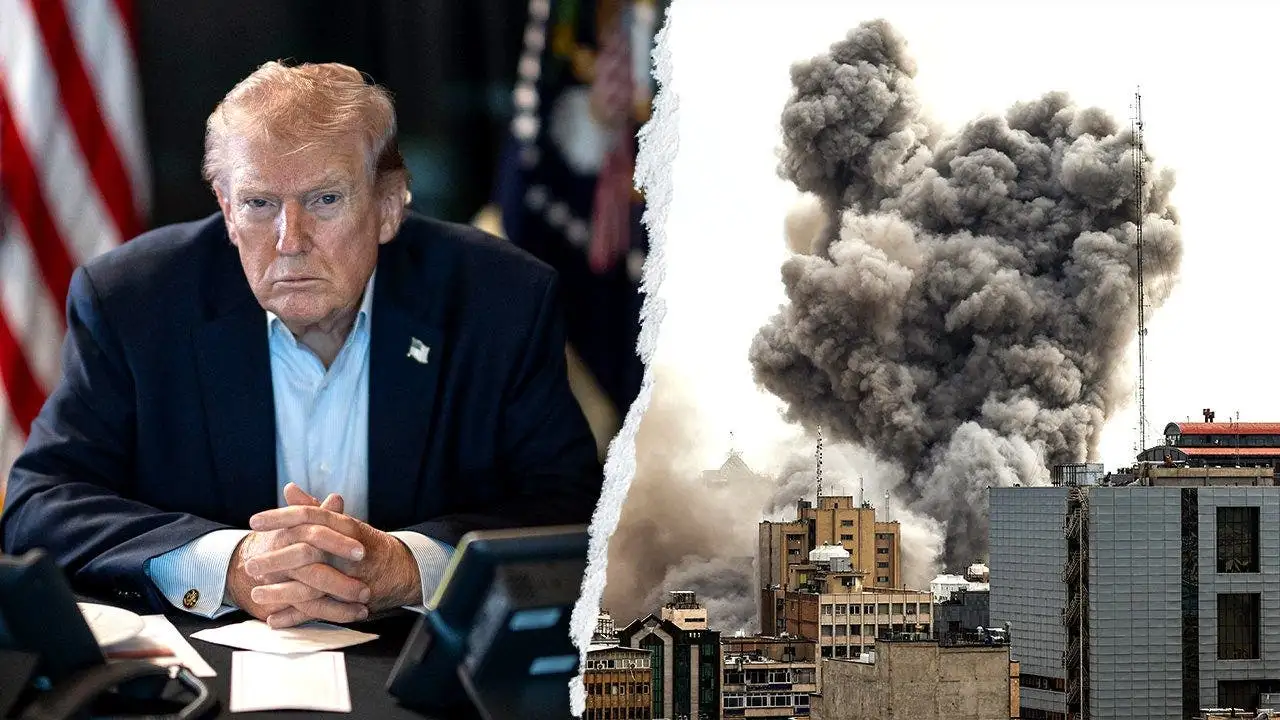
In the high-stakes theater of global geopolitics, the line between catastrophic warfare and fragile peace is often drawn with the invisible ink of backchannel diplomacy, leaving ordinary citizens and military personnel holding their breath in anticipation of the next move. Today, this delicate balance is being tested to its absolute limit as President Donald Trump issues a stark, final warning to the Iranian leadership, declaring that the clock has run out on their opportunities to forge a lasting diplomatic resolution. This ominous ultimatum comes on the heels of a narrowly avoided catastrophe; Trump recently revealed that he held back a massive military strike—one he characterized as potentially the most devastating aerial assault since the dark days of the Second World War—only because he was led to believe that indirect negotiations were on the verge of yielding a breakthrough. Yet, as the world watches this high-tension standoff unfold, the ground beneath these diplomatic efforts remains dangerously unstable, characterized by conflicting narratives, mutual suspicion, and the ever-present threat of miscalculation. While the American administration paints a picture of a cornered adversary begging for a reprieve behind closed doors, Tehran presents a face of defiant indifference, acknowledging only localized, functional talks mediated by regional third parties rather than any grand bargain. For the millions of families living under the shadow of potential conflict in the Middle East, as well as the sailors navigating the treacherous waters of the Persian Gulf, this linguistic and strategic tug-of-war is not merely a game of political chess; it is a terrifying reality where a single misunderstood statement or aggressive posturing could ignite a regional conflagration that changes the course of modern history.
At the heart of this diplomatic maze lies a profound and seemingly irreconcilable disconnect between how Washington and Tehran present their interactions to the public, illustrating the heavy burden of political posturing where saving face is often prioritized over saving lives. Trump, utilizing his characteristic directness and leveraging social media platforms like Truth Social, has publicly accused the Iranian regime of being “unbelievably duplicitous,” painting a vivid picture of foreign officials privately imploring for negotiations while publicly denouncing any association with the United States. According to the American narrative, these backchannel pleadings were substantial enough to warrant a temporary halt to military operations, offering a glimmer of hope that the strategic maritime chokepoint of the Strait of Hormuz could be permanently reopened and that the thorny issue of Iran’s nuclear ambitions could finally be addressed in a comprehensive, two-phase framework. Conversely, Iranian Foreign Ministry spokesman Esmail Baghaei has flatly rejected these assertions, maintaining a stoic front that denies any direct or indirect engagement aimed at a broader geopolitical settlement with Washington. Tehran’s official stance minimizes the scope of the current dialogue, framing it strictly as a bilateral, technical effort facilitated by the Sultanate of Oman to establish a temporary shipping corridor rather than a precursor to disarmament. This stark divergence in storytelling highlights the intense psychological warfare at play: a superpower seeking a definitive, high-profile victory to justify its aggressive posture, contrasted against a regional power desperate to project sovereignty and resilience to its domestic audience and regional proxies, even as its economy buckles under the weight of international pressure.
To understand the human dimension of this conflict, one must look to the waters of the Strait of Hormuz, a vital maritime artery through which a significant portion of the world’s energy supply flows, and where merchant mariners find themselves serving as unwitting pawns in a global power struggle. Under Trump’s proposed framework, the path to peace is divided into two distinct, sequential phases: the immediate, unconditional reopening of the shipping lanes to ensure the free flow of global commerce, followed by a longer, more arduous process aimed at the complete denuclearization of the Iranian state. For the global community, the closure of these straits is not just an abstract economic statistic; it translates directly to skyrocketing energy costs, disrupted supply chains, and the tangible terror felt by civilian ship crews who must navigate waters plagued by sea mines, drone attacks, and hostile boardings. Trump’s insistence that a resolution is imminent, promising that reporters would soon see the fruits of these negotiations, stands in sharp contrast to the silent skepticism emanating from Tehran, which has notably refused to endorse either step of this American-designed roadmap. This disconnect exposes a fundamental flaw in the diplomatic machinery: while Washington views the maritime blockade and economic pressure as leverage to force a sweeping, historic accord, Tehran views any concession on its nuclear program as an existential surrender, choosing instead to treat the shipping crisis as an isolated transactional issue that can be turned on and off to manipulate international anxiety.
Adding another layer of human complexity to this volatile equation is the quiet but desperate lobbying of America’s regional allies, who find themselves caught in the direct line of fire should the fragile peace collapse into open warfare. Nations like Saudi Arabia, the United Arab Emirates, and Jordan have urged the Trump administration to exercise extreme caution, recognizing that any major American offensive against Iran would almost certainly trigger a wave of retaliatory strikes across the Arabian Peninsula, endangering their own citizens, critical infrastructure, and hard-won economic progress. This collective anxiety from Gulf partners has placed a significant burden on American decision-makers, who must balance the desire to project strength and protect global maritime norms with the sobering responsibility of protecting allies who would bear the immediate, bloody consequences of a regional escalation. Experts note that this web of regional alliances has effectively complicated the President’s path forward, leaving him in a position where he desperately desires a clean, decisive diplomatic triumph but is constrained by the realistic fear of a chaotic, uncontrollable chain reaction of violence. The quiet diplomacy conducted by figures like Vice President JD Vance highlights the intense effort to reassure these nervous partners, yet the fundamental dilemma remains unresolved: how to project enough military menace to force Iran to the negotiating table without accidentally tripping the wire that unleashes a devastating, multi-front war that nobody truly wants but everyone is preparing to fight.
This current cycle of hope and hostility is deeply rooted in an exhausting historical pattern of temporary reprieves followed by swift escalations, a phenomenon that defense analysts have wearisomely labeled a “ceasefire war.” The roots of the current crisis can be traced back to a memorandum of understanding signed earlier in June, which was initially hailed as a landmark breakthrough designed to halt active hostilities, lift the crippling American blockade, and restore normal commercial traffic through the vital shipping corridors. However, this agreement quickly fractured under the weight of mutual distrust when both sides attempted to implement their own contradictory plans for maritime security, leading to a rapid succession of accusations, localized skirmishes, and retaliatory airstrikes that shattered the illusion of peace. By early July, the hard-fought ceasefire was officially declared dead, replaced by an expanded American air campaign and a corresponding barrage of Iranian drone and missile strikes targeting American military installations and regional partners, including a tragic incident in Jordan that claimed the lives of American service members. This cyclical rhythm of conflict—where brief, desperate pauses are negotiated by exhausted intermediaries only to be torn apart days later by renewed acts of aggression—has created a state of chronic trauma for the military personnel stationed in the region and the civilian populations who must constantly adapt to the shifting tides of war and peace, never knowing if a quiet evening represents a genuine step toward reconciliation or merely the calm before an even more destructive storm.
Ultimately, both Washington and Tehran find themselves locked in a grueling war of attrition where the status quo is universally acknowledged as unsustainable, yet neither side possesses the political courage or mutual trust required to make the concessions necessary to break the deadlock. For President Trump, the pressure to secure a definitive foreign policy victory is mounting, especially as he attempts to demonstrate the efficacy of his “maximum pressure” campaign without dragging the nation into another protracted, costly conflict in the Middle East. For Iran’s leadership, the calculation is even more existential, as they must balance the severe economic suffering of their population under the weight of the blockade against the ideological imperative of resisting Western dominance and maintaining their regional defensive capabilities. As long as both leaderships believe they can outlast the other—with Washington relying on its overwhelming economic and military might, and Tehran relying on its asymmetric warfare capabilities and tolerance for economic hardship—the prospects for a genuine diplomatic breakthrough remain tragically dim. Until a bridge of trust can be built over this chasm of duplicity and pride, the cycle of threats, temporary pauses, and sudden escalations will continue to define the lives of millions, serving as a sobering reminder that in the modern arena of international relations, the human cost of political stubbornness is always paid by those who have the least say in the decisions of war.