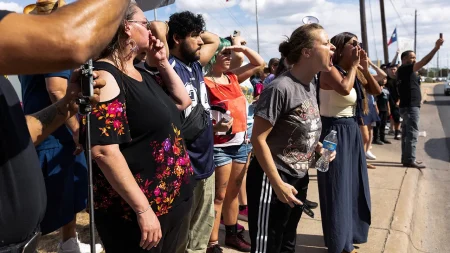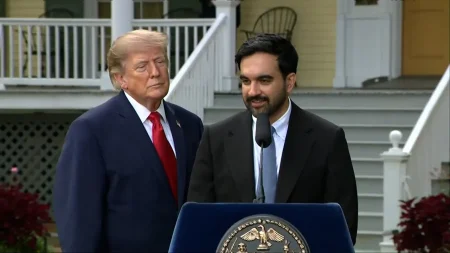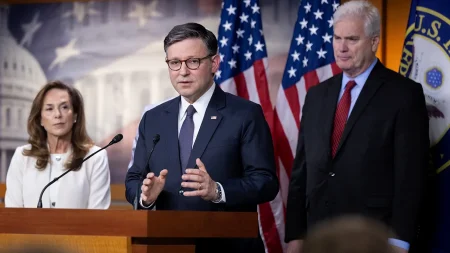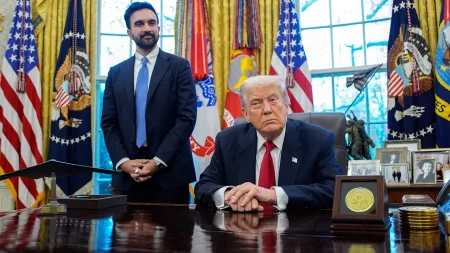






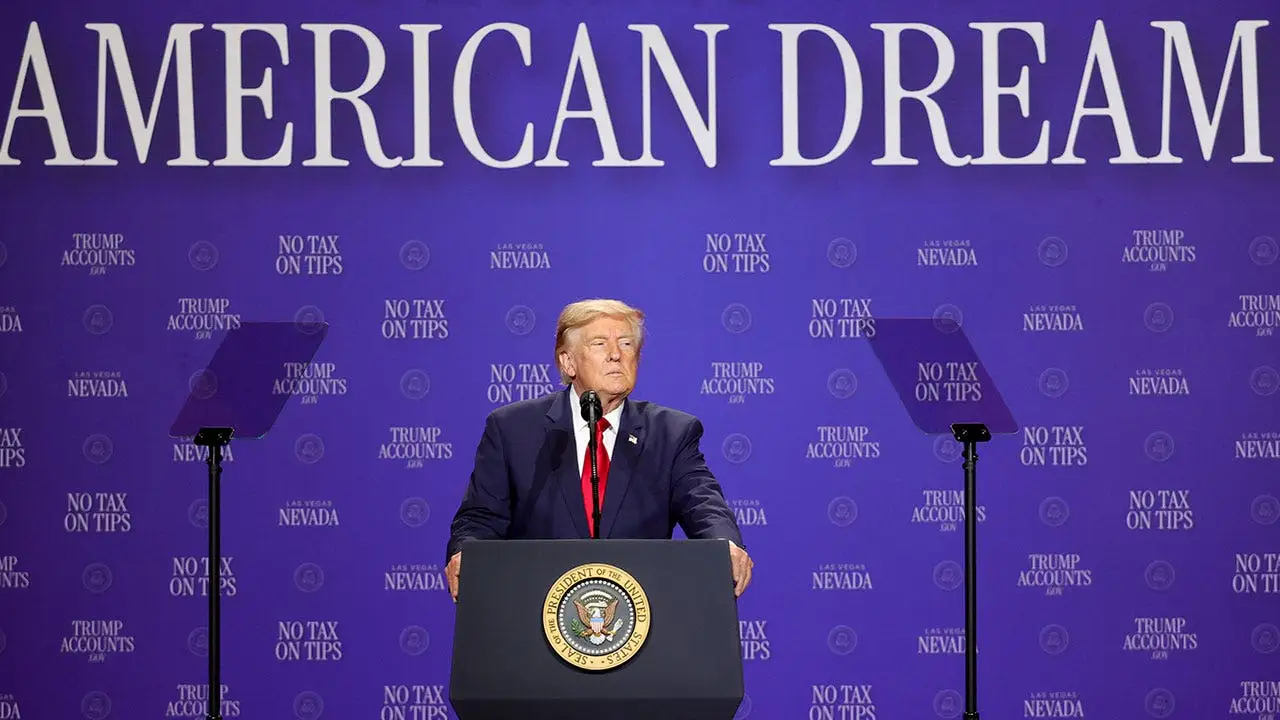
The high-octane atmosphere of a Las Vegas rally has long served as the preferred backdrop for Donald Trump’s distinct brand of political theater, but his recent appearance in the desert went far beyond standard campaign stump rhetoric. Hours after the final ballots were painstakingly tallied in Michigan’s primary, Trump took to the stage to unleash a torrent of fierce criticism aimed directly at Abdul El-Sayed, the newly minted Democratic nominee for a pivotal U.S. Senate seat. With the cameras rolling and a sea of enthusiastic supporters hanging onto every word, Trump escalated his standard opposition playbook to an incredibly intense and personal level, declaring that El-Sayed was “full of s—” and warning that the Democratic Party was rapidly descending into outright communism. This explosive moment was not merely an impulsive outburst; it represented a highly calculated effort to define the terms of the upcoming election cycle by tapping into deeply rooted national anxieties. The sheer immediacy of Trump’s attack, occurring just hours after the Associated Press officially called the race, demonstrated how closely the national Republican apparatus is monitoring local battlegrounds. By framing the progressive surge as an existential threat greater than World War I, World War II, Pearl Harbor, or the tragedy of 9/11, Trump utilized historical trauma to amplify the perceived stakes of the election. This rhetoric demands that voters view the ballot box not merely as a civic duty, but as a defensive shield against a catastrophic civilizational collapse. The crowd’s thunderous reaction to his coarse language underscored the deep polarization of the modern electorate, where aggressive language is often embraced as a sign of authenticity and strength, setting the stage for a bruising campaign season where compromise is viewed as surrender.
To truly understand the weight of Trump’s remarks, one must look closely at the grueling democratic process that unfolded in Michigan just hours prior. The Democratic primary was a tense, exhausting affair that saw Abdul El-Sayed secure a razor-thin victory over Representative Haley Stevens, winning by less than a single percentage point. Behind this statistical sliver lies a profoundly human story of sleepless nights, tireless grassroots organizing, and the immense emotional toll of modern campaigning. For El-Sayed and his dedicated team of volunteers, the victory was the culmination of months of knocking on doors, speaking in crowded community centers, and making a passionate case for a progressive future in a state that has historically been an economic bellwether for the nation. El-Sayed, a charismatic and articulate public health professional who previously served as Detroit’s health director, represents a new wave of progressive leadership that seeks to address systemic inequalities through bold policy proposals. However, the narrow margin of his victory also highlights a deep ideological divide within the Democratic electorate itself, as moderate and progressive factions grapple with how best to appeal to working-class voters who feel left behind by a rapidly changing global economy. Now, as the dust settles on this exhausting primary, El-Sayed faces an even more formidable challenge in the general election, where he will go head-to-head with Republican Mike Rogers. Rogers, a seasoned politician and former congressman, represents the conservative establishment and will offer a stark contrast to El-Sayed’s progressive vision. The vacancy left by retiring veteran Senator Gary Peters has turned Michigan into a crucial battleground, where the personal journeys and political aspirations of these two distinct candidates will be thrust into the relentless national spotlight.
Throughout his speech, Trump engaged in a deliberate effort to redefine the terms of American political discourse, moving beyond the familiar critique of socialism to warn of an imminent communist threat. He argued that the progressive wing of the Democratic Party is no longer content with gradual social reforms but is actively trying to “skip socialism” and plunge the nation directly into communism. To paint a vivid picture of what this transformation would look like for average citizens, Trump used hyperbolic examples, suggesting that a communist government would arbitrarily seize private property, taking houses from neighbors and buildings from landlords, leaving citizens with nothing but “death, squalor, poverty,” and a “life of hell.” To ground these alarming predictions in contemporary reality, he pointed to the economic and social collapse of Venezuela, a nation that was once incredibly wealthy but has since been devastated by political instability and economic mismanagement. By invoking Venezuela, Trump sought to provide a tangible, cautionary tale of what happens when populist, far-left policies are allowed to take root. This rhetorical strategy is designed to appeal directly to voters’ survival instincts, transforming abstract policy debates about healthcare and taxation into visceral fears of losing one’s home, livelihood, and personal security. For many working-class families who are already struggling with inflation and economic uncertainty, these warnings can resonate deeply, tapping into a profound anxiety about the fragility of their middle-class existence and the perceived threat of radical change.
In the face of these heavy accusations, Abdul El-Sayed presents a complex and multifaceted political identity that defies simple categorization. Backed by prominent progressive champions like Senator Bernie Sanders and Representative Alexandria Ocasio-Cortez, El-Sayed has campaigned on a bold platform that includes Medicare for All, aggressive campaign finance reform to remove corporate money from politics, and a highly debated call to end U.S. military aid to Israel. These policies have earned him the enthusiastic support of the progressive grassroots, who see him as a courageous voice willing to challenge the status quo and fight for marginalized communities. At the same time, El-Sayed has consistently described himself as a capitalist and has taken steps to distance himself from organizations like the Democratic Socialists of America, recognizing the political liabilities associated with such labels in a general election. This delicate balancing act illustrates the immense pressure faced by progressive candidates who must navigate the treacherous waters of national politics. They must maintain the enthusiasm of their passionate, left-leaning base while simultaneously appealing to moderate and independent voters who may be wary of radical change. El-Sayed’s campaign is a fascinating case study in how a candidate attempts to humanize complex policy proposals, framing universal healthcare not as an ideological takeover, but as a practical, compassionate solution to the everyday struggles of families who cannot afford life-saving medication. As he prepares to face the onslaught of Republican attacks, El-Sayed’s ability to articulate this nuanced self-image will be tested to its absolute limit, as his opponents work tirelessly to paint him as a dangerous radical who is out of touch with mainstream American values.
The Senate race in Michigan is far more than a local contest; it is a microcosm of the profound cultural, economic, and political divisions that are currently redefining the American landscape. Historically known as the heart of the American automotive industry, Michigan has long been a symbol of blue-collar strength, industrial ingenuity, and middle-class prosperity. However, decades of deindustrialization, economic restructuring, and shifting demographics have left many communities feeling abandoned, anxious, and deeply skeptical of political promises from both sides of the aisle. It is within this fertile ground of discontent that the battle between El-Sayed and Rogers will be fought. For Democrats, El-Sayed’s progressive platform represents a bold attempt to address these systemic economic anxieties by investing in people, public infrastructure, and healthcare, arguing that the old economic model is broken and requires a fundamental overhaul. For Republicans, Rogers’ conservative message offers a return to traditional values, economic deregulation, and strong national security, arguing that progressive policies will stifle innovation, destroy jobs, and burden future generations with unsustainable debt. The outcome of this race will provide crucial insights into the shifting loyalties of working-class voters, particularly in the Midwestern Rust Belt, which has become the ultimate decider of presidential and congressional majorities. The race will test whether a progressive candidate of color, advocating for systemic change, can build a winning coalition in a state that voted for Trump in 2016 and Biden in 2020, making it a vital laboratory for the future strategies of both major political parties.
As the rhetoric escalates and the campaigns gear up for an intense battle leading into November, it is essential to consider the broader human cost of this highly polarized political environment. When national leaders utilize highly charged language, calling opponents “dangerous lunatics” and characterizing political campaigns as struggles against “death and destruction,” it deepens the divisions within local communities and families. Neighbors are pitted against neighbors, and the shared sense of community that once bound Americans together is eroded by mutual suspicion and fear. For the average voter in Michigan, who may be far more concerned with the quality of local schools, the safety of their drinking water, and the stability of their jobs than with abstract debates about communism and capitalism, the relentless noise of nationalized political warfare can feel alienating and exhausting. The challenge for both El-Sayed and Rogers, and indeed for the entire political system, is to find a way to cut through the sensationalized rhetoric and address the genuine, lived experiences of ordinary citizens. Ultimately, the health of American democracy depends on the ability of its leaders to debate serious issues with passion and vigor, while still maintaining a fundamental respect for the humanity of their opponents and the intelligence of the electorate. As the nation watches Michigan over the coming months, the hope remains that amidst the shouting and the political theater, a constructive dialogue can emerge that offers real, tangible paths forward for a state and a country seeking stability, prosperity, and a renewed sense of shared purpose.