





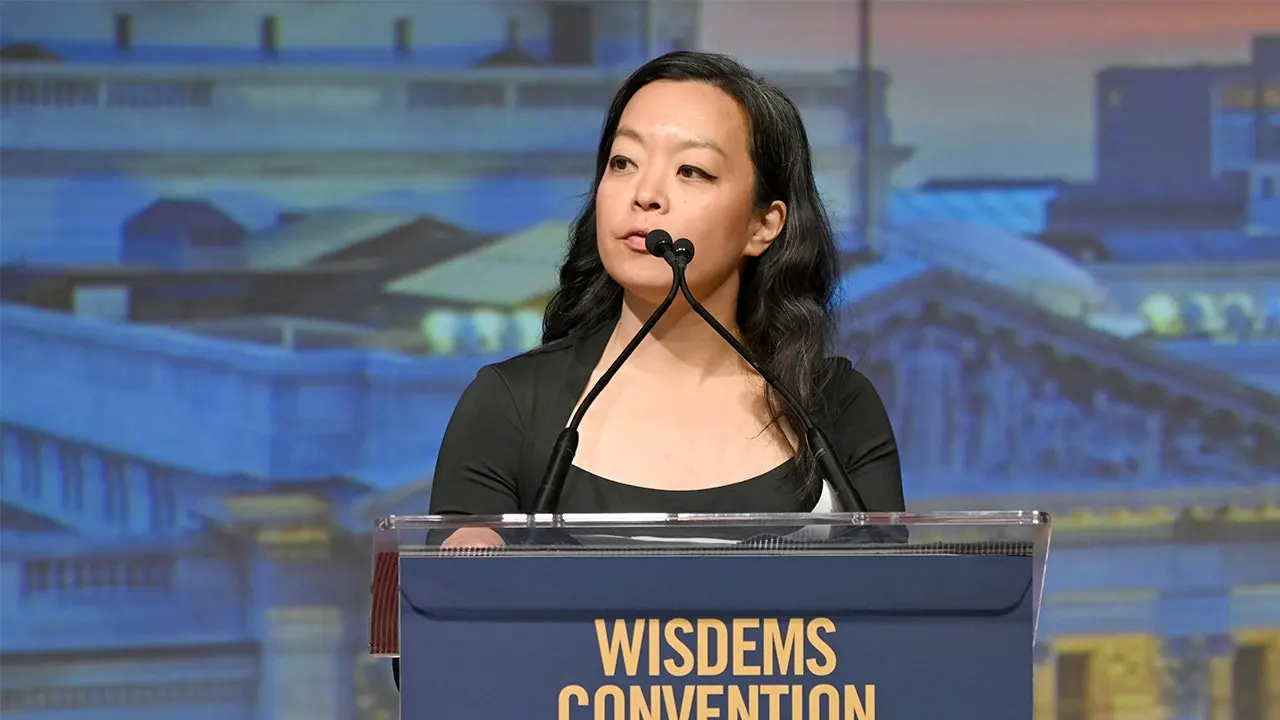
In the high-stakes arena of modern American politics, the journey from grassroots advocate to statewide candidate is rarely a smooth transition, particularly for those who have spent years speaking their minds without the filter of a political consultant. Wisconsin State Representative Francesca Hong, a progressive Democrat running in her party’s gubernatorial primary, embodies this complex transition. Before entering the legislature, Hong was a professional chef, a small business owner, and a working mother—roles that grounded her in the everyday struggles of working-class Wisconsinites but also left her with a trail of highly passionate, raw, and sometimes controversial social media posts. Recently thrust into the national spotlight by conservative media, Hong’s past digital statements have become a lightning rod for debate. At the heart of the controversy is a January 2022 social media post where she described the United States as “an abundance of suffering” and expressed a yearning to transform it into “a wealth of opportunity” by empowering marginalized communities and electing leaders of color who refuse to act as obstructionists. To her supporters, this statement represents a deeply empathetic acknowledgment of systemic inequality and the economic hardships faced by everyday citizens. To her critics, however, it is viewed as an unpatriotic indictment of the nation, illustrating the stark divide in how political rhetoric is interpreted in an increasingly polarized political landscape.
This tension between activist passion and the demands of statewide leadership is further complicated by Hong’s past commentary on American history and culture, which reflects a broader, ongoing national conversation about colonialism and systemic injustice. Among her most heavily scrutinized past posts was a deleted tweet from November 2021 in which she wrote, “Cancel Thanksgiving. Should have done this in 1621,” going on to describe the historical arrival of European colonizers as the “original superspreader event” due to the devastating impact of smallpox on indigenous populations. For many progressive advocates, such language is a blunt but necessary critique of the historical whitewashing of European colonization and its enduring trauma on Native communities. Yet, in the context of a statewide campaign in a politically moderate swing state like Wisconsin, such statements are easily weaponized by opponents to paint her as culturally extreme. Hong, who originally aspired to be a sports journalist and admits she was prone to sharing impulsive “hot takes” online, has had to navigate the reality that in the digital age, a person’s political evolution, historical frustrations, and rawest emotions are permanently archived, ready to be analyzed under a microscope by political adversaries.
Beyond historical debates, Hong’s social media feed has also offered a highly personal, sometimes vulnerable window into her experiences as a Korean-American woman navigating predominantly white spaces. In a 2019 post that resurfaced during her campaign, she described experiencing a severe wave of anxiety while stopping at a fast-food restaurant in rural Black River Falls, Wisconsin, noting that she felt overwhelmed by the presence of older white customers who she assumed doubted her ability to speak English. Sharing such a raw moment of vulnerability and racial anxiety is a testament to the internal struggles many minority citizens face in homogenous environments, highlighting the psychological toll of feeling out of place. However, in the unforgiving theater of political campaigns, this admission of personal anxiety was quickly framed by critics as divisive, demonstrating how personal reflections on race, identity, and mental health can be stripped of their human context and transformed into partisan weapons. For Hong, the post was an authentic expression of a lived reality that many immigrants and people of color experience daily, yet it underscores the immense difficulty of bringing private struggles into the public sphere when seeking to represent a highly diverse statewide constituency.
Perhaps the most politically consequential aspect of Hong’s digital history is her past alignment with the “defund and abolish the police” movement, which gained significant momentum following the high-profile shooting of Jacob Blake by a police officer in Kenosha, Wisconsin, in August 2020. In the emotional aftermath of the shooting, Hong expressed deep grief and outrage, arguing that reform was no longer a viable option because police forces exist to uphold systemic white supremacy, leading her to call for defunding and eventual abolition. When confronted about these statements during her current run for governor, her campaign team sought to humanize her stance, clarifying that Hong views police and prison abolition not as an immediate policy proposal, but as an “aspirational goal” comparable to the global desires to completely eradicate poverty or cure infectious diseases. While she acknowledges that a governor does not possess the unilateral power to defund local police departments, her past rhetoric highlights a profound ideological divide within the Democratic Party itself, as establishment figures often distance themselves from such language, while democratic socialists like Hong argue that incremental reforms fail to address the root causes of systemic violence and community trauma.
This ideological friction places Hong at the vanguard of a broader movement within the Democratic Party, where a new generation of democratic socialists is challenging the party’s moderate establishment for control of its future direction. Running as a socialist candidate in a swing state like Wisconsin is an uphill battle, requiring a delicate balance between energizing a passionate, progressive base and appealing to a broader electorate that may be wary of radical systemic change. Conservative outlets have seized upon Hong’s past statements to portray her as out of touch with mainstream Midwestern values, hoping to mobilize conservative voters and create division among Democrats. Yet, for her supporters, Hong’s willingness to speak candidly about systemic racism, economic inequality, and historical injustice is precisely what makes her a compelling and authentic leader. They argue that the traditional, highly scripted political playbook has failed to solve persistent social crises, and that a leader who has worked in hot kitchens, raised a child under the pressures of the modern economy, and felt the real-world anxieties of being a minority is far more equipped to advocate for the working class than a career politician.
Ultimately, Francesca Hong’s gubernatorial campaign represents a crucial test of whether voters in the modern political era can look past the sensationalized headlines of past social media controversies to engage with a candidate’s broader, humanized vision for the future. Hong herself has brushed off the hyper-focus on her past Twitter “hot takes,” insisting that her primary focus remains on the urgent material needs of Wisconsin families, such as healthcare accessibility, living wages, and reproductive freedom. Her transition from a passionate online commentator to a state representative, and now a candidate for the state’s highest office, reflects the messy, human reality of political growth in the twenty-first century. It raises profound questions about whether our political culture has room for leaders who have made mistakes, expressed raw anger, and evolved in public view, or if the political system will continue to favor sanitized candidates who reveal very little of their true selves. As Wisconsin voters head to the primary polls, they are faced not just with a choice between different policy platforms, but with a fundamental question about the kind of authenticity, vulnerability, and systemic critique they are willing to accept in their public servants.