




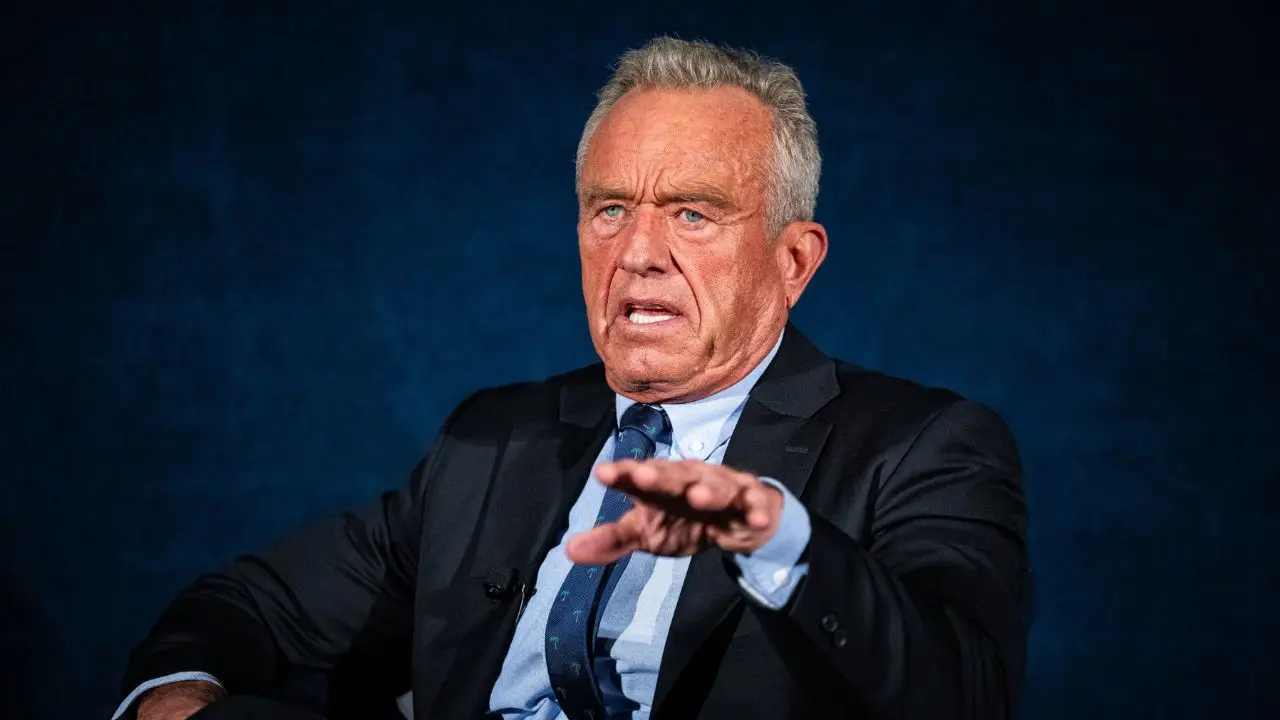
Behind the polished, often sterile veneer of modern American politics lies a colorful, sometimes completely bewildering human element that rarely makes it into official government press releases, a fascinating reality perfectly embodied by Health and Human Services Secretary Robert F. Kennedy Jr. In a series of recent events that read more like a high-stakes adventure reality television show than the daily itinerary of a cabinet-level Washington official, Kennedy captivated—and thoroughly alarmed—the internet by showcasing his highly unorthodox, completely hands-on approach to local wildlife management. The spectacle began on the sunny, beautifully manicured patio of television personality and physician Dr. Mehmet Oz, where Kennedy decided to take matters into his own hands—quite literally—upon encountering a pair of North American black racer snakes slithering across the outdoor space. Without a moment’s hesitation, specialized tools, or protective gloves, the newly appointed health secretary lunged directly toward the agile, wild reptiles, grabbing them by their tails as they instinctively coiled, twisted, and lashed out to defend their territory. As onlookers watched in a mixture of awe, horror, and sheer disbelief, the snakes repeatedly sunk their sharp teeth into Kennedy’s bare skin, drawing blood but failing to elicit even a single flinch or grimace from the veteran outdoorsman. Smiling broadly through the multiple bites, Kennedy casually remarked to the rolling camera that the black racers were indeed biting him, demonstrating a bizarrely calm, almost cheerful demeanor that signaled this chaotic encounter was just another ordinary day for a man whose long life has been deeply intertwined with raw nature, ancient falconry, and aggressive environmental activism. This raw, unscripted moment immediately set social media ablaze, sparking a massive wave of online commentary that ranged from pure amusement at his rugged eccentricities to intense, genuine worry over the physical safety and judgment of a major public official.
At the absolute heart of this viral storm was the deeply comedic and utterly relatable reaction of Kennedy’s wife, the acclaimed Hollywood actress Cheryl Hines, whose terrified, exasperated pleas provided a hilarious and grounding contrast to her husband’s chaotic wilderness antics. Best known for her brilliant, Emmy-nominated role as the long-suffering wife in HBO’s hit comedy series Curb Your Humor, Hines found herself trapped in her own real-life, entirely unscripted farce as she watched her husband corner and wrestle the angry, biting reptiles on their friend’s patio. Her frantic, echoing cries of “Honey, honey… why?” and her desperate, maternal-sounding pleas of “Bobby, please! Bobby, Bobby, please” perfectly mirrored the exact thoughts of millions of social media viewers who could not comprehend why a prominent government figure was willingly allowing wild, aggressive animals to repeatedly chew on his hands. Hines’ blunt, exasperated declaration to the camera that her husband was simply “nuts” highlighted the deeply endearing, highly entertaining dynamic of their high-profile marriage, a relationship where classic Hollywood glamour frequently collides head-on with Kennedy’s lifelong, rugged obsession with the untamed natural world. Despite her obvious terror and vocal protests, Hines has long had to navigate the unique eccentricities of her husband’s daily lifestyle, which historically includes treating injured birds of prey, studying wildlife biology, and turning ordinary domestic spaces into impromptu animal sanctuaries. By later posting the chaotic footage to his social media platforms with a tongue-in-cheek caption claiming his wife was merely “cheerleading” the removal of the snakes, Kennedy leaned heavily into the domestic humor of the situation, showcasing a rare, unvarnished look at a modern political marriage navigating the bizarre boundaries of personal passion, marital patience, and intense public scrutiny.
While the initial patio incident on Dr. Oz’s property was widely viewed as a lighthearted, albeit highly eccentric, display of masculine bravado, it quickly ignited a fierce and polarizing debate across various social media platforms regarding the safety, hygiene, and appropriateness of his actions. Wildlife experts, environmentalists, and casual viewers alike immediately pointed out that while North American black racers are scientifically classified as nonvenomous and generally harmless to human life, they are notoriously defensive creatures that will readily and repeatedly bite to protect themselves, which can easily introduce harmful bacteria into open wounds and pose risks of painful infections. Critics and political opponents questioned whether the specific individual charged with overseeing the nation’s entire health and human services apparatus should be actively engaging in behavior that seemed to disregard basic sanitary protocols and invite unnecessary physical harm. The ensuing online backlash wasn’t merely centered on the physical danger of the bites themselves; it touched on the broader, more symbolic nature of his high-ranking government role, with some arguing that a health secretary should consistently model prudent, risk-averse behavior rather than engaging in daredevil antics with wild reptiles. Medical professionals frequently warn that even superficial bites from wild, nonvenomous reptiles carry a massive risk of introducing dangerous pathogens like Salmonella or inducing severe localized allergic reactions, making his casual acceptance of multiple bites a point of genuine scientific contention among viewers. However, supporters of Kennedy quickly rallied to his defense, painting him as a genuinely authentic, seasoned conservationist whose hands-on, fearless relationship with the natural environment is a refreshing, welcomed departure from the typically sterile, over-rehearsed, and disconnected nature of career Washington bureaucrats. This digital friction set the stage for an even more dramatic follow-up, as Kennedy quickly felt compelled to address the growing chorus of concern regarding his snake-handling habits with a second, far more audacious video.
Directly acknowledging the widespread concern, criticism, and outright disbelief over his apparent lack of caution around wild reptiles, Kennedy took to his Instagram account the very next day to post a response video that, rather than soothing the anxieties of his followers, escalated the stakes to an entirely new level of danger. Filmed initially inside the quiet comfort of his home office, the video begins innocently enough with Kennedy sitting calmly at his desk before an off-camera voice urgently interrupts him to alert him to a much larger, far more hazardous visitor lurking in his paved driveway. Uttering the classic, almost cinematic phrase, “Hold on, guys. I’ll be back in a flash,” Kennedy immediately abandons his desk, grabs a simple, everyday plastic bucket along with a small, flimsy-looking hand net, and confidently marches outside to confront the unknown intruder. To the absolute amazement and horror of the onlookers gathered at his home, the creature in question was not another harmless garden snake, but a massive, highly venomous Western Diamondback rattlesnake, a formidable apex predator known for its lethal hemotoxic venom and defensive aggression. With the practiced ease, steady hands, and nerves of steel of an experienced, professional herpetologist, Kennedy carefully and methodically scooped the heavily buzzing reptile into the plastic bucket, defusing the immediate threat to his household with a level of calm that defied the inherent mortality risk of the situation. Watching the health secretary handle a lethal viper with tools one might use for a domestic goldfish only added to the surreal nature of the footage, illustrating his supreme confidence in his own naturalistic abilities. This seamless transition from a mundane domestic office setting to a high-stakes, life-or-death wildlife rescue highlighted the stark, mesmerizing contrast of Kennedy’s daily existence, where modern political responsibilities are constantly and effortlessly juxtaposed with his primeval, untamed connection to the American wilderness.
The rescue video took an even more nerve-wracking and educational turn when Kennedy, clearly not content with merely capturing the venomous serpent and removing it from his property, decided to transform the perilous encounter into an impromptu masterclass in wildlife biology for his millions of social media followers. Placing his bare fingers mere inches away from lethal danger, he carefully pinned the heavy rattlesnake securely directly behind its triangular head, lifting the writhing predator toward the camera lens to explain the specific, defining anatomical features of the Western Diamondback. Pointing out the distinctive, dark protective rings on the end of its frantically vibrating tail and gesturing carefully near the dangerous mouth while casually warning, “His fangs are in there. I don’t want to touch them,” Kennedy successfully transformed a terrifying household emergency into a profound lesson in wildlife appreciation, warmly calling the highly feared creature a “beautiful snake.” The nail-biting tension of the scene reached its absolute peak when he called out to his wife, Cheryl Hines, asking her to bring him a simple, everyday fabric pillowcase to properly secure the heavy reptile for safe transportation. Hines, once again thrust into the familiar role of the highly reluctant, nervous assistant to her husband’s wild endeavors, complied with the bizarre request, allowing Kennedy to safely bag the dangerous rattlesnake and later release it entirely unharmed back into its natural, wild habitat far away from human suburban neighborhoods. This second video served as a highly effective, direct counter-narrative to his online critics, proving that his earlier encounter with the black racers was not an act of ignorant, reckless folly, but rather the deliberate actions of a man who possesses a deep, decades-long, and highly sophisticated understanding of reptile behavior.
Ultimately, these dramatic, viral snake-handling episodes offer a fascinating, deeply humanizing window into the complex, fiercely independent identity of Robert F. Kennedy Jr. as he prepares to lead one of the most vital, massive, and highly scrutinized departments in the United States government. Far from the typical, heavily media-trained, and carefully scripted politicians who customarily occupy the halls of power in Washington, D.C., Kennedy’s raw, unapologetic authenticity and absolute refusal to abandon his lifelong, rugged passions—no matter how strange, eccentric, or physically dangerous they may appear to the general public—suggests a departmental leadership style that will be anything but conventional. By balancing the terrifying, high-stakes reality of wrestling highly toxic pit vipers with the tender, often deeply hilarious domestic dynamic of his high-profile marriage to Cheryl Hines, he successfully humanizes himself to an American public that is increasingly cynical, detached, and weary of polished political figures. Whether one views his wild reptilian interactions as a reckless, unnecessary display of masculine bravado or as the inspiring, highly knowledgeable deeds of a true, deeply committed environmentalist, it remains entirely undeniable that Kennedy brings a unique, fiercely independent, and wild-at-heart spirit to the national political stage. As he officially steps into his role as the head of Health and Human Services, these viral videos remain a vivid, unforgettable reminder that behind the dry policy debates, complex health regulations, and intense political controversies is a man who is entirely comfortable staring down raw danger, whether it comes in the form of a hostile political establishment or a highly venomous rattlesnake vibrating aggressively in his own driveway. In an era of highly managed public relations, this level of raw transparency represents a paradigm shift in how high-ranking officials communicate with the public, proving that Kennedy refuses to be sanitized by the machinery of federal governance, choosing instead to remain steadfastly and weirdly himself.