





Five Years After the Tariffs, the Hidden Game of “Transshipment” Is Getting Harder to Play
There is a quiet but growing worry inside Washington that a lot of the goods arriving at American ports and border crossings are not quite what they appear to be. The concern is not about counterfeit sneakers or fake handbags, at least not in the usual sense. Instead, it is about a clever and increasingly common workaround called transshipment, a practice in which foreign exporters, especially those in China, route their products through a third country before sending them to the United States. The goal is simple: to make the goods look like they came from somewhere else, and in doing so, dodge the heavy tariffs President Donald Trump placed on Chinese imports. On Thursday, the White House released a striking new report, appropriately titled “The Great Transshipment Scam,” that lays out just how widespread this practice has become. According to the report, more than forty countries now pose a high transshipment risk, including not only China but also Panama, Mexico, Colombia, Brazil, Argentina, Chile, Peru, Costa Rica, and the Dominican Republic. The report warns that these countries are being used as intermediaries, where goods are sent, sometimes barely touched, repackaged, relabeled, or simply given new paperwork, before continuing on to the United States under a false country of origin. It is, in essence, a tariff loophole with a lot of shipping containers attached.
The report was produced by the White House Office of Trade and Manufacturing Policy, the group led by longtime trade adviser Peter Navarro, who has spent years warning about what he calls the “great transshipment scam.” The report argues that China offers the clearest and most important historical example of how this strategy works. When the United States imposed Section 301 tariffs on Chinese goods in 2018, the direct U.S. trade deficit with China actually fell in 2019 and 2020. On the surface, that looked like a victory for American trade policy. But the White House now says that apparent win was partly an illusion, because Chinese exporters did not really stop selling to the American market. Instead, they changed their shipping routes. Goods that had once moved directly from Chinese factories to American warehouses began traveling first to other countries, where they underwent limited assembly, finishing, repackaging, relabeling, or only documentation changes. These small steps were enough to give the products a new national identity. A Chinese-made mechanical part, for example, might land in Mexico, be placed in a new box labeled “Made in Mexico,” and then cross the border into Texas without facing the same tariffs. The report makes clear that this is not a niche problem or a minor technicality. It represents, in many ways, an entirely underground global logistics system designed to undermine the very purpose of tariffs.
The report goes on to describe how these practices have matured over time into what it calls a “global network of production hubs, logistics platforms, free-trade zones, bonded warehouses, processing corridors, and re-export centers.” That sounds abstract, but in practice it means that billions of dollars in goods are moving through complicated routes specifically to avoid paying taxes owed to the United States. The White House estimates that this tariff-evading transshipment costs the U.S. Treasury between $19 billion and $26 billion in lost revenue every single year. Other estimates, cited in the report from both government and private-sector sources, put the total value of transshipped goods at anywhere from $34.2 billion to a staggering $303 billion annually. That enormous range shows just how hard it is to measure a problem that is, by its very nature, hidden. Some of these goods are lightly processed in the third country; others are not touched at all and simply pass through on their way to American consumers. Either way, the U.S. government is losing money, and American manufacturers are facing unfair competition. The report insists that the Trump administration has taken steps to strengthen transshipment enforcement, but it also acknowledges that this is an ongoing battle. One of the new tools in that fight is technology. Navarro said that U.S. Customs and Border Protection has begun using artificial intelligence in a prototype program designed to detect transshipment patterns, essentially teaching computers to spot suspicious shipping routes, sudden increases in exports from small countries, or documentation irregularities that would be hard for humans to catch quickly.
In comments to the Associated Press, Navarro was characteristically blunt about the stakes. “For years, the great transshipment scam has let communist China launder its exports,” he said. That kind of language, harsh as it sounds, captures the administration’s view that transshipment is not simply a trade issue but a form of economic deception. The report also warns that other countries, including India, could use the same tactic to avoid tariffs, and that future trade agreements pursued by the Trump administration will include specific provisions to penalize trading partners that engage in the practice. This matters because the fight against transshipment cannot be won by focusing on China alone. If a new agreement with, say, a Southeast Asian nation does not contain strong enforcement language, then the same pattern could simply re-emerge there. The administration is also sending a message to importers. Navarro said that companies found to have falsified a product’s origin can face tariffs applied retroactively for roughly a year. That is a potentially severe financial penalty, and it is intended to make businesses think twice before participating in schemes that may involve fake labels or misleading paperwork. In a world where supply chains are already complicated, the threat of retroactive tariffs adds another layer of risk for companies that choose to cut corners.
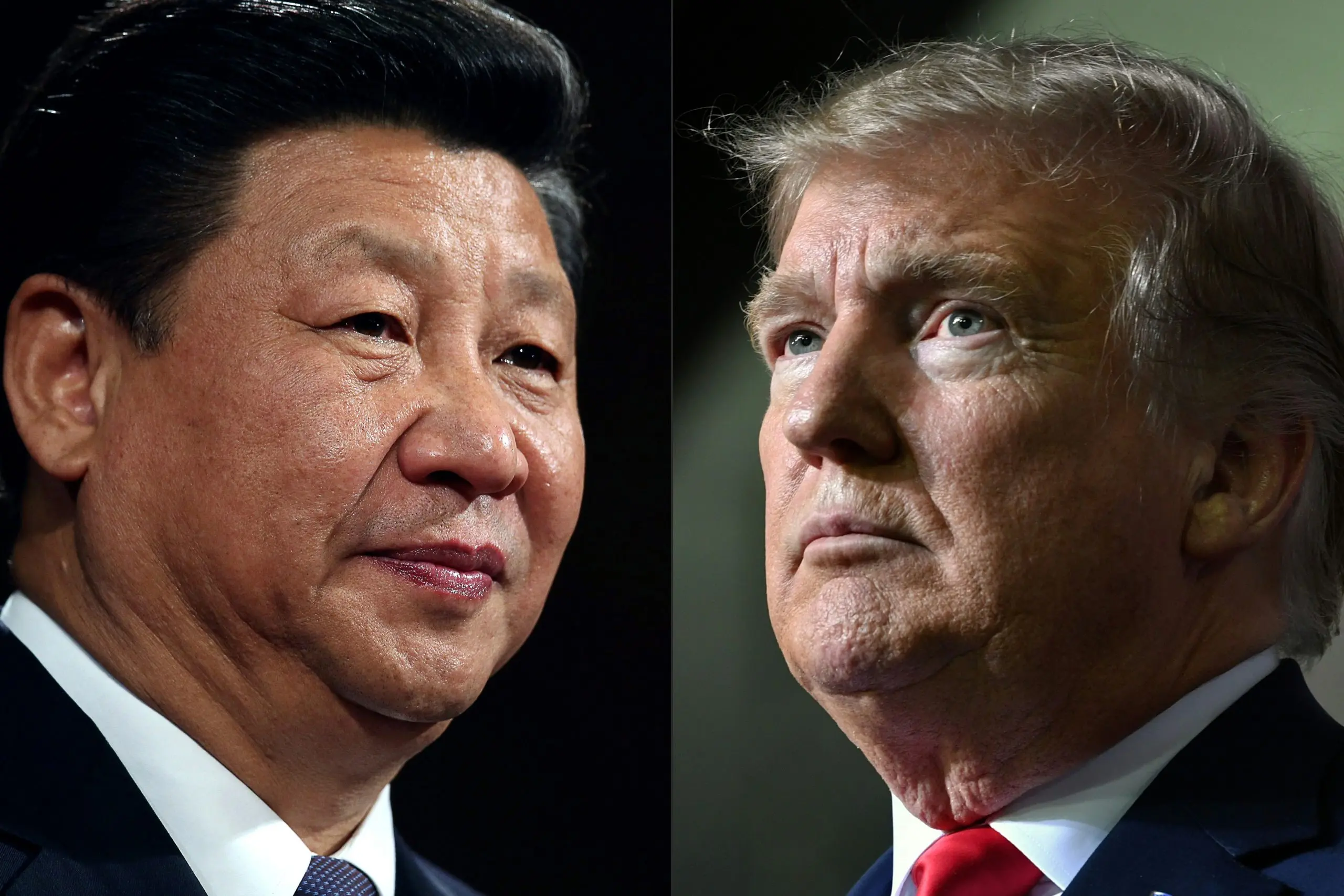
The timing of the report is notable. According to the article, it comes ahead of a planned September visit to Washington by Chinese President Xi Jinping, following President Donald Trump’s visit to Beijing in May. The report therefore lands at a moment when the two largest economies in the world are trying to navigate a relationship that is filled with both high-stakes diplomacy and deep tensions. Trade disputes, especially over tariffs and technology, have tested the relationship between Washington and Beijing in recent years, and the issue of transshipment only makes the negotiations more complicated. On one hand, the United States wants to maintain pressure on China to stop unfair trade practices. On the other hand, the two countries are also trying to talk, and the planned exchange of presidential visits suggests a desire to keep channels of communication open despite the friction. The report can be seen as a negotiating tool, a way of publicly drawing attention to China’s behavior and creating leverage ahead of those high-level meetings. It is also a reminder that trade agreements are only as strong as their enforcement mechanisms. A piece of paper that says tariffs will be applied means little if exporters can simply reroute their goods through a third country and pretend they are something they are not.
For ordinary Americans, this story might seem far removed from daily life, but it is not really. Tariffs are eventually paid by someone, and when they are avoided, the burden shifts in ways that are not always visible. When foreign exporters evade tariffs through transshipment, they keep their prices low and make it harder for American companies to compete on a level playing field. It also means that the government collects less revenue than it should, which has consequences for the federal budget. The good news, according to the White House, is that enforcement is becoming more sophisticated. The use of artificial intelligence to scan shipping data and identify suspicious patterns is a sign that the government is catching up with the global marketplace’s ability to adapt. But the report also suggests that this will be a long-running game of cat and mouse. As soon as one loophole is closed, another may open. The countries listed in the report, from Panama to Peru, from Mexico to Madagascar, are not necessarily doing anything illegal themselves, but they have become part of a system that can be exploited. The White House is betting that public pressure, stricter trade agreements, advanced technology, and the threat of retroactive tariffs will make transshipment less attractive. Whether that bet pays off may depend on how seriously other nations take their commitments and how creative exporters become in response. For now, the message from Washington is unmistakable: the era of the great transshipment scam is not over, but the rules of the game are being rewritten.