





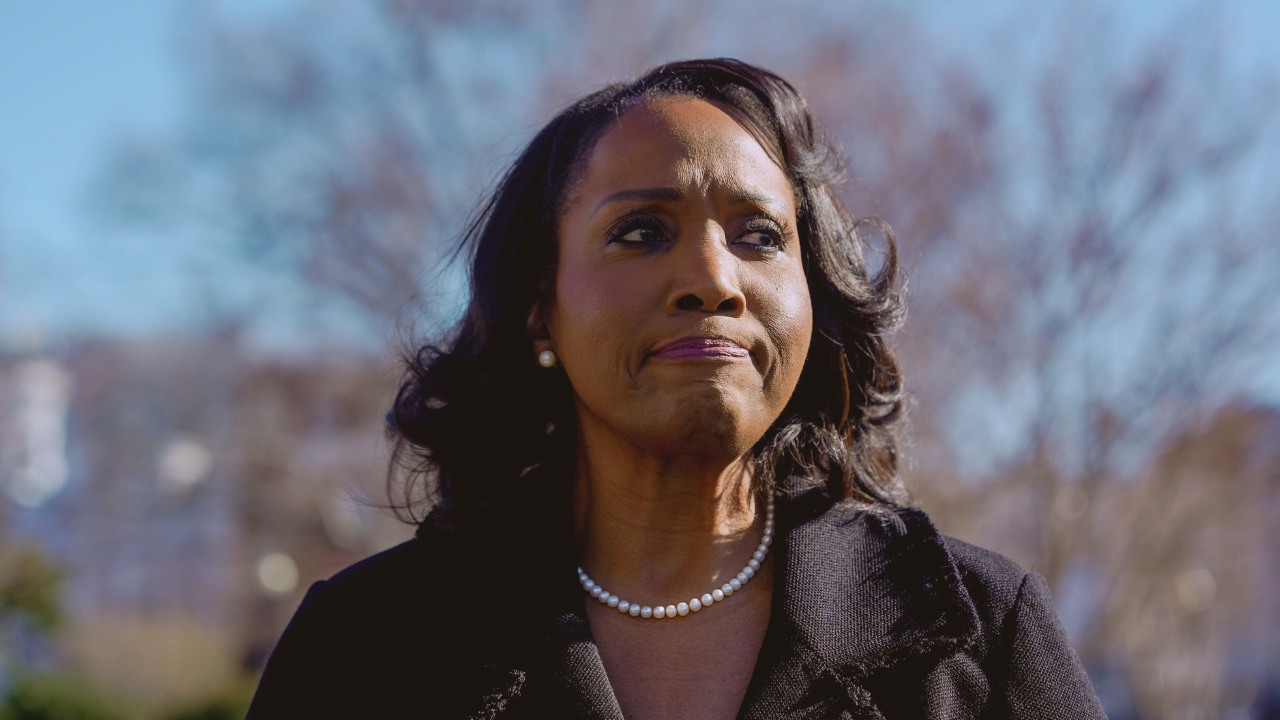
The halls of the United States Supreme Court are no strangers to intense ideological battles, but rarely do these legal skirmishes threaten the foundational plumbing of the global financial system quite like the ongoing dispute surrounding Federal Reserve Governor Lisa Cook. At the heart of this dramatic 5-4 Supreme Court decision lies a profound constitutional question wrapped in a deeply human struggle: can a sitting president summarily dismiss a member of the nation’s independent central bank, or do these economic stewards enjoy a protected status that shields them from the shifting winds of partisan politics? By narrowly ruling that Cook may remain in her powerful post as her legal challenge against former President Donald Trump’s firing order winds its way through the judicial system, the justices have temporarily averted a chaotic vacancy at the Fed. This crucial decision recognizes that the Federal Reserve occupies a highly sensitive and unique constitutional niche, one purposefully designed by Congress to operate above the daily fray of electoral politics. For Lisa Cook, a trailblazing economist whose historic appointment was meant to bring fresh perspectives to monetary policy, the ruling is an intensely personal vindication, allowing her to keep her seat at the decision-making table where interest rates and inflation strategies are forged, even as she remains the lightning rod in a historic separation-of-powers showdown.
The sheer gravity of what is at stake in this legal battle prompted an unprecedented intervention from a pantheon of American economic leadership, individuals who normally guard their public neutrality with fierce determination. In an extraordinary show of solidarity, a massive bipartisan coalition of economic titans submitted a thirty-two-page amicus brief to the Supreme Court, pleading with the justices to halt any executive overreach that would compromise the central bank’s autonomy. This remarkable document bears the signatures of every single living former Chair of the Federal Reserve—Alan Greenspan, Ben Bernanke, and Janet Yellen—marking a rare moment where these legendary figures, who have guided the American economy through decades of crises, felt compelled to speak with one unified voice. Joining them were six former Treasury secretaries who served under both Republican and Democratic administrations, alongside seven former White House economic advisers, representing nearly half a century of collective wisdom in managing the world’s largest economy. For these seasoned policy veterans to step directly into a highly charged legal dispute signals a deep, collective anxiety that the very institutional foundations of American financial stability are being pushed to the brink of a dangerous precipice.
In their compelling and deeply humanized brief, these economic guardians argue that stripping a Federal Reserve governor of their protection against politically motivated termination would do far more than just disrupt the career of one individual; it would actively erode the public’s confidence in the entire financial system. The primary anxiety is that if a president can fire a central banker over a policy disagreement, the Fed’s decisions will cease to be guided by rigorous, objective data and will instead bow to the short-term electoral desires of the executive branch. This loss of independence, they warn, is a recipe for economic disaster, historically proven around the globe to trigger runaway inflation, sky-high interest rates, and deep systemic instability that ultimately punishes everyday citizens at the grocery store and the gas pump. When the public, domestic employers, global investors, and financial markets begin to suspect that interest rate hikes or cuts are being dictated by political calculations rather than sound economic science, the credibility of the U.S. dollar and the stability of the American treasury bond are thrown into jeopardy. The brief makes it clear that the eyes of the global financial community are currently fixed on Washington, watching this dispute to determine whether the American central bank will remain a credible anchor of global finance or become a mere instrument of partisan warfare.
On the other side of this high-stakes legal divide stands the ironclad constitutional argument presented by Solicitor General D. John Sauer, who represents the administration’s view that presidential authority must not be artificially restricted. Sauer has vigorously dismissed the amicus brief as an exercise in policy advocacy rather than sound legal analysis, arguing that the personal preferences of economists, no matter how distinguished, cannot be allowed to rewrite the explicit text of the United States Constitution. From this strict originalist viewpoint, the President of the United States, as the sole head of the executive branch under Article II, must possess the unhindered authority to manage and remove executive officers to ensure that the laws of the land are faithfully executed. Sauer contends that carving out vague, unlimited exemptions for independent agencies like the Federal Reserve creates a dangerous “fourth branch of government” that is entirely unaccountable to the American electorate through their chosen president. In his view, the arguments championing the Fed’s independence may sound appealing in theory, but they lack any logical or constitutional limit, establishing a slippery slope where any regulatory agency could declare itself immune to presidential accountability under the guise of specialized expertise.
The magnitude of this constitutional collision has not been lost on current Federal Reserve leadership, with Chairman Jerome Powell himself stepping forward to issue an ominous warning about the existential threat this case poses to the institution he leads. Powell has privately and publicly signaled that this Supreme Court showdown could easily become the most consequential legal and structural threat to the Federal Reserve in its entire century-long history. The anxiety reverberates through every corner of the financial sector, where traders, mortgage lenders, and corporate strategists are forced to recalculate risks based on the potential politicization of the Fed. If the court eventually rules that a president can dismiss a Fed governor at will, it would fundamentally alter the psychology of monetary policy, introducing a volatile layer of political unpredictability into every future interest rate decision. This uncertainty could immediately manifest as higher borrowing costs for families trying to buy homes and businesses trying to expand, as lenders command a premium to offset the risks associated with a politically compromised central bank.
Ultimately, the battle over Lisa Cook’s seat is a poignant reminder that the abstract fields of macroeconomics and constitutional law are deeply intertwined with the daily lives of ordinary human beings. High-minded debates over executive removal powers and independent agency structures translate directly into the purchasing power of a retired grandmother’s pension and the job security of a young factory worker. Trust is the ultimate currency of any modern financial system; it is an intangible asset that takes generations of careful stewardship to build but can be shattered by a single catastrophic political maneuver. As the Supreme Court prepares to issue its final, definitive ruling on the merits of this historic case, the American public is left to contemplate a vital question about the nature of governance in a divided republic. The outcome of this struggle will decide whether the nation can preserve quiet, insulated sanctuaries of technical expertise to guide its economic future, or whether even the most vital levers of global financial stability must be dragged into the unforgiving arena of perpetual campaign politics.