


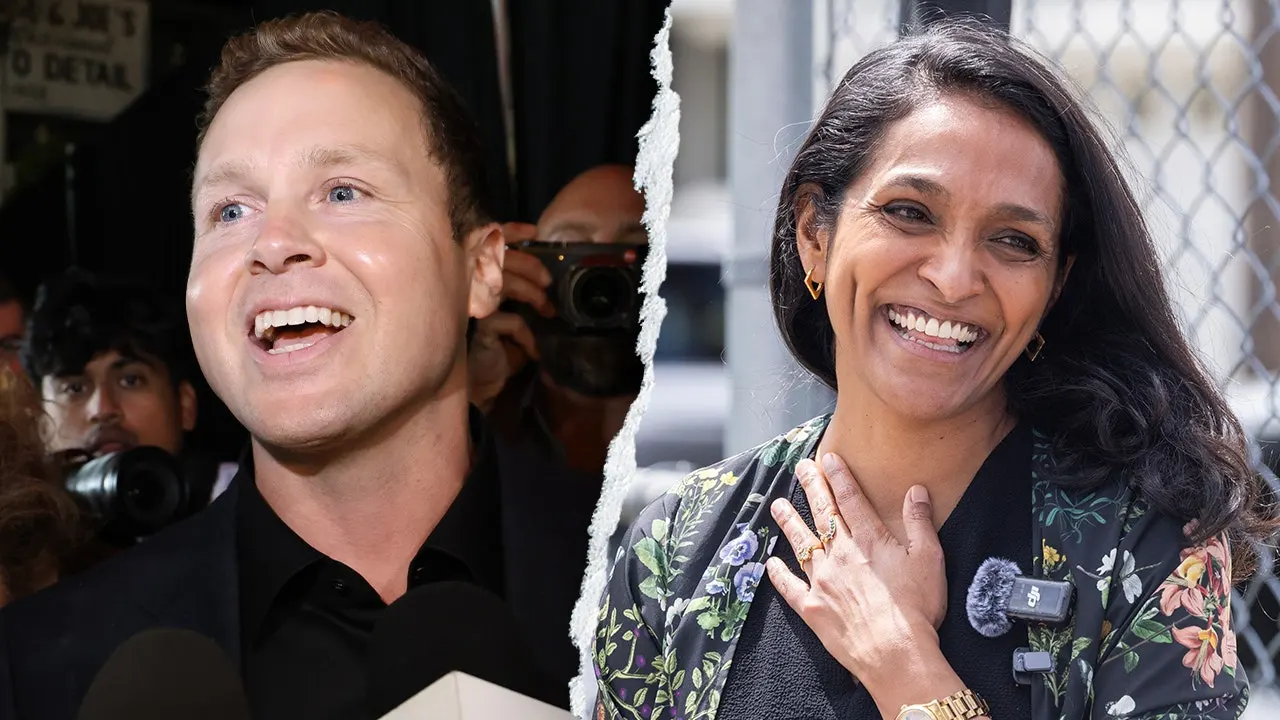
In the glittering, high-stakes, and often deeply volatile arena of Los Angeles politics, where the boundaries between Hollywood fame, reality television culture, and serious civic duty frequently blur, a spectacular electoral drama has taken center stage. The latest Associated Press vote count has sent shockwaves through the city as progressive Democratic City Council member Nithya Raman narrowly overtook the flamboyant reality television star and Republican challenger Spencer Pratt. Just hours prior to this dramatic shift, Pratt had held a tantalizing and highly unexpected lead, sparking frantic headlines across the state and painting a vivid picture of a conservative populist upset that would have completely rewritten the political script of Southern California. However, as the slow and steady wheel of the democratic process continued to grind behind the scenes, the latest updates showed Raman surging ahead by a razor-thin margin of just over 3,000 votes—representing a microscopic 0.4 percentage points in this officially nonpartisan mayoral race. This dramatic shift highlights the deep ideological divides within the city, pitting Raman’s brand of grassroots, community-first progressive activism against Pratt’s high-profile, disruptor campaign. Watching this theatrical display from a secure, comfortable distance is the incumbent Mayor, Karen Bass, a seasoned Democrat who has already successfully advanced to the high-stakes November runoff. Bass now finds herself in an uncomfortable state of suspended animation, waiting alongside millions of anxious, watching Angelenos for the Associated Press to officially declare which challenger will survive this grueling endurance test to face her in the general election. The atmosphere across the metropolis is charged with nervous energy; in a city famous for its scripted blockbuster endings, this real-life political thriller is playing out off-screen, leaving campaign offices, eager volunteers, and disillusioned citizens clinging to every minor update from the county registrar as the final, decisive ballots are painstakingly processed, highlighting how every single voice in this sprawling metropolis carries immense weight.
Behind the cold, hard numbers of the shifting vote tallies lies an agonizingly real human element—an atmosphere of heavy exhaustion, nervous anticipation, and sleepless nights experienced by campaign staff, excited volunteers, and the ordinary citizens of Los Angeles. For candidates like Raman and Pratt, this prolonged period of uncertainty is a psychological marathon, suspending their lives, careers, and future campaign plans in a state of exhausting limbo where they can neither celebrate a hard-fought victory nor begin to plan their next strategic moves for the upcoming runoff. Across Los Angeles County, in highly secured, fluorescent-lit election warehouses, another group of human beings is carrying the heavy physical and emotional burden of democracy on their shoulder blades. These are the hundreds of ordinary election workers, neighborhood volunteers, retired citizens, and dedicated civic staff who work long, grueling shifts to manually verify signatures, inspect damaged paper envelopes, and feed ballots into complex digital processing machines. The air in these secure facilities is thick with quiet concentration, punctuated only by the rhythmic hum of heavy machinery, the soft rustle of sorted paper, and the occasional murmured conversation among observers who watch the process unfold from behind protective barriers. These workers are the unsung, everyday guardians of the local democratic process, meticulously handling each ballot not as a mere administrative task, but as the precious, individual voice of a resident who went to the trouble of exercising their fundamental right to vote. As the days stretch into agonizing weeks, the physical and mental toll on these workers increases exponentially under the weight of national scrutiny, yet their unwavering commitment to accuracy and transparency over speed remains absolute, standing as a quiet, resilient testament to the rule of law amidst a sea of loud, partisan clamor and building public impatience. In the end, the true strength of a democracy is not found in the rhetoric of its politicians, but in the quiet, tireless labor of those who ensure that every single vote is accurately counted, no matter how long it takes.
To truly understand why this agonizing delay occurs, one must look closely at the highly inclusive, deliberately methodical mechanics of California’s modern election laws, which actively prioritize voter accessibility and systemic equity over immediate political gratification. Unlike states that require voters to navigate strict administrative hurdles, show specific types of identification, or stand in long, exhausting lines on a single designated Tuesday, California has systematically transformed its electoral system to bring the ballot directly to the kitchen table of every single eligible citizen. Under current state laws, every active registered voter in the state automatically receives a mail-in ballot at their home, a compassionate policy designed to empower working-class families, busy single parents, night-shift employees, and marginalized communities who historically found it incredibly difficult to participate in traditional in-person voting. Furthermore, the state allows for an incredibly generous grace period, accepting and counting any ballot postmarked on or before Election Day, even if it physically arrives at the county processing center up to seven full days later. While this expansive, human-centered approach drastically lowers the barrier to democratic participation and ensures that no eligible voice is excluded due to postal delays, it also creates an incredibly complex logistical and administrative challenge for local election officials. Workers must painstakingly match signatures on return envelopes against official voter registration records in a highly regulated database, resolve any discrepancies through a delicate outreach process known as “curing,” and process hundreds of thousands of late-arriving mail-in ballots. This intentional approach to voting means the final determination of any close election is not a frantic sprint to the finish line, but an intentional, hyper-detailed march toward absolute accuracy, transforming the post-election landscape into an extended period of mandatory civic patience.
However, this intentional and methodical pacing has met with fierce resistance, igniting a national firestorm of controversy that exposes the deep-seated polarization of the modern American political climate. For many observers and partisan organizations, particularly the Republican National Committee, California’s prolonged counting process is viewed not as a triumph of inclusivity, but as an embarrassing, outdated administrative failure that actively damages public trust in democratic institutions. To weaponize this growing frustration, the RNC took the dramatic step of launching a digital tracker on its website, mockingly counting down every second, minute, and hour that has passed since the polls closed on the June 2, 2026, primary. Declaring the Golden State’s election system to be a “complete joke,” conservative leaders and vocal supporters of Spencer Pratt have aggressively criticized the ongoing ballot count, arguing that the protracted delay breeds suspicion, opens the door to conspiracy theories, and creates unnecessary confusion among a weary electorate. This sentiment reflects a broader national anxiety where the speed of an election is increasingly conflated with its ultimate legitimacy and security. For the average conservative voter watching the slow, daily erosion of Pratt’s initial lead, the delay feels less like careful administration and more like a frustrating injustice, fueling a narrative of systemic inefficiency and driving a broader push for rigid voting reforms. This clash of philosophies creates a highly hostile environment where local election administrators find themselves caught in the crossfire, forced to defend their legal commitment to count every single valid vote while facing intense, nationwide scrutiny and hostile rhetoric from a public increasingly accustomed to instant gratification in almost every other aspect of modern life. Ultimately, this deep division over election logistics threatens to overshadow the very candidates themselves, shifting the public focus away from local policies and toward a relentless, bitter debate over the validity of the democratic machinery itself.
The fierce political finger-pointing has escalated all the way to the highest echelons of national politics, with prominent figures using the Los Angeles mayoral race as a high-profile battleground to litigate the legacy of California’s leadership and its progressive governance model. Former House Speaker Kevin McCarthy recently took to Fox News’ “Sunday Morning Futures” to sound the alarm, laying the blame for the sluggish and agonizing count squarely at the feet of Governor Gavin Newsom. In a scathing critique, McCarthy recalled a time when California’s elections were decided rapidly and cleanly, pointing out that when Newsom was first elected governor, results were known within a day or two, whereas now the process takes weeks, if not a full month, to yield a clear winner. McCarthy raised sharp, skeptical questions about the true motivations behind the sweeping changes to election laws implemented during Newsom’s tenure, suggesting that these reforms were designed more to serve partisan interests and build political power than to genuinely serve the common good of the electorate. This critique taps into a fundamental and highly contentious debate about the very nature of democracy itself: is an election system better when it is swift, decisive, and easily managed, or when it is vast, highly accessible, and designed to capture as many diverse voices as possible, even at the cost of prolonged delay and confusion? By framing the slow count as a direct, negative consequence of deliberate executive action in Sacramento, critics like McCarthy successfully turn a complex logistical and bureaucratic reality into a powerful partisan weapon, ensuring that the debate over California’s voting laws remains a key focal point in the national cultural wars. Under this intense political spotlight, the act of voting ceases to be a simple civic duty and instead becomes a contested battleground where the rules of engagement are constantly scrutinized, debated, and weaponized by both sides of the political aisle.
As the July 2 deadline for final official results approaches, followed closely by the Secretary of State’s final certification on July 10, the people of Los Angeles are left to contemplate the future of their vast city and the resilience of their democratic institutions. Regardless of whether Nithya Raman maintains her narrow lead or Spencer Pratt stages a dramatic, late-count comeback to secure the second spot in the runoff against Karen Bass, this election has permanently altered the landscape of local politics and voter expectations. It has shown that even in an era of hyper-connected, fast-paced digital media, the foundational mechanisms of democracy remain stubbornly, beautifully slow, requiring a level of patience and civic maturity that is increasingly rare in our modern, impatient society. The true challenge moving forward will be for the citizens of Los Angeles, regardless of their political stripe, to rebuild trust in a system that, while undeniably sluggish, is ultimately designed to ensure that no legitimate voter is cast aside, forgotten, or silenced by bureaucratic oversight. As the warm Southern California summer paves the way for a highly contentious, incredibly expensive, and undoubtedly dramatic November runoff, the hope remains that both candidates and voters can look past the exhausting partisan warfare, appreciate the painstaking dedication of the average workers behind the scenes, and recognize that the slow grind of the ballot count is not a sign of systemic failure, but rather a profound reflection of a society that refuses to leave any voice behind in the search for a truly fair, inclusive, and representative future where every individual’s ballot is treated as sacred. Ultimate victory in a democracy should not be measured solely by who wins the race, but by the integrity, integrity, and thoroughness of the process that allows every single Angeleno, from the hills of Hollywood to the neighborhoods of South LA, to have their voice fully heard and respected.