


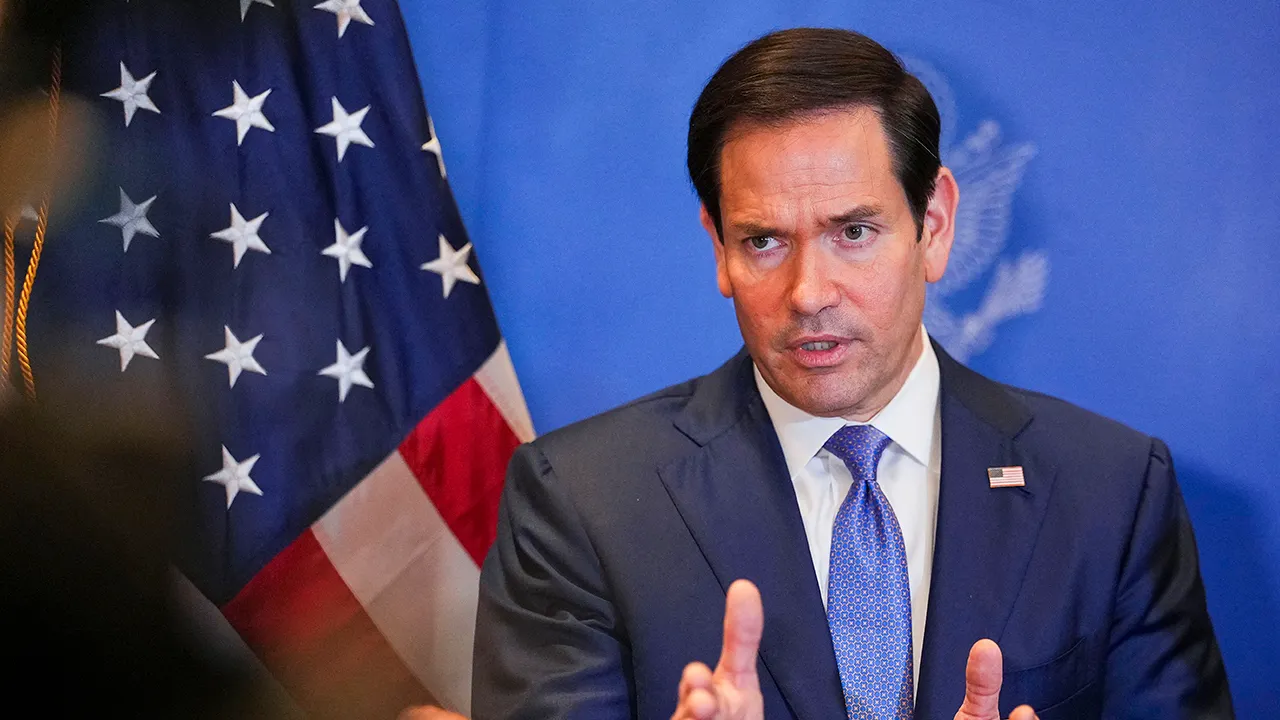
Against the backdrop of the high-stakes ASEAN Summit in the Philippines, a deeply complex geopolitical drama is unfolding, highlighting the razor-thin line between global diplomacy and devastating military conflict. Secretary of State Marco Rubio took to the podium in Manila just hours after American forces completed their eleventh consecutive night of airstrikes against Iranian military targets—a stark reminder of the violent reality underlying his diplomatic messaging. The atmosphere in the summit halls, usually reserved for quiet regional cooperation, was charged with tension as Rubio sought to reconcile two seemingly contradictory American stances: an earnest willingness to negotiate and an unrelenting readiness to use military force. By choosing this moment and this platform, the U.S. administration aimed to show that its patience is not infinite, framing the ongoing military strikes not as an end to diplomacy, but as the direct, tangible consequence of Iran’s refusal to act in good faith. For Rubio, the situation represents a classic diplomatic paradox where peace can only be secured when the threat of war is undeniably credible, leaving observers to wonder whether the two nations are on the cusp of a historic breakthrough or a catastrophic escalation.
To truly understand the urgency of the Secretary’s warnings, one must look at the rapid unraveling of the June 17 memorandum of understanding, a diplomatic framework that was supposed to guide the transition toward regional stability. This agreement established a crucial 60-day negotiating window intended to address a wide range of issues, including Iran’s controversial nuclear and missile programs, international economic sanctions, and the vital guarantee of free passage through global shipping lanes. However, instead of fostering trust and de-escalation, this halfway mark has witnessed a disastrous regression into open hostilities, as the theoretical ceasefire gave way to physical combat. Even as diplomatic teams struggled to find common ground, Iranian forces continued targeting commercial vessels, prompting immediate and heavy American military retaliation across the region. This tragic cycle of violence highlights the human cost of failed agreements, where the collapse of political goodwill on paper translates directly into explosions in the Gulf, leaving sailors and soldiers on both sides in constant peril.
At the very heart of this confrontation is the Strait of Hormuz, a narrow, strategically vital waterway that serves as the economic throat of the modern world. Rubio’s warnings focused heavily on Iran’s claims of control over this corridor, arguing that allowing any nation to dictate terms of transit through an international waterway would shatter the legal foundations of global trade. The human impact of this dispute is immense; the Strait of Hormuz carries roughly twenty percent of the world’s energy supply, meaning that any prolonged disruption would trigger immediate economic hardships for families worldwide, from skyrocketing fuel costs to disrupted supply chains. Rubio passionately argued that permitting such actions would set a highly dangerous precedent, essentially giving rogue regimes a green light to hold the global economy hostage through piracy and extortion. By defense of the “fundamental principle of freedom of navigation,” the United States is positioning itself not just as a regional actor, but as the guarantor of a global rules-based order that has successfully underpinned international commerce for over a century and a half.
This dual-track strategy of intense military pressure and open diplomatic channels is a direct reflection of the administration’s broader foreign policy philosophy, heavily influenced by President Donald Trump’s distinct approach to negotiations. While Trump has publicly declared the initial ceasefire to be “over,” he has also kept the door to diplomacy open, noting that Iranian officials still seem characterized by a desperate desire to meet and talk. Rubio masterfully echoed this sentiment, presenting the United States as a reasonable, rule-following actor that remains ready to engage in positive talks, provided its counterpart shows an equal commitment to keeping its promises. This approach relies on a psychological calculation: that maximum economic and military pressure will eventually force Tehran to recognize that the benefits of a negotiated settlement far outweigh the destructive costs of continued defiance. It is a high-stakes strategy that tests the limits of coercion, operating on the belief that real diplomacy cannot occur in a vacuum and must be backed by the unmistakable willingness to enforce consequences when agreements are broken.
It was highly symbolic that Rubio chose the ASEAN Summit in the Philippines as the stage to deliver this firm message, deliberately connecting the security of the Middle East to that of the Indo-Pacific region. Southeast Asian nations, constantly navigating their own maritime disputes and the looming shadow of larger powers, understood the deeper implications of Rubio’s speech, which implicitly draw parallels between Iranian hostility and maritime aggression in places like the South China Sea. By speaking to this audience, the Secretary of State reminded the international community that the laws governing global shipping are indivisible; if they are allowed to fail in the waters of the Middle East, they will inevitably fail in the vital trade routes of Asia as well. This rhetorical strategy aims to build a broad, global coalition of nations that recognize their collective economic survival relies on a unified front against unilateral maritime coercion, transforming a localized security crisis into a shared global responsibility.
As the remaining days of the 60-day negotiating window rapidly tick away, the world finds itself watching a dangerous game of chicken, where the margins for error are terrifyingly thin. The coming weeks will reveal whether the combined pressure of military strikes and economic isolation will steer Iran back to the negotiating table, or if the region will descend further into an unmanageable, wider conflict. Rubio’s remarks serve as a final, sober warning that while the United States does not seek war, it will not allow its peaceful intentions to be exploited as a strategic vulnerability. Ultimately, the resolution of this crisis depends on whether leaders in Tehran can find a path to de-escalation that allows them to prioritize the welfare of their people over regional ambition, choosing the certainty of diplomatic dialogue over the unpredictable storm of military consequences.