


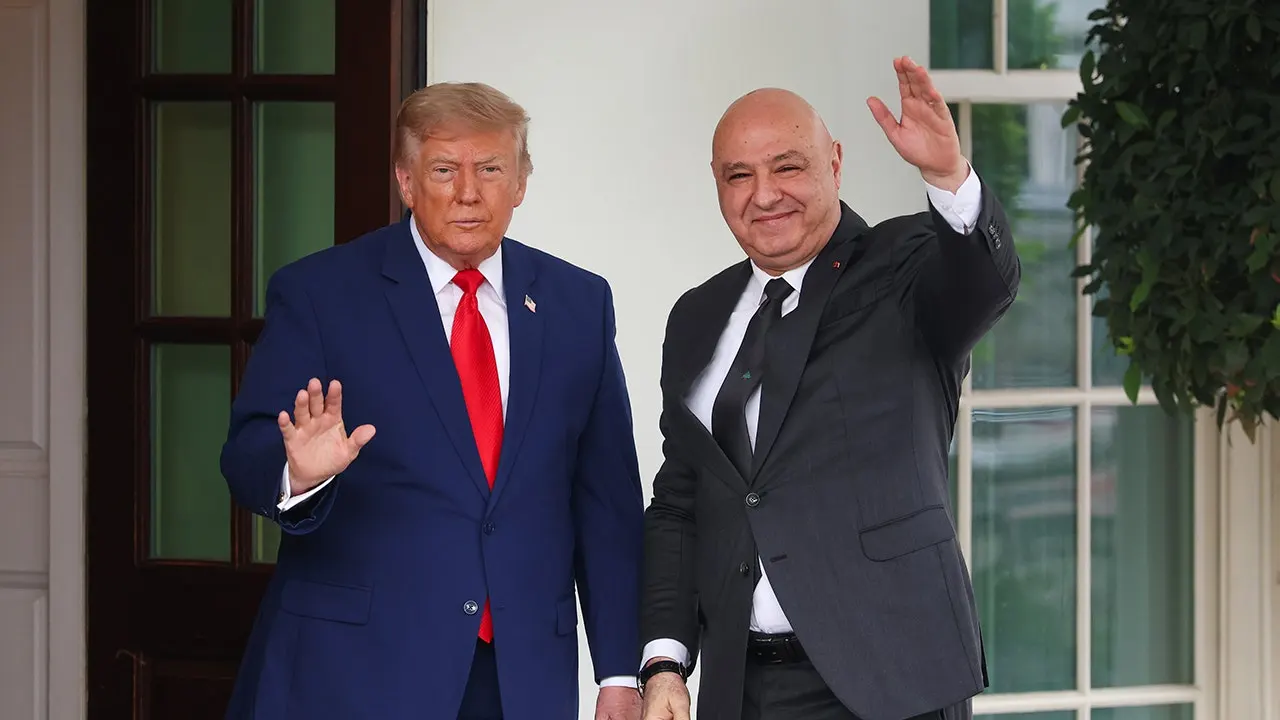
In a moment of profound diplomatic theater and geopolitical shift, President Donald Trump welcomed Lebanese President Joseph Aoun to the Oval Office, signaling a warm and highly unexpected new chapter in the historically complex relationship between Washington and Beirut. This high-profile meeting, characterized by an unusual level of public camaraderie, culminated in a swift and major policy declaration, with Trump utilizing his Truth Social platform shortly after the meeting to announce that he is directing his administration to lift decades of long-standing restrictions and permit all U.S. airline carriers to establish direct flight routes to Lebanon. Praising President Aoun’s efforts to actively transform his nation, Trump painted an evocative picture of a nation ripe for rediscovery, urging American travelers to experience what he fondly described as a “beautiful land” with “great intellect.” The unexpected directive marks a significant departure from decades of cautious, highly security-focused American foreign policy regarding travel to the Levant. By framing this critical decision around the human ideas of accessibility, cultural bridge-building, and economic revival, the administration sought to inject a sense of optimism into a relationship often overshadowed by conflict and regional instability. For the Lebanese-American community and the broader public, the announcement was not merely an administrative update or standard bilateral talking point, but a powerful symbolic gesture of trust and re-engagement, promising to strip away the cumbersome layovers, high costs, and psychological barriers that have historically kept the two nations at arm’s length.
To fully grasp the magnitude of this directive, one must look at the deep, often painful history of aviation security between the United States and Lebanon, a history heavily shaped by the tumultuous decades of the Lebanese Civil War and the painful hijacking of TWA Flight 847 in 1985. Following that tragedy, direct flights between the two nations were entirely grounded, turning what should be a straightforward transatlantic journey into a grueling, multi-leg expedition through European or Gulf hubs. This logistical hurdle has long placed an immense emotional and financial burden on the massive Lebanese diaspora living in the United States, which is estimated to be hundreds of thousands strong and deeply rooted in American civic life. Grandparents, cousins, young entrepreneurs, and students looking to connect with their ancestral heritage have often found themselves navigating restrictive State Department travel advisories, shifting security alerts, and exhausting transit times at foreign airports just to visit loved ones in Beirut. By ordering the Department of Transportation to clear a path for direct flights, Trump is addressing a long-held grievance of this vibrant diaspora, transitioning the narrative of Lebanon from a forbidden, dangerous zone to an accessible, welcoming destination. This physical reconnection holds the potential to revitalize Lebanon’s struggling tourism sector, inject desperately needed hard currency into its fragile economy, and allow families to bridge the geographical divide with unprecedented ease, turning what was once a grueling journey into a direct line to home.
Beneath the celebratory rhetoric of travel and tourism lies a deeply strategic geopolitical play aimed directly at countering the influence of Iran and its powerful proxy, Hezbollah, within the struggling Lebanese state. During their joint appearance in the Oval Office, President Trump did not shy away from the security challenges plaguing the Mediterranean nation, explicitly acknowledging the pervasive “Hezbollah problem” while hinting that his administration has already taken quiet, highly impactful measures to address it in ways “the world will take notice” of. This strategic framing suggests that the decision to permit direct flights is being welcomed by international relations experts as a diplomatic carrot, designed to strengthen the legitimacy of Lebanon’s state institutions, such as the Lebanese Armed Forces and the presidency under Aoun, while sidelining non-state armed actors. For decades, Hezbollah’s dominance in southern Lebanon and its significant political footprint in Beirut have made the country a pariah in various Western circles, limiting its economic potential and national sovereignty. By offering direct commercial ties and a direct line to the world’s largest economy, the Trump administration is attempting to show the Lebanese government and its citizens the tangible, prosperous benefits of partnering with the West rather than aligning with Tehran. This bold move underscores a broader strategic framework that seeks to isolate extremist elements by fostering direct economic dependency and high-level engagement with legitimate state partners.
This historic policy announcement arrives at a critical juncture for the Middle East, closely following a hard-won, U.S.-backed diplomatic push between Lebanon and Israel that has served as the first major test of the Trump administration’s regional framework. The international response to these swift shifts has been a mix of cautious optimism and strategic calculation, highlighted by Israeli Prime Minister Benjamin Netanyahu’s declaration that the ceasefire and its accompanying political alignments deal “a severe blow to Iran” and its regional ambitions. Meanwhile, the U.S. Ambassador to Israel, Mike Huckabee, hailed the evolving diplomatic landscape as a “historic opportunity,” though he maintained that the ultimate disarmament of Hezbollah remains an absolute pre-condition for any permanent, sustainable stability in the unstable region. For his part, President Aoun expressed deep gratitude during his White House visit, thanking the administration for its active, facilitating role in the delicate negotiations and for standing by Lebanon during a time of immense vulnerability and transition. This intricate diplomatic web shows that the flight authorization is not an isolated travel directive but a high-stakes component of a regional puzzle, where civil aviation, state sovereignty, and regional disarmament are tightly interwoven in a bid to remake the balance of power in the Levant.
Implementing such a monumental shift in aviation policy requires immediate, coordinated action across various federal cabinet departments, highlighted by the enthusiastic readiness of Secretary of Transportation Sean Duffy, who responded publicly on social media with a swift, “You got it, Mr. President.” While the political will is clear, the practical execution of establishing direct flights between the U.S. and Beirut-Rafic Hariri International Airport will demand a rigorous, multi-layered security vetting process. Agencies like the Federal Aviation Administration (FAA) and the Transportation Security Administration (TSA) will have to closely coordinate with Lebanese aviation authorities to conduct thorough audits of security protocols, screening technologies, and airport infrastructure in Beirut. Given the historical security anxieties surrounding the region, these technical evaluations are vital to ensuring that commercial airlines and their passengers can travel without compromise. Despite the lack of an immediate public timeline from the White House regarding when the first commercial flight might take off, Duffy’s rapid alignment with the president’s directive suggests that the administration intends to move with urgency, turning a long-standing geopolitical barrier into a streamlined, operational reality in record time, illustrating a governance style that values swift results over bureaucratic delays.
Ultimately, this sudden pivot in U.S. foreign policy transcends the realm of official statistics, administrative guidelines, and geopolitical chessboards, whispering instead to the profound, human truth that connectivity breeds understanding. In describing Lebanon as “a country of great intellect” filled with capable, bright people, Trump touched on a reality often buried under headlines of war and economic distress; namely, that Lebanon is a historic hub of culture, academic excellence, and resilience in the Mediterranean. By smoothing the path of travel, the policy promises to foster a deeper human exchange, enabling student programs, business ventures, and cultural pilgrimages that will enrich both nations. As Lebanese families prepare for a future where their loved ones are only a single direct flight away, and as American travelers look forward to exploring the historic ruins of Byblos, the vibrant streets of Beirut, and the snow-capped mountains of Mount Lebanon, there is a renewed, cautious hope that isolation is giving way to integration. If successful, this bold initiative will not only rewrite the rules of modern air travel in the Middle East but will serve as a testament to the idea that building direct paths between nations remains the most durable instrument of peace.