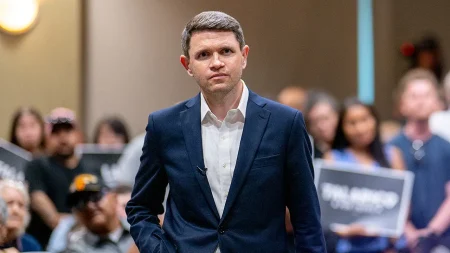






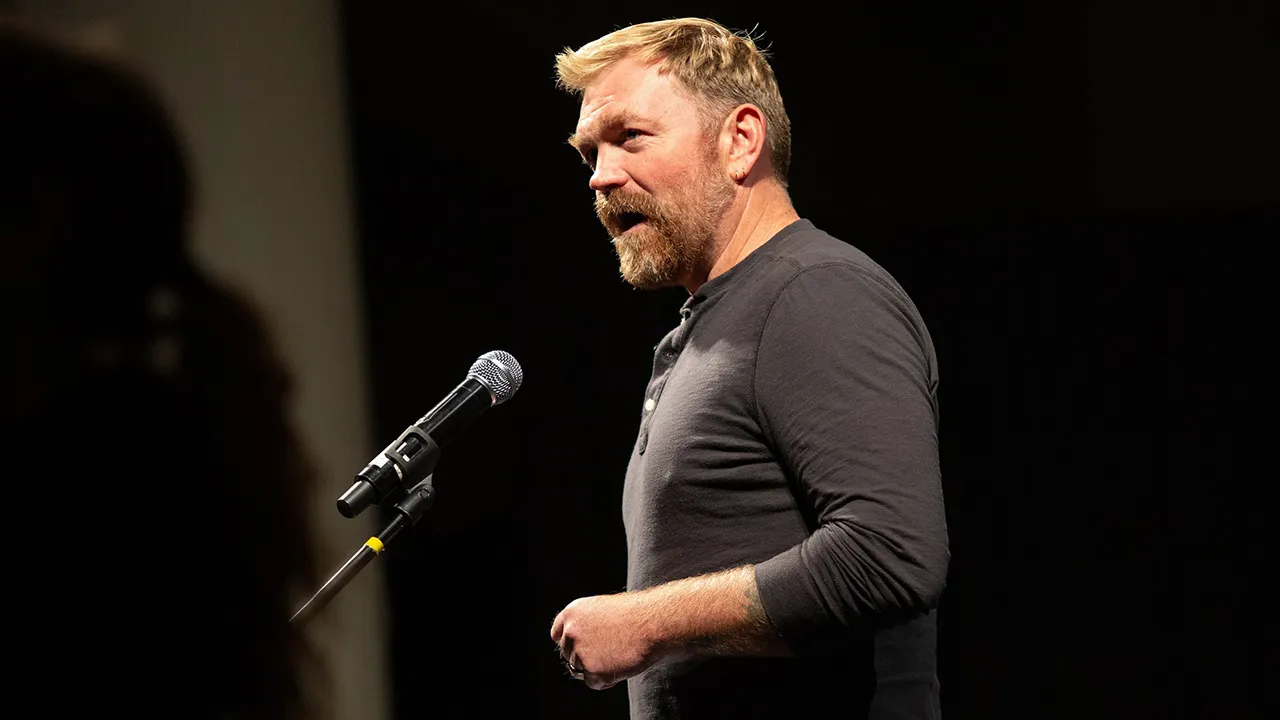
In the high-stakes, hyper-scrutinized arena of modern American politics, candidates are increasingly forced to confront the digital ghosts of their active online past, a reality currently reshaping the high-profile United States Senate race in Maine. Graham Platner, a military veteran running as the presumptive Democratic nominee in his bid to unseat seasoned Republican incumbent Senator Susan Collins, has recently found himself at the epicenter of a massive political storm. The controversy stems from a series of highly inflammatory and abrasive posts made on the popular online discussion platform Reddit under the pseudonymous username “P-Hustle.” Platner, who served both in the United States Marine Corps and the Maryland Army National Guard, completing multiple intense combat tours in Iraq and Afghanistan, has acknowledged that the deleted account indeed belonged entirely to him. The resurfaced remarks have ignited a fierce debate that transcends standard partisan bickering, touching on sensitive issues such as military camaraderie, the psychological toll of warfare, and the boundaries of acceptable public discourse for aspiring national leaders. What makes this situation particularly compelling is the jarring contrast between Platner’s polished public persona as a reformer hoping to represent the good people of Maine and the raw, unfiltered, and deeply offensive commentary he broadcasted to the digital world years before launching his congressional campaign. By examining these digital footprints, we gain a rare, albeit troubling, glimpse into the complex mind of a combat veteran trying to transition from the brutal reality of the battlefield to the diplomatic theater of the Senate. The fallout from these revelations has not only energized his political opponents but has also forced his supporters to grapple with difficult questions about redemption, accountability, and the long-lasting impacts of wartime trauma on those who volunteer to fight all our nation’s wars. As the campaign intensifies, the narrative surrounding Platner’s candidacy has evolved from a policy-focused challenge to an intense referendum on his personal character, his underlying respect for his fellow service members, and his fitness to hold office on Capitol Hill.
At the core of the controversy are Platner’s scathing assessments of the United States Army, an institution in which he actively participated, but ultimately came to view with profound contempt. In April 2019, writing under his Reddit moniker, Platner described the Army as “absolute trash” and alleged that the branch was “full of fat, lazy trash who would rather not be in uniform.” It is historically common for members of different military branches to engage in lighthearted inter-service rivalry, but Platner’s critiques escalated far beyond playful ribbing into direct, systemic denigration. He argued that the Army, as a broader organization, was fundamentally deficient when compared to the Marine Corps, asserting that it lacked the unique “warrior ethos” and the deep-seated obsession with leadership that defines the Marines. Platner claimed that the Army generally attracts what he characterized as a “lower standard of person” than other branches of the service. Despite these sweeping generalizations, his commentary was not entirely devoid of nuance, as he occasionally balanced his harsh remarks with praise for highly specific, specialized active divisions. He noted that the Army possessed “some squared away fighting units,” explicitly highlighting elite groups such as the Army Rangers, dedicated light infantry, reconnaissance teams, and various Special Operations Forces. He also lauded the Army’s combat doctrine and its accessibility to high-level instructional schools, showing that his frustrations were directed at the rank-and-file bureaucracy rather than the entire established military apparatus. However, these sporadic compliments did little to soften the immense blow of his broader, highly public criticisms. In a particularly telling post from 2013, Platner sought to justify his aggressive tone by arguing that while civilians could remain ignorant of military shortcomings, service members themselves had a solemn, unyielding duty to engage in “brutally honest” internal criticism. This perspective suggests that Platner viewed his online vitriol not as a direct personal betrayal of his peers, but as a form of tough love necessary to maintain absolute combat readiness and structural integrity within the national defense establishment.
While Platner’s generalized insults toward the Army drew significant ire, his most damaging and deeply personal comments were reserved for individual service members, most notably Teddy Daniels, a highly decorated and wounded Army veteran. Daniels, who survived being shot by Taliban fighters during a firefight in Afghanistan and was subsequently awarded the prestigious Purple Heart, became the target of Platner’s intense tactical scrutiny in a 2019 Reddit thread. Reacting to a video depicting the battlefield engagement in which Daniels was injured, Platner offered a callous assessment of the soldier’s combat maneuvers, ultimately declaring that the “dumb motherf—er didn’t deserve to live.” This shocking statement, filled with immense vitriol and lack of empathy, immediately sent massive shockwaves through the veteran community, where the shared experience of surviving combat usually fosters an unspoken bond of mutual respect, regardless of tactical disagreements. Criticizing a wounded warrior in such a derogatory manner violated a sacred cultural boundary, prompting swift and severe condemnation from fellow veterans across the political spectrum. Adam Schwarze, a former Navy SEAL and Marine veteran currently pursuing a Senate seat as a Republican in Minnesota, representing the frustrations of many, spoke out forcefully against Platner’s remarks, emphasizing that joking about or trivializing the near-death experiences of fellow service members is entirely abnormal and unacceptable behavior within their community. The backlash highlighted a profound disconnect between Platner’s harsh online critique and the reality of combat, where split-second decisions under fire are easily second-guessed from the safety of a computer screen. By reducing a decorated Purple Heart recipient’s intense struggle for survival into a cheap, disposable internet insult, Platner alienated a critical voting demographic and deeply wounded his own credibility as a leader who claims to respect the sacrifices of those in uniform. For many observing the race, this specific incident transformed the controversy from a simple case of online politically incorrect venting into an unforgivable breach of basic human decency and professional respect among those who have voluntarily worn the proud uniform of our nation.
The controversy surrounding Platner’s digital footprint extends far beyond his criticisms of the Army, revealing a broader pattern of highly provocative statements that touch on broad social, cultural, and political issues. On his now-deleted Reddit account, Platner did not hold back his opinions on a wide variety of sensitive social topics, at times utilizing offensive slurs, expressing a severe, general contempt for white rural Americans, and openly identifying himself as a Marxist, a series of positions that are highly polarizing and difficult to defend in a politically moderate state like Maine. His provocative commentary also extended to other branches of the elite special operations community, where he took extreme aim at the Navy SEALs. On his Reddit account, he generalized SEALs as being largely incompetent, while paradoxically offering high praise for the Army Rangers, a distinction that showcased his highly subjective views on military efficacy. In a 2024 podcast interview, Platner further escalated his rhetoric by targeting the historical legacy of the late Chris Kyle, one of the most famous Navy SEAL snipers in American military history. Platner publicly suggested that Kyle’s legendary sniper tally was the result of a lack of discrimination in target selection, implying that Kyle and his associates actively targeted innocent civilians to artificially inflate their numbers. He stated that the stories regarding the high volume of individuals Kyle shot aligned with behaviors he had personally witnessed among certain units during his active combat deployments, asserting that achieving such numbers was relatively easy if a unit was less disciplined than its professional counterparts. These highly damaging allegations against such a celebrated, albeit controversial, military figure served to alienate many mainstream voters and further deeply entrenched his reputation as an unpredictable and highly combative figure. By consistently choosing to attack established military figures and expressing extreme ideological views online, Platner created a massive digital archive of ammunition for his political opponents, leaving many to wonder how his campaign could possibly survive the intense, unyielding scrutiny of a high-profile statewide election.
In the face of mounting public outrage and intense criticism from both sides of the aisle, Graham Platner has sought to contextualize his past online behavior by pointing to the heavy psychological burdens and emotional challenges associated with military service and combat. Confronted with the reality of his controversial posts, Platner has expressed deep contrition, apologizing for his past offensive statements and pleading with the state’s electorate not to judge his entire moral character based on the “dumbest things” he ever wrote on the internet years ago. He has urged voters to evaluate him instead on the mature person he has worked tirelessly to become today, recognizing that people are capable of profound growth and positive change over time. To explain the aggressive and often vulgar nature of his anonymous Reddit commentary, Platner has openly pointed to the severe psychological trauma he developed as a direct result of his demanding combat deployments to the active war zones of Iraq and Afghanistan. He explained that his harsh words were heavily influenced by the dark, crude, and often morbid humor that he and his fellow Marines utilized as a vital coping mechanism to survive the horrors and daily stress of active combat on the front lines. In the military, where death and violence are constant companions, such dark and crude humor often serves as an emotional shield, albeit one that translates incredibly poorly to civilized civilian life and the polite boundaries of public office. By framing his internet outbursts as the unfortunate, maladaptive coping strategies of a traumatized combat veteran, Platner’s campaign has attempted to humanize his struggle, transforming him from a malicious online troll into a complicated human being carrying the deep, invisible scars of his wartime service. Whether this explanation resonates with Maine voters remains to be seen in the upcoming election, as it forces the public to weigh the genuine empathy genuinely deserved by traumatized veterans against the high standards of temperament, personal maturity, and judgment required of a United States Senator.
As the Maine Senate race marches forward, the severe political fallout from Platner’s digital history continues to reverberate, creating a highly challenging landscape for his campaign and putting his prominent national allies on the defensive. Organizations like the National Republican Senatorial Committee, represented by press secretary Bernadette Breslin, have seized on the controversy, labeling Platner’s comments as thoroughly disgusting, disqualifying, and indicative of a profound contempt for the active-duty men and women who serve in the armed forces today. Republicans have also used the situation to pressure high-profile national Democrats, such as Massachusetts Senator Elizabeth Warren, to explain their initial support for Platner’s candidacy in light of his controversial online remarks, which continue to dominate local headlines daily. This intense focus has created a massive headache for the national party, which had hoped to keep the focus of the race purely on Collins’ legislative record rather than their own candidate’s past behavior. Meanwhile, Platner’s own campaign has largely retreated into silence, failing to issue formal responses to the numerous direct recent media inquiries regarding the continuous flow of surfaced posts as pressure builds from local community organizers. This deafening silence from his campaign team has only added to the public speculation and allowed his political rivals to control the narrative. The ongoing controversy has undeniably amplified the division within the state’s electorate, turning what could have been a policy-centered debate on the economy and local governance into an intense moral conversation about forgiveness, veteran support, and the qualifications for public office. For the voters of Maine, who pride themselves on their political independence, the decision now lies in balancing Platner’s real-world service and his struggles with combat-related trauma against his highly offensive online history. As election day approaches, this complex race will serve as a critical test of whether the electorate can truly look beyond a candidate’s worst digital moments to embrace their shared humanity, or if some online remarks are simply too toxic to be forgiven in the unforgiving court of public opinion.