


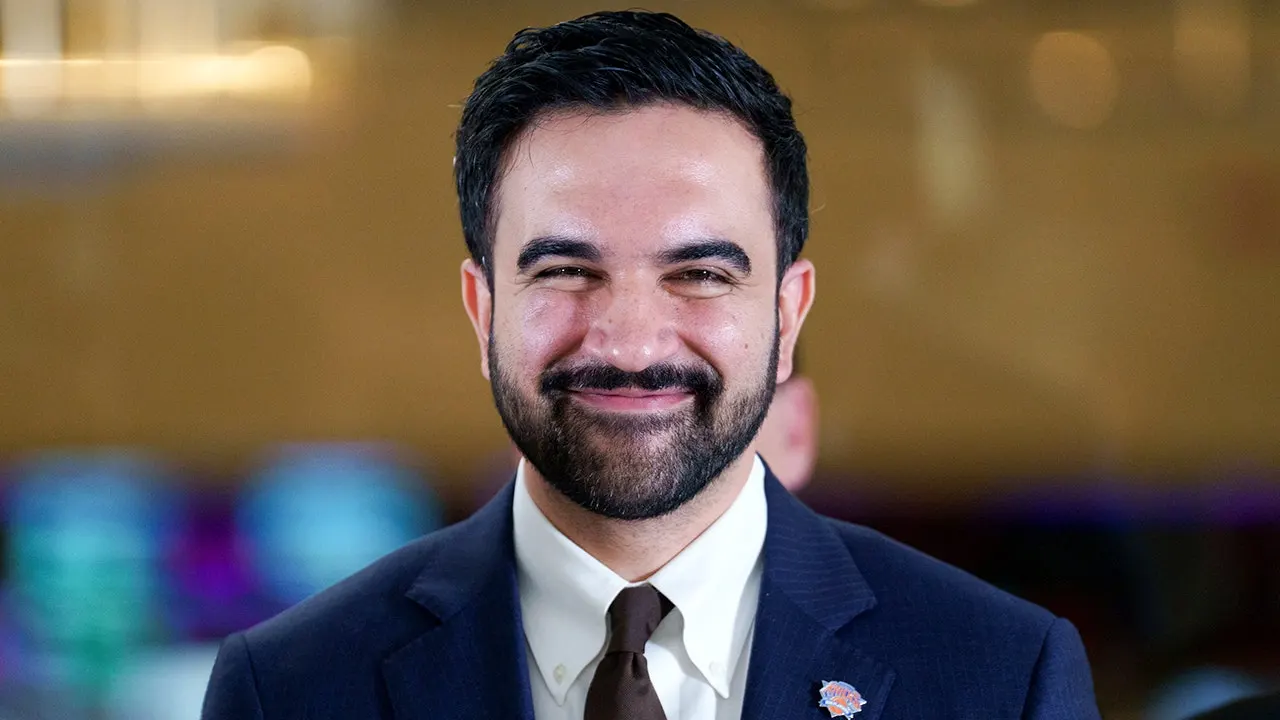
The political landscape of New York City has always served as a high-stakes theater for the evolving soul of the American left, but few moments have signaled as profound a paradigm shift as the inauguration of Zohran Mamdani as mayor on January 1, 2026. Standing before a city defined by both unimaginable wealth and crushing poverty, Mamdani did not offer the traditional, polished platitudes of a moderate caretaker; instead, he stepped up to the podium and proudly declared his identity as a democratic socialist, promising to govern with the same radical empathy and systemic critique that fueled his grass-roots campaign. For an electorate weary of hyper-corporatized politics and incremental reforms that fail to keep pace with the rising cost of survival, his victory represented a dramatic rupture from the status quo. His rise to the city’s highest office reflects a growing hunger among everyday residents who feel increasingly abandoned by the traditional political establishment. By centering his administration on the lived realities of working-class families who are forced to decide between paying rent, putting food on the table, or keeping the lights on, Mamdani has effectively forced a conversation about who local government is truly meant to serve.
This ideological battle came to the forefront during a candid interview with Eugene Daniels on MS NOW, where Mayor Mamdani pointedly argued that the modern Democratic Party has fundamentally lost its connection to working people. He lamented that the party’s leadership often appears detached from the gut-wrenching economic pressures that define daily life for tens of millions of Americans, opting instead for abstract policy debates and elite consensus. To illustrate his point, Mamdani invoked the historic legacy of the New Deal and President Franklin D. Roosevelt’s “Four Freedoms,” reminding viewers of a time when the Democratic Party was unapologetic and relentless in its defense of the working class. He characterized his administration not as an outlier, but as a long-overdue return to these foundational principles, aiming to resurrect a political ethos where the government acts as an active shield for the vulnerable rather than a passive observer of market forces. In Mamdani’s view, the failure of the national party to provide clear, actionable, and courageous solutions to everyday financial anxieties has created a dangerous vacuum, one that progressives must urgently fill with a renewed commitment to economic justice and public welfare.
To truly understand Mamdani’s critique is to look beyond abstract economic theories and examine the human stories unfolding daily across the five boroughs, where the soaring costs of groceries, gas, and housing have transformed basic survival into an escalating crisis. For a family in Queens or the Bronx, the national conversation about macroeconomic indicators and stock market highs feels entirely disconnected from the reality of a weekly grocery bill that has doubled, or a rent increase that threatens to displace them from the communities they have lived in for generations. Mamdani’s political strategy is built on the belief that a political party cannot expect loyalty from voters if it fails to offer tangible relief for these concrete struggles. By focusing intensely on universal needs—demanding aggressive tenant protections, investments in truly affordable housing, and municipal programs to curb food insecurity—he seeks to demystify progressive governance and show that policy is ultimately about the sanctity of human life. His campaign resonated because it validated the quiet desperation experienced at millions of kitchen tables, transforming private anxieties into a collective, public demand for a city that prioritizes people over profit.
Embracing the label of a democratic socialist in a city that serves as the global capital of finance capital is no small feat, yet Mamdani has refused to dilute his message to appease centrist skeptics or corporate donors. During his inauguration, he made it clear that his ideology is not a marketing gimmick to be discarded once in office, but a rigorous framework that will guide every legislative and executive decision his administration makes. This unapologetic stance stands in stark contrast to the cautious, poll-tested strategies favored by many mainstream Democratic leaders who fear that progressive labels will alienate moderate voters. Mamdani’s success suggests the opposite: that voters are far less concerned with ideological labels than they are with authenticity, courage, and a clear vision for material improvement. By proving that a candidate can run and win on an uncompromisingly progressive platform, Mamdani has provided a blueprint for how the left can rebuild its coalition, suggesting that the path to electoral victory lies in energizing the working class rather than chasing an phantom middle ground.
Naturally, Mamdani’s bold political identity and activist background have drawn intense media scrutiny and sparked fierce debates over the direction of his administration. Long before stepping into City Hall, his vocal advocacy for progressive causes—such as his support for the “Abolish ICE” movement and his outspoken stances on international human rights—had already established him as a polarizing figure among conservative critics and moderate Democrats alike. Yet, Mamdani has consistently sought to bridge these deep divides by focusing on shared humanity and community empowerment, whether dedicating himself to inclusive civic celebrations or championing the rights of marginalized groups. During Pride Month, he emphasized that honoring the immense contributions of the queer and transgender communities requires a Year-round commitment to material support and civil rights, rather than mere symbolic outreach. Even as he faces constant pressure from political opponents and media outlets eager to paint his agenda as too radical, Mamdani remains focused on demonstrating that a progressive city is one where everyone, regardless of their background, documentation status, or identity, can live with dignity and security.
Ultimately, Zohran Mamdani’s mayoralty represents a high-stakes, real-world experiment that could redefine the national identity of the Democratic Party and the broader progressive movement in America. If his administration can successfully implement policies that lower the cost of living, protect tenants, and revitalize public services in the nation’s largest metropolis, it will serve as powerful proof that democratic socialism is not an impractical academic theory, but a viable, humane system of governance. Conversely, a failure to deliver on these ambitious promises will likely be weaponized by moderates to argue that the left is incapable of managing the complexities of a major city. As Mamdani navigates the immense challenges of governing New York—from balancing fiscal realities with social programs to managing the bureaucratic inertia of municipal agencies—his journey will be watched closely by organizers and politicians across the country. It is a defining moment, one that poses a fundamental question to the future of American politics: can a government truly of, by, and for the working class triumph over the entrenched power of wealth and privilege?