




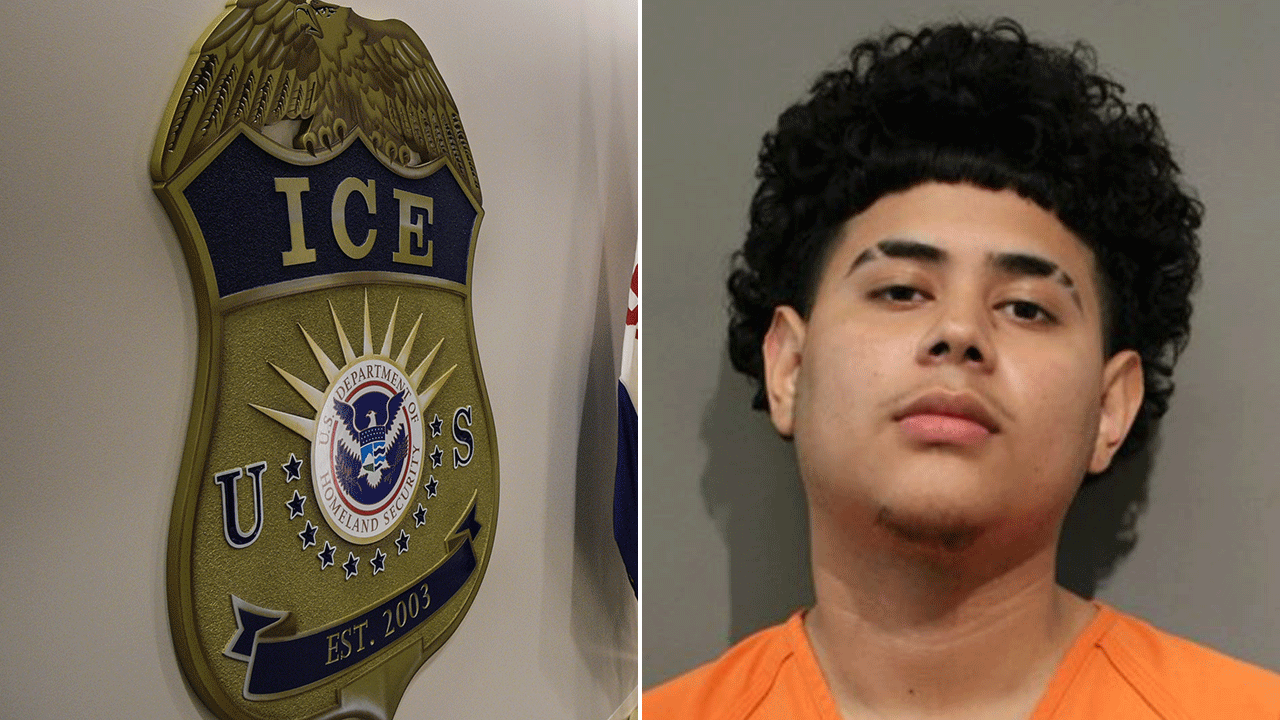
Two families in Houston, Texas, are currently grappling with the devastating aftermath of senseless gun violence, their lives permanently altered by the sudden loss of loved ones whose futures were abruptly cut short. At the center of these tragic events is 18-year-old Jefferson Adonay Velasquez-Torres, an El Salvadoran national residing in the United States illegally, who now faces two separate charges of murder. The U.S. Department of Homeland Security (DHS) recently confirmed that Immigration and Customs Enforcement (ICE) has placed an official detainer on Velasquez-Torres, requesting that Texas law enforcement authorities do not release him from custody without prior federal notification. This legal maneuver highlights a complex intersection of local criminal justice and national immigration policy, but beneath the administrative paperwork lies a deeply human story of grief, fear, and a community searching for answers in the wake of dual tragedies that have left neighborhoods shaken and families mourning.
The most recent outbreak of violence occurred in the early morning hours of April 27, outside a bustling Houston nightclub—a place where young people had gathered to escape the stresses of daily life, only for the night to end in terror. On that fateful evening, 27-year-old Noah Ramirez lost his life when gunfire erupted in the parking lot, transforming a vibrant social scene into a chaotic crime scene. In addition to the fatal wounding of Ramirez, two other individuals suffered injuries during the shooting, their physical scars serving as a lasting reminder of a night of horror. For the family and friends of Noah Ramirez, his sudden death represents an unimaginable void, a sudden theft of a young man’s potential, and a stark reminder of how quickly public spaces can be shattered by gun violence. Investigators working tirelessly on the case eventually linked Velasquez-Torres to the incident, leading to a formal murder charge that brought some sense of accountability, though little comfort, to those who loved Ramirez.
Shockingly, the April nightclub shooting was not the first time Velasquez-Torres had been accused of taking a human life. Just months prior, in June, he was charged in connection with another fatal shooting that occurred during a house party in August of the previous year, an event that claimed the life of 17-year-old Angel Garcia. House parties, which are traditionally spaces for teenagers to celebrate youth and friendship, have increasingly become flashpoints for conflict, and for young Angel, it became the place where his life ended before it truly began. Alongside Velasquez-Torres, police arrested a second suspect, 19-year-old Enrique Aguilar, alleging that both young men played a role in the violence that stole Garcia’s future. The grief of the Garcia family is compounded by the painful realization that their teenage son’s life was cut short in an environment that should have been safe, painting a troubling picture of a cycle of youth-on-youth violence that continues to plague local communities.
To understand how an 18-year-old came to be charged with such severe crimes, one must look back at his journey to the United States, a path that reflects the systemic challenges of the American immigration system. Velasquez-Torres crossed the southern border illegally as an unaccompanied minor in 2014, during the second term of the Obama administration, and was subsequently released into the interior of the country. This practice, often intended to protect vulnerable children fleeing harsh conditions in Central America, has long been a subject of intense national debate. In the decade that followed his arrival, the young migrant apparently drifted away from any path of constructive integration, eventually accumulating charges that include unlawfully carrying a weapon and aggravated robbery, alongside the two murder allegations. His trajectory from a young child seeking a new life to a heavily armed teenager accused of multiple homicides serves as a sobering case study of how vulnerable youth can fall through the cracks of both federal oversight and local community support systems.
The arrest of Velasquez-Torres has reignited a fierce political debate over border security and immigration enforcement, with federal officials placing the blame squarely on past policy decisions. Homeland Security Assistant Secretary Lauren Bis issued a strongly worded statement expressing outrage over the situation, pointing to what she described as the “reckless open-border policies” of the Obama administration as the direct reason the suspect was present in the country to commit these alleged crimes. Bis emphasized that the federal government is taking every measure to ensure that this “public safety threat” remains behind bars, praising the state of Texas for its cooperation with ICE detainers. This rhetoric highlights the ongoing friction between political administrations over how to manage immigration, transforming a local criminal case into a symbol of a broader, national struggle over law enforcement, sovereignty, and the protection of American citizens from violent offenders.
As Velasquez-Torres remains held in the Harris County Jail after being denied bond, the focus of the Houston community remains on healing and the pursuit of justice for Noah Ramirez and Angel Garcia. The cooperation between local Texas authorities and federal immigration agencies represents a critical safeguard, ensuring that individuals accused of violent crimes cannot easily evade the consequences of their actions through jurisdictional loopholes. Yet, for the families of the victims, the legal proceedings offer only a bitter form of closure, as no court ruling can restore the lives of the young men who were lost. Moving forward, the tragedy serves as a call to action for both policymakers and community leaders to address the root causes of youth violence, reform broken systems, and work together to ensure that the streets of Houston, and communities across the nation, can once again become places of safety, peace, and hope for future generations.