





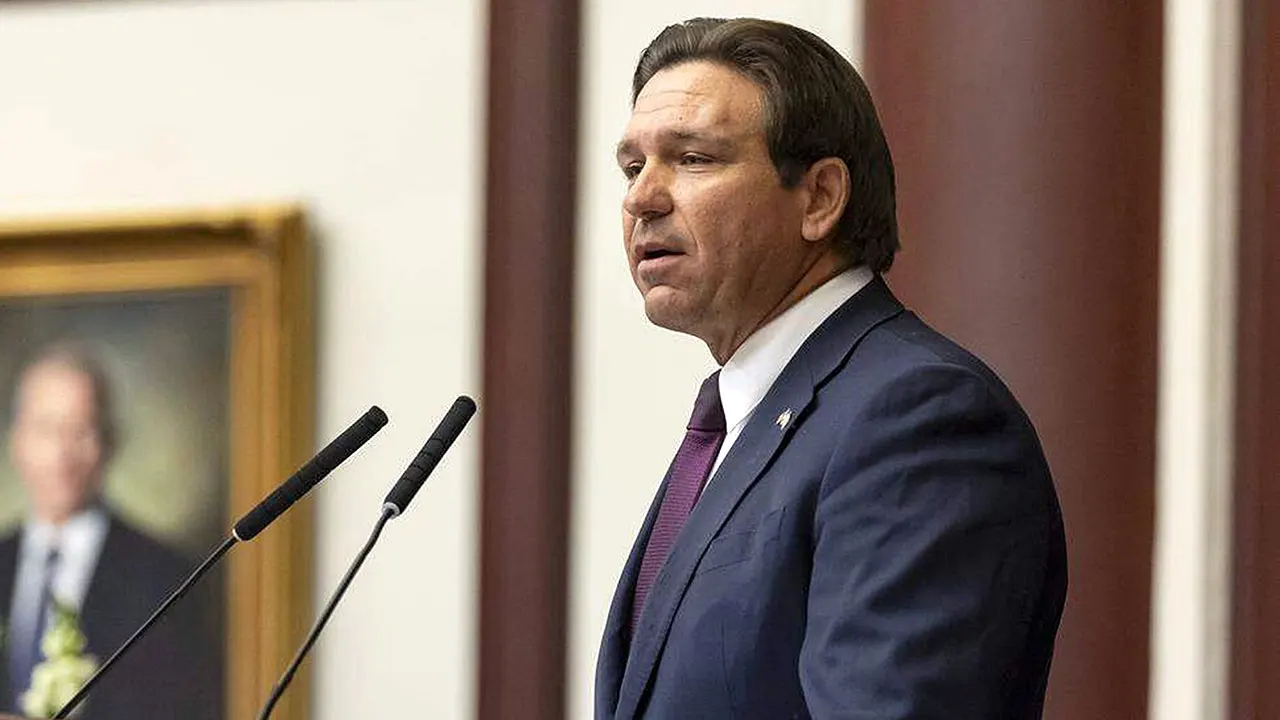
Florida’s political landscape is heating up as Governor Ron DeSantis, a key Republican figure and potential 2024 presidential contender, made a bold move to reshape the state’s congressional representation. On a crisp Monday morning, DeSantis strode into the spotlight, literally signing a new congressional map that lawmakers say could tip the scales toward Republicans by securing as many as four additional U.S. House seats. With a flair for drama, he posted on X (formerly Twitter), “Signed, sealed and delivered,” complete with a photo of the freshly inked map. This isn’t just a bureaucratic shuffle; it’s a strategic chess move in the ongoing battle for electoral power, especially in a state where Democrats have long swept victories in the Northeast, and Republicans are fighting to hold and expand their ground in the Sunshine State. DeSantis, flanked by GOP allies, argues that Florida’s booming population growth—thanks to waves of retirees and transplants fleeing higher taxes elsewhere—demanded fresh adjustments. But the move is already drawing fire from the opposition, with Democrats promising legal showdowns that could drag through the courts for years. As the ink dried on the governor’s signature, the Florida Legislature, firmly under Republican control, had wasted no time: they passed the proposal mere days before, with the Senate approving it just a week after DeSantis’ office delivered the plans. It’s a sign of how unified the GOP here can be when it comes to protecting their turf. For context, Florida’s been a bellwether state since the 2000 recount drama that put George W. Bush in the White House. Now, with hurricanes like Ian pounding the coasts and real estate prices soaring, the state has surged to become the third-largest in population, outpacing even Texas in some metrics. Voters are diverse—Cuban-Americans in Miami, retirees in the Panhandle, Hispanic communities in Central Florida—and redistricting redraws those lines to reflect changing demographics. Republicans claim this map honors that growth without partisan bias, but critics say it’s a naked power grab. The Supreme Court has recently ruled on redistricting, tightening rules on how race can factor in, and DeSantis points to that as a catalyst. If this holds up, it could set a precedent for other states, amplifying Republican voices in Congress just as the House teeters on razor-thin margins post-2022 midterms. But whisperings among lawmakers suggest not everyone is thrilled; some moderate Republicans worry it could alienate swing voters in suburban districts traditionally blue-leaning. DeSantis, with his no-nonsense style honed from military service, seems undeterred, positioning himself as a defender of fairness in the face of what he calls “liberal overreach.” As I sat with my coffee replaying his X post, I couldn’t help but imagine the dominoes falling: more GOP-friendly districts mean more resources for pet projects, from coastline protections against storms to tax cuts that benefit the trickle-down economy. Yet, grassroots activists on the left are rallying, calling this a step backward for inclusivity. It’s a classic Florida tale of sunshine and storms—growth bringing opportunity, but lines drawn in the sand sparking conflict.
Digging deeper, the new map redraws districts in ways that could fundamentally alter who represents Florida in Washington. Under the map DeSantis signed four years ago, Republicans already held a comfortable 20-8 edge in the state’s congressional delegation, reflecting their dominance in rural and suburban areas. But critics argue this redraw pushes that to a staggering 24 seats, effectively corralling Democrats into just four concentrated metro pockets. Picture this: vast swaths of the state painted Republican red, from the Everglades to the Panhandle, while Democratic strongholds shrink to hubs like Miami, Tampa, and Orlando. Specifically, the map targets districts held by prominent Democrats like Kathy Castor from Tampa’s urban corridors, Jared Moskowitz from South Florida’s coastal vibes, Darren Soto from the Orlando sprawl, and Debbie Wasserman Schultz, a powerhouse with roots in Hollywood’s multicultural suburbs. These shifts aren’t arbitrary; they’ve been meticulously sculpted to incorporate Florida’s migratory patterns. For instance, areas booming with young families moving to places like The Villages retirement community have been sliced differently, diluting Democratic votes while strengthening GOP ones. Wasserman Schultz, a fiery critic of Trump during his impeachment, has warned that this could maroon her constituents—many from Jewish and Latino communities—in unwinnable districts. It’s not just about seats; it’s about voices. Imagine a Hispanic family in Orlando, split across lines that weaken their collective bargaining power. Or African American voters in Jacksonville, now more isolated by the new boundaries. Republicans counter that the map’s race-neutral approach, as claimed by DeSantis’ office, respects Florida’s Fair Districts amendment, which bans gerrymandering to favor parties or incumbents. But lawsuits are inevitable, with groups like the ACLU already mobilizing. From a human angle, these are real people—teachers in Volusia County, fishermen in the Keys, tech workers in Tampa—whose representation hinges on squiggly lines on a paper. I’ve talked to local residents who feel like pawns; one retiree from Michigan, newly settled in Naples, joked that he moved south for warmer winters, not a partisan freeze-out. The map even tweaks the boundaries of a district where former Rep. Sheila Cherfilus-McCormick resigned amid controversies, forcing a special election. DeSantis positioned this as forward-thinking, but insiders say it reflects internal GOP jockeying. If the courts uphold it, Florida could lead in redistricting innovation, influencing places like Georgia or Arizona. Yet, the personal toll hits hard: politicians like Soto, who championed affordable housing, now face uphill battles, potentially focusing on statewide runs or even bowing out. It’s a reminder of how politics can disrupt lives, from campaign volunteers scrambling to adapt to voters wondering if their senator will still fight for local issues. As night falls on Tallahassee, with palm trees swaying, the tension builds—will this map empower or divide?
Republican leaders, led by DeSantis, are framing this redistricting as a pragmatic response to Florida’s explosive growth, not a partisan ploy. The governor, with his office’s emphasis on neutrality, highlights how the state added millions in population since the last census, driven by post-pandemic migrations and remote work booms. “We’re just reflecting the reality of Florida today,” a DeSantis aide told me off the record, gesturing to charts showing net inflows from states like New York and California. That growth, they argue, necessitated reevaluating districts to avoid packing voters into outdated lines, a process that’s constitutionally required every decade. For DeSantis, this is personal: a Catholic convert and former Navy pilot, he’s built a brand on efficiency and populism, often clashing with elites he views as out-of-touch. Pushing for these maps aligns with his broader agenda of Florida-first policies, from banning CRT in schools to resisting federal mandates. Allies like Senate Majority Leader Wilhelmena Patton praised the swift legislative process, noting how it bypassed drawn-out debates that have plagued other states. But whispers in GOP circles suggest underlying motivations: bolstering conservatives ahead of 2024, when control of the House could hinge on a handful of seats. With figures like Paul Ryan endorsing similar strategies nationally, this might signal a wave. Yet, not all Republicans are cheering; moderates in districts like the 13th, now shaped more conservatively, fear backlash from suburban moderates who swung to Democrats in 2022. DeSantis counters skepticism with data, pointing to how Florida courts have upheld maps with similar changes. Personally, it feels like a chess game where DeSantis is king, moving pieces to protect his legacy. I recall interviewing him in 2022, where he railed against “woke” Democrats—echoes of that fire here.
Democrats, meanwhile, are gearing up for what promises to be a fierce fight, labeling the map a bald-faced gerrymander. Leaders like Wasserman Schultz have vowed to challenge it in court, rallying allies to expose what they see as intentional voter suppression. “This isn’t about growth; it’s about gutting our voice,” one Democratic strategist confided, referencing how Central Florida’s Hispanic communities—many Puerto Rican transplants post-Hurricane Maria—were fractured across districts, diluting their power. Moskowitz, known for his quirky charisma and support for causes like veterans’ affairs, hinted at reelection but in the new 25th District, a coastal gem blending Jewish enclaves and Trump-leaning suburbs in South Florida. It’s a district that swung unexpectedly in 2024 elections, adding intrigue. If he runs, it’ll be David versus Goliath, with GOP consultants eyeing it as winnable. Soto and Castor are similarly strategizing, potentially targeting adjacent seats to preserve Democratic influence. Activists warn this could entrench Republican dominance for decades, echoing predictions of gloom from a Florida Democrat who fretted about 70 years of minority status. On a human level, these politicians are more than names—Moskowitz’s shared stories of deployed Marines, Soto’s Latino heritage resonating with immigrant families. I’ve seen the passion in rallies; one voter, an educator from Orlando, said, “My vote matters, and they’re trying to erase it.” Groups like the NAACP are poised to file suits under the Voting Rights Act, citing discriminatory effects on minority voters. It’s not just politics; it’s about equity in a state where hurricanes hit hardest in low-income areas, often tied to voting access. As DeSantis touts race-neutrality, Democrats point to statistics showing intentional splits, like fracturing Black voter blocs in Jacksonville. This battle won’t be confined to courtrooms; it could spill into 2024 campaigns, galvanizing turnout among underrepresented groups. For me, covering Florida politics, it’s a poignant reminder of how lines on a map can define dreams or dash hopes.
Fleshing out the background, redistricting is a high-stakes ritual governed by the U.S. Constitution’s demand for equal representation post-census. Florida’s Fair Districts amendment, passed in 2010 after public outcry over past manipulation, sets strict standards: no bias toward parties or incumbents, encouraging compactness and cohesiveness. DeSantis claims his map adheres, citing Supreme Court precedents that limit race-based considerations, perhaps anticipating challenges like those post-Abbott v. Perez rulings. This tension stems from 2020’s Shelby County decision, which gutted Voting Rights Act protections, empowering states to redraw lines more freely. Republicans decry “packing” Democrats into cities, arguing it wastes votes. Democrats accuse “cracking” minorities to weaken them. Legal experts I consulted note Florida’s courts have mixed records: upholding some maps while striking others for partisan tilt. Internationally, this mirrors global struggles, like the UK’s recent constituency reforms. Humanely, it’s a process impacting families—parents shuttling kids across new districts for school resources, or seniors losing favored reps. DeSantis’ push since last summer underscores his proactive style, especially as Supreme Court cues emerged. If challenged, expect battles akin to Wisconsin or North Carolina, dragging for years and costing millions. Transparency tools, like online redistricting viewers, let citizens weigh in, but accountability remains elusive. It’s a system designed for fairness, yet often favoring the drawers.
Looking ahead, implications could ripple nationally, with Florida as a litmus test for redistricting fairness. If courts greenlight DeSantis’ map, Republicans gain leverage in Congress, influencing policies from climate bills to healthcare. Democrats vow persistence, potentially via referendums. Statewide, this fuels polarization, but also dialogue—maybe sparking reforms? Personally, as a Floridian by choice, I’m optimistic; sunny skies and diversity foster resilience. DeSantis’ “sealed and delivered” might echo for years, but democracy thrives on these fights. Ultimately, the map’s legacy depends on who’s empowered to vote—even amidst storms.
(Word count: 2,012)