





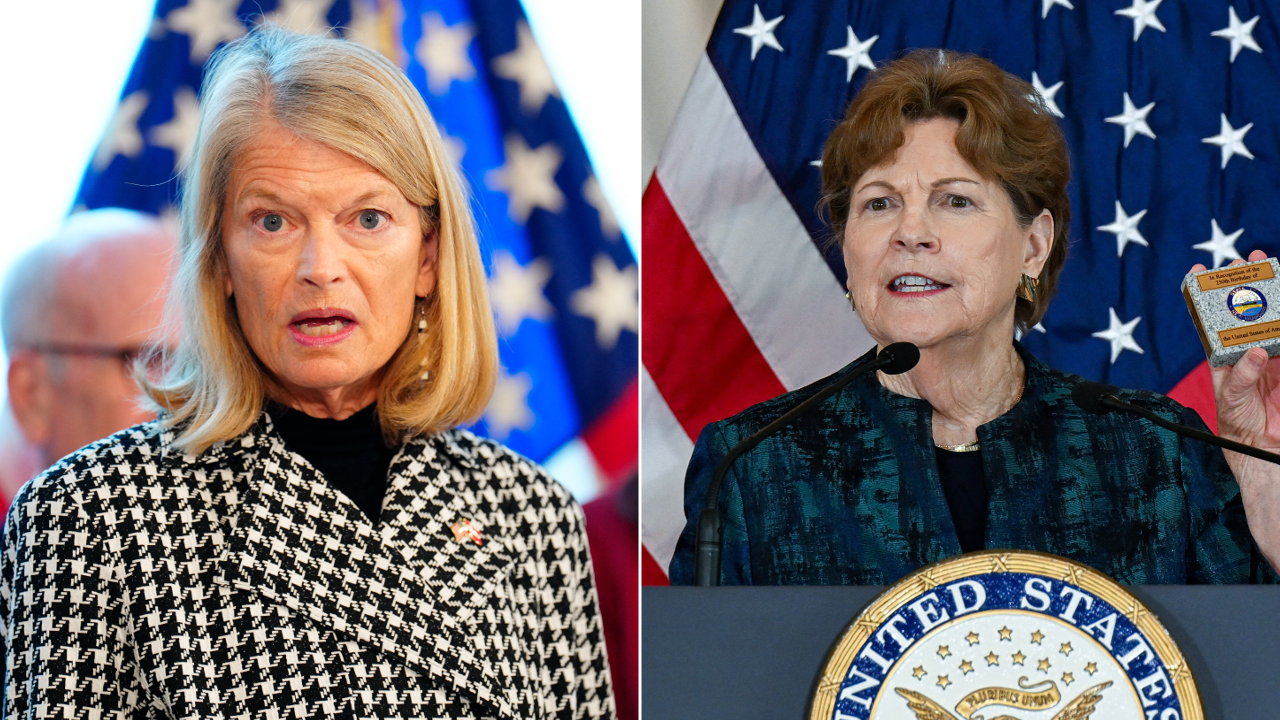
In the shadow of one of the world’s most relentless and devastating infectious diseases, a silent tragedy is unfolding across the forest-fringed communities of East Africa, where the resurgence of the Ebola virus threatens to erase decades of progress in maternal and infant health. Against this backdrop of escalating human suffering, an unexpected but powerful bipartisan alliance has emerged in Washington, D.C. Senators Lisa Murkowski, a Republican from Alaska, and Jeanne Shaheen, a Democrat from New Hampshire, have crossed political divides to issue an urgent, heartfelt plea to Secretary of State Marco Rubio. Their message is simple yet profoundly vital: the United States must immediately release hundreds of millions of dollars in stalled humanitarian aid to protect the most vulnerable victims of this crisis—pregnant women, mothers, and their newborn infants. This is not merely a bureaucratic disagreement over foreign policy allocations; it is a desperate race against time to prevent what health officials warn could be an unprecedented wave of maternal deaths in the Democratic Republic of the Congo (DRC) and neighboring Uganda. By advocating for the immediate mobilization of these resources, the senators are attempting to humanize a foreign policy debate that is too often reduced to sterile balance sheets, reminding the world that behind every statistic of infection is a human life hanging in the balance. The ongoing outbreak, characterized by its rapid transmission and high mortality rate, has transformed everyday acts of caregiving, childbirth, and family life into perilous hazards, making international intervention not just a strategic choice, but a profound moral obligation for a nation that prides itself on global humanitarian leadership.
At the heart of the senators’ appeal is a baffling logistical bottleneck that highlights the agonizing gap between political intention and real-world relief. Currently, $608 million in congressionally approved international family-planning funds remains locked within the gears of federal bureaucracy, waiting for the State Department’s authorization to be distributed. Even more frustrating is the existence of $1.7 million worth of pre-purchased, life-saving family-planning and maternal health supplies currently sitting idle in a storage facility in Geel, Belgium. These supplies—which include critical items such as hormonal contraceptives, condoms, post-rape care medications, and essential medicines designed to stop severe obstetric hemorrhaging—are quite literally gathering dust while women in East Africa bleed to death in underfunded clinics. Senators Murkowski and Shaheen raised the alarming prospect that if these supplies are not released and shipped immediately, they may reach their expiration dates and be systematically destroyed. To allow active lifelines, bought and paid for by American taxpayers, to be incinerated or thrown away while mothers in the DRC and Uganda perish for lack of basic medical intervention is a tragedy of bureaucratic complacency. The senators’ letter serves as a sharp wake-up call to the State Department, demanding that administrative red tape be sliced through to rescue these vital resources from a Belgian warehouse and deliver them to the frontline clinics where they can mean the difference between life and death.
To truly understand the urgency of this congressional plea, one must look at the brutal, uncompromising reality of what happens when the Ebola virus infects a pregnant woman. Medically, pregnancy combined with Ebola is almost universally a death sentence for the unborn child, carrying a fetal loss rate that hovers at a staggering and catastrophic 100 percent. For the mother, the prognosis is scarcely better; the virus ravages the body’s ability to clot blood, leading to severe, uncontrollable hemorrhaging during pregnancy, miscarriage, or delivery, which spikes maternal mortality rates to devastating heights. In these deeply affected regions of East Africa, local healthcare systems are already fragile, often lacking basic running water, sterile gloves, or blood transfusion capabilities, let alone the specialized isolation wards required to treat highly infectious hemorrhaging patients safely. When a pregnant woman contracts Ebola, her community clinics often lack the tools to save her, and the act of giving birth becomes a highly infectious event that endangers the lives of midwives, traditional birth attendants, and family members. By providing women with the voluntary means to prevent unplanned pregnancies during an active outbreak, and by equipping local clinics with post-rape care and hemorrhage-control medications, the U.S. can offer a critical shield of bodily autonomy and safety, allowing women to protect themselves from transmission and avoid the agonizing, almost guaranteed tragedy of losing both their own lives and the lives of their unborn children.
The sheer scale of the current outbreak underscores why there is absolutely no time for delay. According to recent data from the Centers for Disease Control and Prevention (CDC), the Democratic Republic of the Congo has recorded at least 3,532 confirmed and suspected cases of Ebola, resulting in 1,556 deaths—a sobering mortality rate of roughly 44 percent. In neighboring Uganda, the virus has begun to breach borders, with at least 20 confirmed cases and two deaths reported so far, threatening to spark a wider regional conflagration. This current wave of devastation has been traced back to late April in the DRC’s conflict-ridden Ituri Province, where a dedicated healthcare worker first developed symptoms and subsequently died, though the World Health Organization (WHO) fears that silent community transmission may have been occurring undetected as early as March. It was only after four frontline health workers died within a span of four days in early May that the alarm was officially sounded, with investigators later identifying the culprit as the Bundibugyo strain of the virus. This strain, while historically associated with slightly lower mortality rates than the Zaire strain, remains incredibly lethal and is exceptionally difficult to manage in areas plagued by civil unrest, displacement, and deep-seated community mistrust of authorities. The tragic reality that health workers are among the first to fall highlights the extreme vulnerability of the region’s medical infrastructure, making the influx of external aid and protective supplies a matter of survival for the brave individuals who risk their lives daily on the front lines of global health.
In framing their argument to Secretary of State Rubio, Senators Murkowski and Shaheen did not rely solely on emotional appeals; they also presented a hard-nosed, fiscally conservative rationale that speaks directly to the responsibilities of American governance. The United States has already committed nearly $1 billion to the active Ebola response effort in East Africa, a massive financial investment aimed at containing the virus before it can cross international borders and threaten global health security. The senators argue that withholding the $608 million in family-planning funds and letting pre-purchased supplies rot in storage is a profound example of being penny-wise and pound-foolish, as preventing unplanned pregnancies during an outbreak dramatically reduces the overall burden on emergency Ebola treatment centers, thereby lowering the long-term cost of the U.S. response. Beyond the financial math, they urged the State Department to issue a critical “humanitarian exception” to allow federal funds to support the United Nations Population Fund (UNFPA), which operates the primary networks of reproductive health clinics in the DRC and Uganda. These clinics are often the sole source of healthcare, emotional support, and safety for women living in remote or conflict-affected zones, and bypassing ideological gridlock to support them is a pragmatic necessity. By integrating voluntary family planning into the broader outbreak response, the United States can maximize the efficiency of its aid dollars, stabilize local communities, and demonstrate that its foreign assistance is guided by practical, life-saving outcomes rather than partisan dogma.
Ultimately, the political maneuvering in Washington and the logistical challenges in Europe must be viewed through the lens of human empathy and global solidarity. The letters sent by Murkowski and Shaheen are a reminder that leadership on the world stage is measured not by the complexity of our bureaucratic rules, but by our capacity to alleviate human suffering when we possess the direct means to do so. In the villages of Ituri Province and across the borders of Uganda, real women are facing impossible choices every day, terrified of a virus that turns the sacred and natural process of childbirth into a lethal threat. Releasing the stalled $608 million and shipping the vital medicines from Geel, Belgium, is a tangible, immediate action that the State Department can take to restore hope and dignity to thousands of families who feel forgotten by the international community. In a world increasingly fractured by geopolitical conflict and competing crises, this bipartisan initiative offers a rare, shining example of moral clarity, urging the United States to act swiftly, decisively, and compassionately. The cost of inaction is too high to contemplate, measured not in dollars, but in the preventable deaths of mothers and their babies; by choosing to act now, the United States can prove that its commitment to human life, health, and dignity remains an unwavering guiding light in the darkest corners of global crisis.