






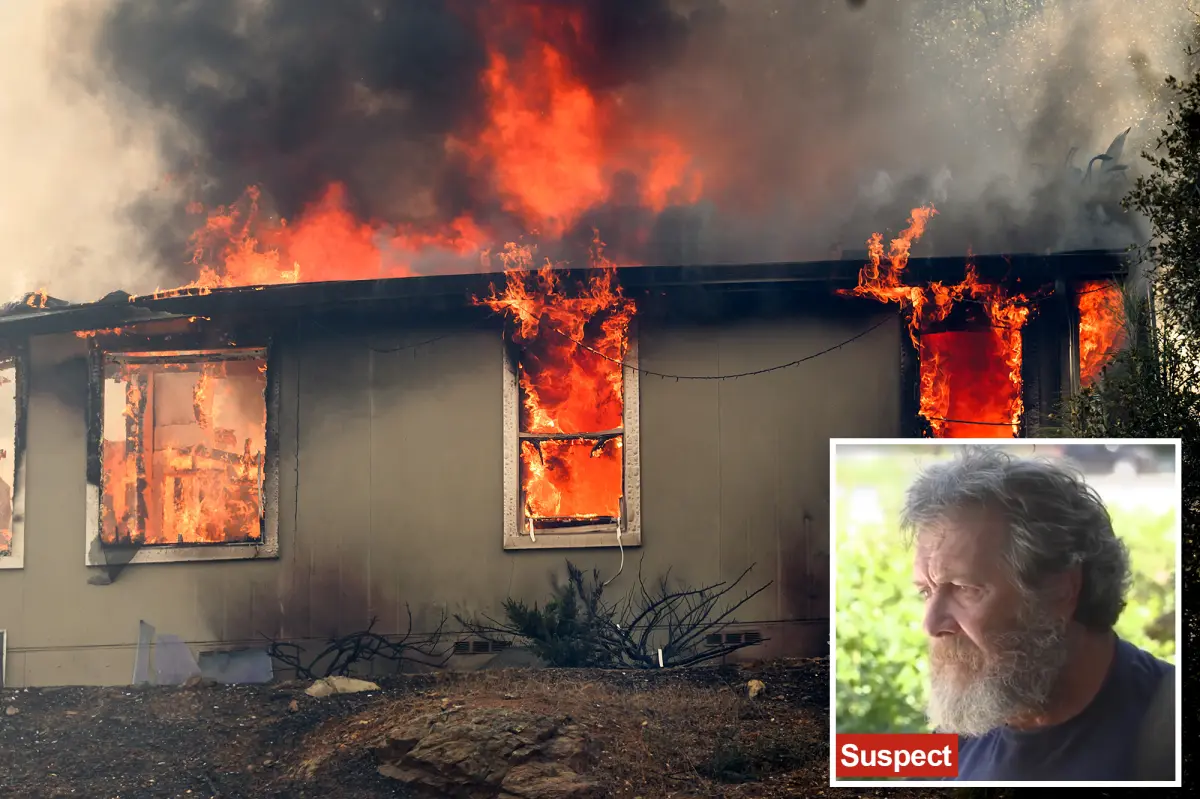
The historic gold-country landscapes of Calaveras County, California, known for their rugged beauty and deep-rooted community spirit, have been plunged into a state of profound grief and anxiety as the devastating Gann Fire continues its relentless march across Northern California. This monstrous wildfire, which has already consumed more than 10,000 acres of parched vegetation, oak woodlands, and rolling hills, recently claimed its most heartbreaking toll. In the quiet, rural neighborhood of the 4600 block of Jaquima Drive, situated near the historic city of Angels Camp, emergency responders made a grim and sobering discovery inside the blackened ruins of a residential home. Among the ash and charred structural remains lay the body of an unidentified 70-year-old woman. The physical devastation of the landscape—the blackened trees, the smoky orange skies, and the scorched earth—suddenly faded into the background, eclipsed by the raw, intimate tragedy of a human life lost to the flames. For the tight-knit communities nestled in the Sierra Nevada foothills, the abstract threat of wildfire season instantly transformed into a deeply personal nightmare, reminding everyone of the terrible, unpredictable speed with which these disasters can strike.
Though the victim’s identity has not yet been officially released to the public, her profile as a 70-year-old woman living in a quiet enclave near Angels Camp speaks volumes to the quiet lives and vulnerable populations that define these rural California regions. At seventy, a home is rarely just a physical structure; it is a repository of a lifetime of memories, filled with family photographs, cherished keepsakes, and the quiet comforts of a long life. The realization that this sanctuary was turned into a fiery trap has sent shockwaves of grief and empathy through the neighboring communities. Locals are left to grapple with agonizing questions about her final moments: did she receive the evacuation warnings in time, was she physically able to escape, or did the fast-moving smoke and heat overwhelm her before she could flee? This tragedy shines a harsh light on the acute vulnerability of elderly residents in wildland-urban interface zones, where rapid fire progression can quickly cut off escape routes, leaving those with limited mobility or isolated living situations at the mercy of a merciless elements.
In the wake of this devastating loss, a meticulous and emotionally heavy investigation has begun on Jaquima Drive. The Calaveras County Sheriff’s Office, collaborating closely with specialized fire investigators from various state and local agencies, is working diligently to piece together the tragic puzzle. Investigating a death within a wildfire zone is an incredibly complex forensic challenge, as the intense heat of the blaze often consumes the very evidence needed to establish a clear timeline. Officials have stated that their primary focus is to determine the exact cause and manner of death, as well as the definitive relationship between the fire itself and the woman’s passing. This joint effort is not merely a legal necessity; it is a vital pursuit of truth and dignity for the deceased woman and her surviving family members. By treating the burned homestead as a sensitive scene and carefully evaluating every fragment of physical evidence, investigators hope to provide the community with the answers, clarity, and closure they so desperately need during this time of collective mourning.
The emotional weight of the tragedy took a complex and controversial turn with the announcement of an arrest in connection with the fire’s ignition. Authorities arrested 65-year-old Herbert Wayne Smith of Spring Valleys, accusing him of starting the blaze that ultimately grew into the 10,000-acre inferno. Speaking to local news outlet KCRA, a visibly shaken Smith expressed the absolute ruin that now defines his existence, stating, “This is going to destroy my life, one way or another.” His words lay bare a raw, tragic human reality: the sudden, catastrophic shift from an ordinary citizen going about his day to a man facing the immense guilt, legal jeopardy, and social ruin of being linked to a fatal disaster. The contrast between the loss of the elderly woman’s life and the self-reckoning of the man accused of starting the fire highlights the dual tragedy of the event, illustrating how a single afternoon can permanently shatter multiple lives, leaving families on both sides of the incident to pick up the pieces of an irreversible disaster.
According to Smith, the catastrophic fire began not out of malice, but from a mundane, everyday task gone horribly wrong. He recounted that he was using a hand-held saw to cut up scrap metal when sparks from the tool flew into the nearby dry brush, instantly igniting the parched vegetation. In the highly volatile climate of modern Northern California—where years of drought, soaring summer temperatures, and low humidity have turned the natural landscape into a virtual tinderbox—such a simple chore carries the potential for unimaginable destruction. This incident serves as a stark, terrifying reminder of the razor-thin margin of safety that exists during wildfire season. A task that would be completely harmless in a wetter climate or a paved urban area becomes an existential threat in the dry foothills of Calaveras County. It underscores the profound responsibility placed upon every resident in these regions, where a momentary lapse in judgment or a failure to recognize the extreme fire danger can unleash a fast-moving disaster that destroys thousands of acres and costs innocent people their lives.
As the Gann Fire continues to burn and fire crews work tirelessly to establish containment lines, the community of Angels Camp and the surrounding areas are left to mourn, reflect, and rebuild. The physical scars on the landscape will eventually heal, as the blackened hillsides of Calaveras County slowly regenerate over the coming decades, but the emotional scars left by this tragedy will linger in the community’s consciousness for generations. This event serves as a somber milestone in California’s ongoing battle with seasonal wildfires, emphasizing that the true cost of these disasters is not measured in acres burned or suppression costs, but in the human lives disrupted, homes destroyed, and communities forever changed. In the face of such profound loss, the residents of Calaveras County are drawing closer together, offering mutual support and seeking solace in their shared resilience, united by the memory of the life lost on Jaquima Drive and a renewed commitment to protecting one another from the ever-present threat of the flames.