







Paragraph 1: The Scene in the City
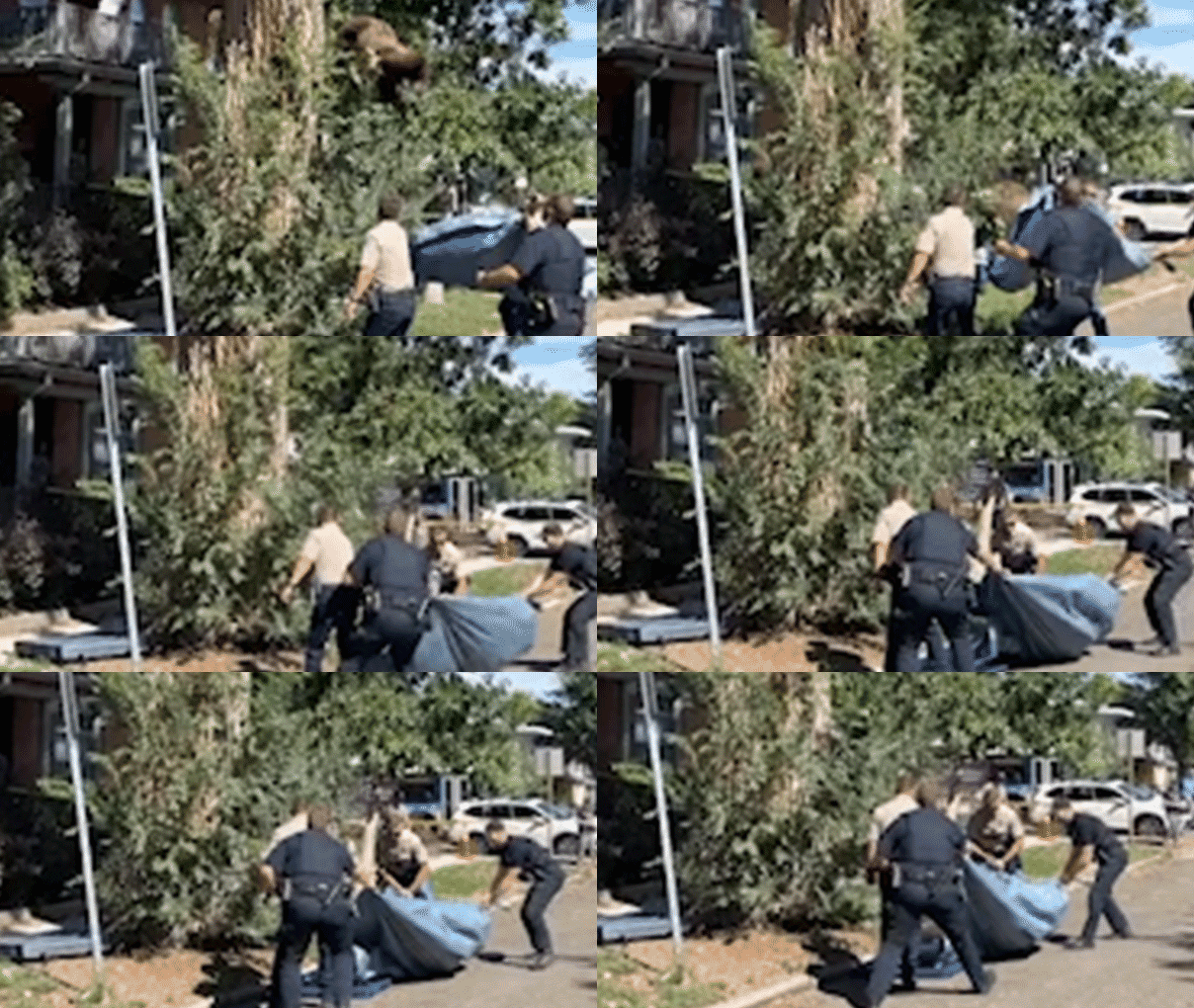
The quiet of a Sunday morning in a residential Denver neighborhood was shattered by an unusual commotion. Near the intersection of Louisiana Avenue and Pennsylvania Street, where the usual soundtrack is the chirping of birds and the distant hum of traffic, residents found themselves staring up into the branches of a tall tree, their eyes searching for the source of the excitement. High above the sidewalks and manicured lawns, a young black bear had decided to take refuge, its dark fur a stark contrast against the morning sky. For a moment, the sight felt almost surreal, as if the wild had wandered off the Rocky Mountain foothills and stumbled into the middle of a city block. The bear, likely confused and disoriented after wandering too far from its natural territory, had climbed high to escape an unfamiliar situation, but its presence was hardly a secret. Word spread quickly among neighbors, and soon the scene was a blend of curious onlookers, flashing phone cameras, and the unmistakable presence of law enforcement. Colorado Parks and Wildlife (CPW) officers arrived on the scene, fully aware that this was not a routine call in the woods but a delicate operation in the heart of an urban environment. “This morning we responded to a bear in a tree… in Denver,” CPW later announced on their social media, adding a wry note of disbelief: “Not a typo. In Denver.” The post immediately captured the attention of the public, drawing a mixture of amusement, concern, and fascination. For the officers, the challenge was clear: how do you safely bring down a frightened, powerful animal from a tree without causing injury to the bear, the public, or themselves? The answer, they decided, was to use a tranquilizer, a standard but always risky procedure that requires precision, timing, and a bit of luck.
Paragraph 2: The Delicate Extraction
The operation unfolded with the careful coordination of a well-oiled machine. CPW officers, armed with a dart gun, took aim at the bear, which was perched precariously on a branch perhaps thirty feet above the ground. The animal, an estimated yearling male around a year and a half old, weighed in at roughly 100 pounds—a fraction of what it would become as an adult, but still a powerful, potentially dangerous creature in the wrong circumstances. The tranquilizer dart struck its mark, and for a few tense moments, the bear seemed unaware, shifting its weight nervously. Then, the effects of the drug began to take hold. The bear swayed, its grip on the branch loosened, and what followed was the kind of heart-stopping sequence that makes even seasoned wildlife officers hold their breath. The tranquilizer, while effective, doesn’t offer a graceful descent. The bear plummeted from its perch, crashing through the branches below, each snap of wood echoing like a gunshot. The crowd gasped, fearing the worst. But below, a team of officers from the Denver Police Department and CPW were waiting, expertly positioning themselves to catch the falling animal. The landing, as CPW would later describe it, was far from smooth—“It didn’t have the smoothest landing, but the bear is ok!”—yet it was successful. The officers secured the unconscious bear, checking its vital signs, ensuring that the fall hadn’t caused any broken bones or internal injuries. After a brief assessment, they loaded the animal into a specialized transport vehicle. The plan was simple: take the bear far from the city limits, to a stretch of wilderness where it could recover from the tranquilizer in peace, and release it back into a “better habitat,” far from the dangers of traffic, pets, and the temptations of human garbage. For the bear, this was a second chance at life in the wild, a reprieve from a deadly path that many urban bears tragically follow.
Paragraph 3: A Growing Pattern of Urban Encounters
This particular incident was not an isolated fluke but a symptom of a larger, increasingly alarming trend across Colorado. The Centennial State is experiencing a dramatic surge in bear activity, particularly in urban and suburban areas that were once considered safe havens for wildlife. According to data released by CPW, the numbers are staggering. Between January 1 and August 13 of this year alone, the agency received 6,129 reports of bear sightings and conflicts, a figure that more than doubles the 3,115 reports recorded during the same period last year. That’s nearly a 100% increase, a statistic that has wildlife officials deeply concerned. To put it plainly, bears are on the move, and they are increasingly showing up where they don’t belong—in city parks, backyards, and even, as in this case, in the middle of downtown neighborhoods. The Harvey Park neighborhood, also in Denver, had its own unwelcome visitor just days before this tree incident, when a mother bear and her cub wandered in and refused to leave, prompting CPW to tranquilize and relocate them after a tense, multi-day standoff. These events are not random quirks of nature; they are a direct consequence of environmental pressures, foremost among them a severe drought that has gripped the region. The parched landscape has decimated natural food sources—berries, acorns, grasses, and insects—that bears rely on to survive. Faced with an empty pantry in the wild, these intelligent, adaptable animals are looking for easier alternatives, and our neighborhoods, full of unsecured trash cans, bird feeders, and pet food, look like an all-you-can-eat buffet.
Paragraph 4: The Hungry Desperation of Hyperphagia
To understand why a bear would risk the chaos of a city, you have to understand the powerful biological drive that governs its life this time of year. Bears are entering the crucial phase known as hyperphagia, a period of intense, almost obsessive eating that occurs in the late summer and fall. During this time, a bear’s physiological imperative is to consume as many calories as possible—up to 20,000 calories a day—in order to build up the thick layer of fat necessary to survive the long, harsh months of winter hibernation. It’s a matter of life and death. A bear that fails to gain sufficient weight may not wake up in the spring. When natural forage is plentiful, this instinct can be satisfied in the wild, but the ongoing drought has severely impacted the availability of these foods. “You’re not crazy, we are seeing more bear conflicts this year,” CPW wrote in their social media thread, cutting through the confusion. “The drought is forcing bears to seek food in our neighborhoods.” This is a poignant reminder that these encounters are not a sign of aggression or natural malevolence; they are the desperate acts of wild animals fighting for survival. The young bear found in that Denver tree wasn’t a villain; it was a hungry, scared adolescent, navigating an unfamiliar world that suddenly smelled of food. It had likely wandered into the city following its nose, drawn by the scent of garbage or a forgotten barbecue, and then panicked, seeking refuge in the first safe-looking tree it could find. Wildlife officials are quick to point out that human behavior plays a critical role. When we leave food accessible, we teach bears that human spaces are a source of easy meals, transforming them from wild animals into conditioned, dangerous pests. The solution, they stress, lies not just in relocating individual bears, but in changing our own habits.
Paragraph 5: A Call for Coexistence and Common Sense
In response to this unprecedented activity, CPW is issuing a clear, urgent plea to all residents of Colorado: secure your property and remove all attractants. This is not just a helpful tip; it is a proactive measure that can save bears’ lives and prevent dangerous conflicts. The agency emphasizes that the single most important step is managing trash. Residents are urged to place garbage out only on the morning of pickup, not the night before, and to use bear-resistant containers whenever possible. This seemingly simple act removes a major, easily accessible food source. Likewise, bird feeders, which are essentially bowls of high-energy seeds and suet, should be taken down immediately, especially as we transition into the autumn months. Pet food should never be left outside, and feed other pets like chickens only between dawn and dusk. Another often-overlooked issue is vehicles; bears have an uncanny ability to open unlocked car doors if they catch a whiff of a food wrapper or a spilled soda from inside, treating your passenger seat like their personal dining room. Always lock your car doors and windows, and never leave coolers, groceries, or trash in the vehicle. This is about practicing what wildlife experts call “bear awareness,” a philosophy that hinges on the adage: “A fed bear is a dead bear.” While it may sound harsh, the reality is that bears that become habituated to human food lose their natural fear of people. They return again and again, becoming bolder and more destructive, eventually posing a public safety risk, which often results in euthanization. Relocating a bear, like the one that fell from the tree in Denver, is a costly and stressful intervention, and it is not always successful. The most effective way to protect these majestic creatures is to ensure they never associate humans with food in the first place. The responsibility, they stress, lies squarely on our shoulders.
Paragraph 6: A Shared Landscape and a New Beginning
The story of the bear that took a tumble in Denver ends with a hopeful—if somewhat comical—resolution. After its ungraceful fall and successful capture, the yearling was safely transported to a remote, forested area far from the city’s sprawl. There, after the tranquilizer wore off, it likely woke up, shook its head, and wandered off into the trees, bewildered by its strange trip to the big city. It was given a second chance at a life that doesn’t involve dodging cars or rummaging through dumpsters. But the broader challenge of living alongside wildlife in Colorado remains. These incidents serve as a fascinating, and slightly unnerving, reminder that we do not inhabit a purely artificial world. The Rocky Mountains cast a long shadow over the metropolitan areas, and the wild is always creeping closer. As climate patterns shift, droughts become more intense, and natural habitats shrink, we will inevitably see more of these encounters. We must learn to coexist, to respect the fact that bears call this state home too. While it is disconcerting to see a 100-pound bear in your city tree, it is also a powerful testament to the resourcefulness and resilience of nature. It challenges us to view our communities not as isolated fortresses, but as shared spaces that we must manage responsibly. So, as autumn approaches and bears continue their frantic search for winter calories, the advice from Colorado Parks and Wildlife is simple: be vigilant, be respectful, and above all, be responsible. Keep your trash secure, your feeders down, and your doors locked. By doing so, you are not just protecting your own property; you are actively contributing to the conservation of a species that has roamed these mountains long before our cities ever existed. The bear in the tree is a fleeting visitor, a symbol of the wild resilience that still surrounds us, and a reminder that the fate of these magnificent animals rests, quite literally, in our hands.